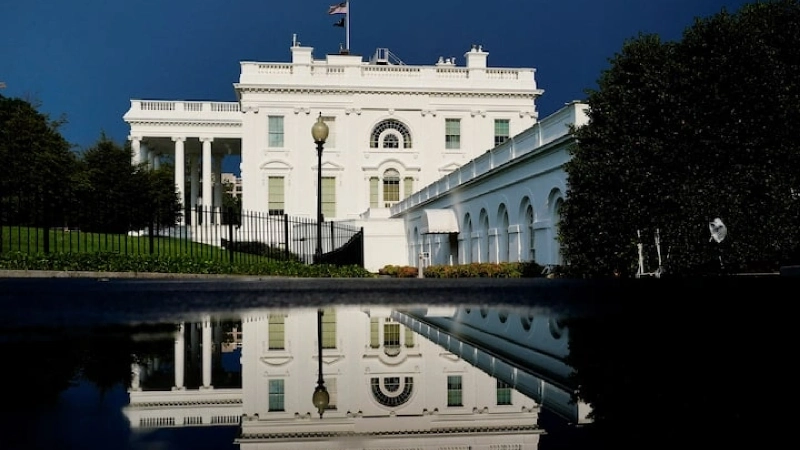
The White House is accelerating efforts to pass the first comprehensive federal artificial intelligence law, as geopolitical tensions and the expanding role of AI in both economic systems and military operations intensify the urgency for regulation. Officials are seeking bipartisan support for a framework that would establish national standards for AI development while addressing risks tied to infrastructure, security, and consumer protection. The push comes at a time when AI is no longer confined to innovation cycles but is actively shaping global conflicts, supply chains, and critical digital systems.
Recent developments linked to the Iran conflict have highlighted how deeply AI is embedded in modern infrastructure, with data centers and cloud networks increasingly becoming strategic assets. Disruptions to facilities in the Middle East, including systems tied to major technology platforms, have underscored vulnerabilities in the digital backbone that supports AI driven services. These incidents are reinforcing concerns among policymakers that the lack of a unified regulatory framework could expose critical infrastructure to both geopolitical and technological risks as AI adoption accelerates globally.
The proposed legislation aims to create a stable regulatory environment for innovation while addressing concerns around consumer protection and economic impact. Key priorities include safeguarding children interacting with AI systems, preventing rising energy costs linked to large scale data center operations, and establishing federal oversight that preempts a fragmented patchwork of state level regulations. Officials argue that without a centralized framework, inconsistent rules across states could slow innovation and create uncertainty for companies developing AI technologies.
At the same time, the policy effort faces significant challenges, including criticism that current proposals lack detail on national security risks and the management of increasingly advanced AI systems. Some lawmakers have raised concerns about issues such as misinformation, autonomous decision making, and broader societal impacts that are not fully addressed in early drafts. Others see the framework as a necessary starting point for what is expected to be a lengthy legislative process involving multiple stakeholders across government and industry.
The administration is also aiming to move quickly, with officials expressing confidence that legislation could be passed within the current political cycle. Control of both chambers of Congress provides an opportunity to advance the bill, though internal divisions within political groups and differing views on regulation may complicate progress. The formation of advisory councils that include major technology leaders signals an effort to align policy with industry expertise while maintaining momentum toward a national framework.
Broader political dynamics are shaping the debate, as concerns about job displacement, social impact, and the influence of large technology companies continue to gain attention. Policymakers are balancing calls for stronger oversight with the need to maintain global competitiveness in AI development. This tension reflects a wider struggle over how to regulate a technology that is rapidly transforming multiple sectors while remaining central to economic growth and national security.
The push for AI legislation is also being influenced by global supply chain disruptions tied to the conflict in the Middle East. Shortages of key materials used in semiconductor production, including helium, are raising concerns about the stability of the chip industry that underpins AI systems. These pressures highlight the interconnected nature of geopolitics, technology, and economic policy, reinforcing the urgency for a coordinated approach to AI governance as the technology continues to expand its role across industries.