


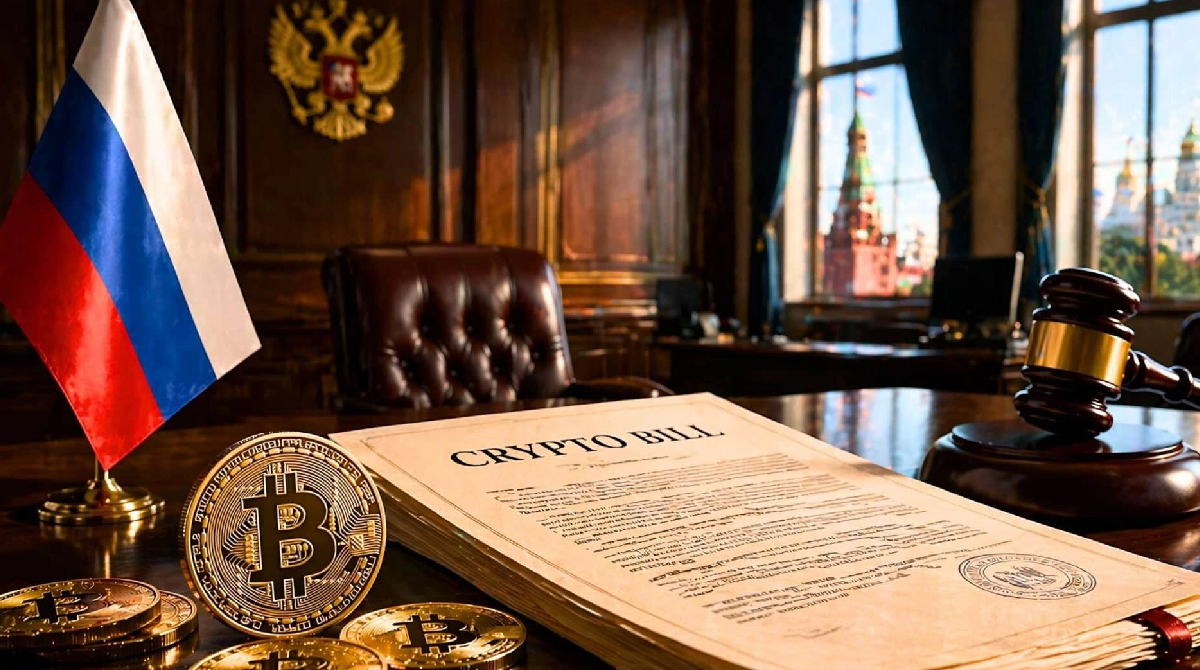
Russia has moved forward with a significant step toward formalising its digital asset framework after its State Duma approved a new cryptocurrency bill in its first reading. The legislation aims to establish a regulated structure for crypto market activity while clearly separating domestic restrictions from international financial use cases.
Under the proposed framework, the Bank of Russia would serve as the primary regulatory authority responsible for licensing crypto market participants and overseeing digital asset operations. The bill outlines a controlled environment in which exchanges, brokers, and selected financial institutions would be permitted to operate under defined compliance standards.
A key feature of the legislation is the distinction between domestic and foreign use of cryptocurrencies. While the bill maintains a prohibition on using crypto for internal payments within Russia, it explicitly allows digital assets to be used in foreign economic transactions. This reflects a growing interest in leveraging cryptocurrencies as a tool for cross border trade settlements outside the traditional banking system.
The proposed rules also introduce a tiered access system for investors. Qualified professional participants would have broader access to digital assets, while non qualified investors would face limits on crypto purchases, capped at approximately 300,000 rubles. This structure is designed to reduce exposure for retail investors while enabling institutional participation in regulated channels.
Additionally, the bill includes provisions to simplify entry into the crypto market for entities already operating under existing experimental legal frameworks, as well as for banks and brokers seeking to expand into digital asset services. The legislation still requires approval through additional readings and review stages before it can be enacted, but it signals a gradual formalisation of cryptocurrency use within Russia’s broader financial and trade strategy.