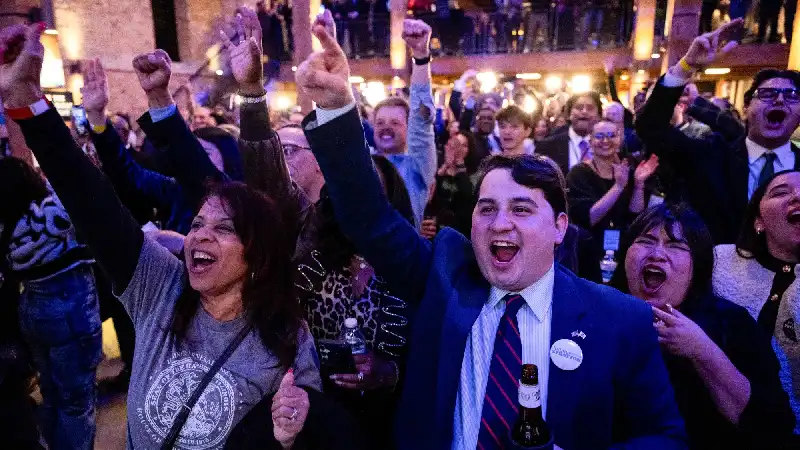
In the Illinois primary elections, deep-pocketed artificial intelligence and cryptocurrency industries invested millions of dollars in campaigns but secured limited victories, highlighting the limits of financial influence in politics. The Fairshake PAC, backed by the crypto sector, spent $10 million supporting candidates against Democratic Senate contender Juliana Stratton, who ultimately won the primary with endorsements from Governor JB Pritzker. Meanwhile, AI-focused super PACs spent $1.3 million backing Jesse Jackson Jr.’s bid for a Chicago-area House seat but were unsuccessful, with other political action committees like those associated with AIPAC securing wins instead.
Combined spending by crypto, AI, and pro-Israel lobby PACs reached nearly $35.7 million, yet the results show that money alone does not guarantee success. The industries did celebrate a single victory as Melissa Bean, supported by both AI and crypto PACs along with AIPAC affiliates, won the 8th District House seat being vacated by Raja Krishnamoorthi. Strategists noted that Bean’s commitment to a national regulatory framework for AI aligned with the priorities of technology and crypto advocates, signaling some influence despite overall setbacks.
The primary outcomes underscore the enduring importance of candidate quality and local political clout in elections. Stratton’s backing by Pritzker proved decisive against the significant industry spending aimed at opposing her, while AI and crypto PACs struggled to translate financial support into wins in competitive races. Even major tech companies like Meta, which spent $750,000 across multiple Illinois primaries, found their chosen candidates largely unsuccessful, further highlighting the limitations of campaign cash as a determinant in electoral outcomes.
The results arrive amid broader geopolitical and economic developments that could influence voter sentiment. The ongoing conflict between Iran and Israel has driven energy price spikes, with oil and European natural gas markets reacting sharply to the escalation. U.S. President Donald Trump’s efforts to stabilize markets have been challenged by rising geopolitical tensions, and concerns about inflation continue to influence economic policy discussions. Analysts suggest that these global issues, combined with local political dynamics, shaped the outcomes of the Illinois primaries and may continue to affect voter behavior heading into the 2026 midterm elections.
The mixed results from Illinois illustrate that while AI and crypto industries possess significant financial resources, their impact in shaping political outcomes remains limited without strategic candidate alignment and local support. Observers note that the elections reinforce the importance of grassroots influence, endorsements, and regional political networks, indicating that even well-funded industry-backed campaigns cannot always overcome entrenched political advantages or voter preferences. These lessons may inform strategies for future elections where technological and crypto-focused PACs seek to expand influence on legislative priorities and regulatory frameworks.