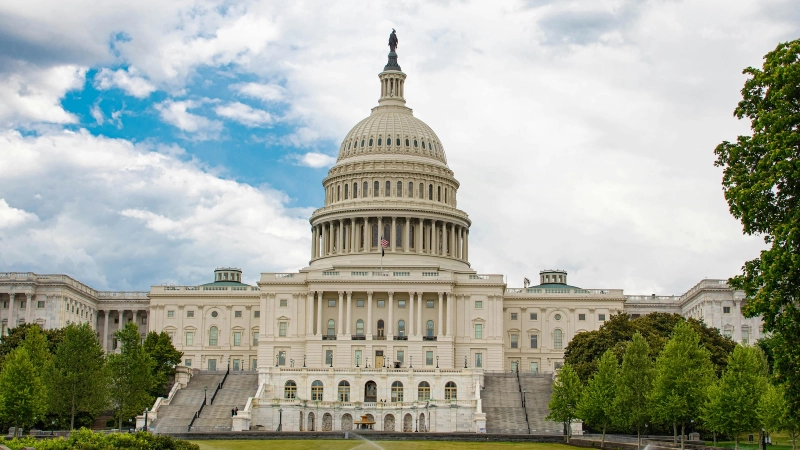
US lawmakers and financial industry leaders are signaling a clear direction for the future of tokenized assets, emphasizing that securities issued on blockchain infrastructure must continue to comply with existing regulatory frameworks. During a congressional hearing focused on advancing the Capital Markets Technology Modernization Act of 2026, executives from across the crypto and traditional finance sectors agreed that the underlying technology does not change the legal responsibilities governing securities markets. The discussion reflects a growing push to integrate blockchain innovation into established financial systems without weakening oversight or investor protections.
Industry representatives highlighted that tokenization offers significant operational benefits, particularly in reducing transaction costs and accelerating settlement times. By replacing manual record keeping with blockchain based systems, transactions can be recorded in a transparent and time stamped manner, enabling near instant settlement and improved capital efficiency. However, despite these technological advantages, executives stressed that the same rules around compliance, reporting and market surveillance must still apply. The consensus indicates that regulators are unlikely to create entirely new legal categories for tokenized securities, instead adapting current laws to fit the evolving infrastructure.
Key concerns raised by lawmakers focused on how compliance measures such as Know Your Customer and Anti Money Laundering requirements would function within tokenized ecosystems. Industry leaders responded by outlining how identity verification and regulatory controls can be embedded directly into blockchain based systems. Solutions discussed include permissioned networks that restrict access to verified participants, as well as token level identifiers that carry compliance data across transactions. These approaches aim to ensure that regulatory standards are maintained even as trading shifts to decentralized or semi decentralized environments.
Executives also addressed the technical challenges that still exist in monitoring activity on blockchain networks, particularly when it comes to detecting market manipulation or identifying participants with full certainty. While some platforms are developing mechanisms to freeze assets or enforce compliance at the token level, gaps remain in tracking certain types of trading behavior. Despite these limitations, the overall tone of the hearing suggested confidence that technological solutions will continue to evolve alongside regulatory expectations, supporting a more integrated digital asset market structure.
The hearing forms part of a broader legislative effort in the United States to establish a comprehensive framework for digital assets and tokenized markets. Policymakers are increasingly focused on balancing innovation with financial stability, ensuring that emerging technologies can operate within a trusted and regulated environment. As multiple crypto related bills continue to progress through Congress, the message from both regulators and industry leaders is clear that tokenization will be embraced, but only within the boundaries of existing financial laws and oversight mechanisms.