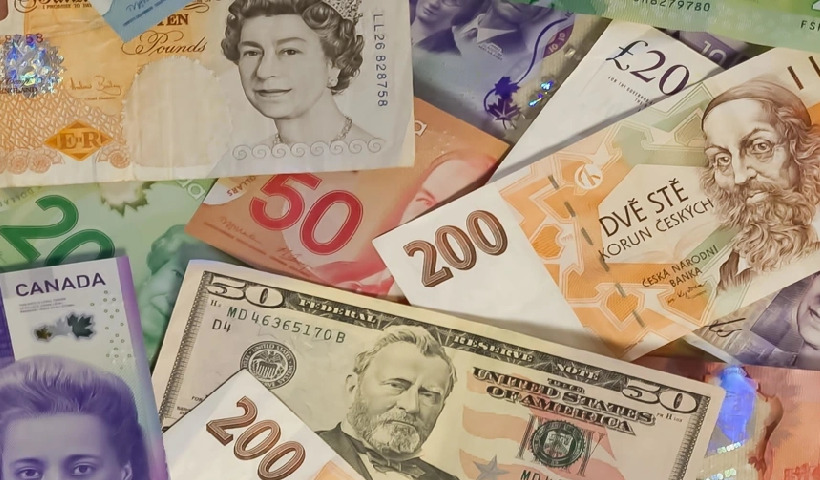
The US Dollar has retreated from its recent record highs, signaling a shift in currency markets even as several other global currencies continue to face downward pressure. The move comes after a period of strong dollar performance driven by interest rate expectations and safe haven demand. Market participants are now reassessing positions as changing economic signals and policy outlooks influence currency valuations across major economies.
Analysts note that the dollar’s pullback may be linked to adjustments in expectations around monetary policy and inflation trends, with investors closely watching signals from central banks. While the dollar remains relatively strong compared to historical levels, the recent decline reflects a cooling phase after sustained gains. At the same time, other foreign currencies have also weakened, highlighting broader uncertainty in global markets rather than a simple reversal of dollar strength.
Currency movements have been influenced by a mix of geopolitical developments, economic data releases, and capital flow dynamics. Emerging market currencies in particular have experienced volatility, as investors respond to shifting risk sentiment and global liquidity conditions. A strong dollar environment often puts pressure on these currencies, but even with the recent dip, underlying concerns about growth and financial stability continue to weigh on exchange rates worldwide.
Financial experts suggest that the current trend reflects a more complex global picture, where multiple factors are shaping currency performance simultaneously. Diverging economic conditions between regions, varying interest rate paths, and trade imbalances all contribute to fluctuations in exchange rates. As a result, movements in the dollar and other currencies are likely to remain closely interconnected in the near term.
As markets continue to adjust, traders and policymakers are monitoring developments closely to gauge the direction of future currency trends. The recent pullback in the US dollar does not necessarily signal a long term reversal but rather a temporary recalibration within a broader cycle of global economic adjustment.