

Global financial markets are entering a period of structural change as geopolitical tensions and prolonged conflicts begin to influence currency dynamics. The United States dollar has long held its position as the world’s dominant reserve currency, accounting for around 58–60% of global foreign exchange reserves according to international monetary data. It also underpins nearly 80–90% of global trade invoicing and dominates settlement systems. However, recent developments are prompting governments and institutions to reassess exposure to a system increasingly shaped by political leverage, sanctions, and shifting alliances.

7
Conflicts and evolving geopolitical blocs are accelerating this reassessment. Sanctions regimes and restrictions on cross-border payment networks such as SWIFT have exposed structural dependencies. In response, several economies are increasing gold reserves, expanding bilateral trade in local currencies, and experimenting with alternative settlement systems. While the dollar remains central, the direction of travel points toward diversification rather than outright replacement.
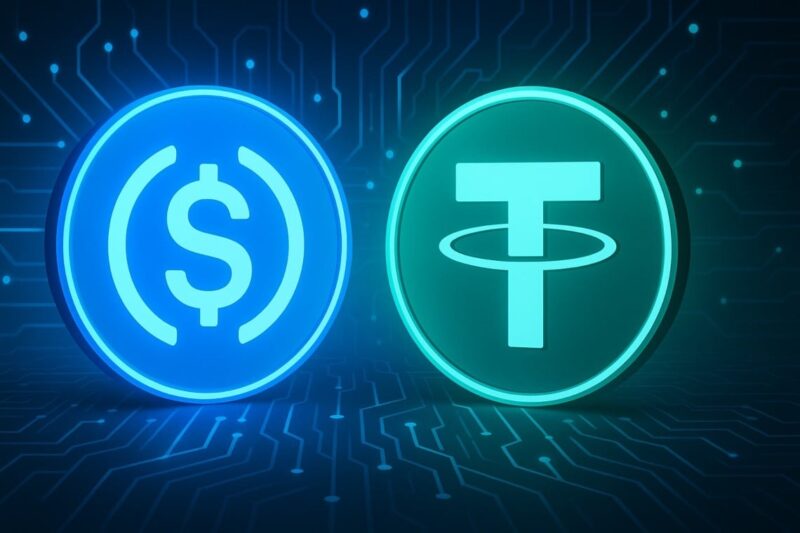
One of the most visible developments within this transition is the rapid rise of stablecoins. Digital assets such as Tether and USD Coin are now embedded in global liquidity flows, with combined circulation exceeding $150 billion and annual transaction volumes crossing $10 trillion. Their appeal lies in maintaining stable value while enabling near-instant settlement, particularly in regions where traditional banking rails are slow, expensive, or restricted. In some emerging markets, stablecoins are increasingly used for trade settlement, remittances, and capital preservation.

At the same time, the evolution of stablecoins is moving beyond transactional use. New frameworks are introducing models where financial systems connect directly with real-world economic activity. RMBT represents one such approach, linking financial flows to infrastructure assets such as transport networks, energy grids, and logistics systems. Instead of acting solely as a medium of exchange, this structure allows assets to generate continuous economic output tied to real usage, creating a feedback loop between infrastructure performance and financial support.
This shift reflects a broader transformation in how value is structured. Traditional systems rely on centralized reserves and institutional trust to maintain stability. In contrast, infrastructure-linked financial models combine asset backing with ongoing economic activity, potentially improving resilience in environments where geopolitical risks can disrupt conventional financial channels. For instance, infrastructure that generates measurable revenue streams can support its own maintenance and expansion, reducing reliance on external funding cycles.

The implications for the United States dollar are gradual but significant. While it is unlikely to lose its dominant role in the near term due to deep capital markets and institutional trust, its share of global usage may continue to decline at the margins. Stablecoins and alternative frameworks are not direct substitutes but complementary systems that introduce flexibility. This diversification allows countries and institutions to reduce dependency while maintaining access to global liquidity.
Digitization is further reinforcing this transition. Financial systems are increasingly integrating blockchain-based tools to improve speed, transparency, and efficiency. Cross-border transactions that once required multiple intermediaries and several days can now settle within minutes. This shift is particularly relevant for trade corridors, emerging markets, and sectors where timing and cost efficiency are critical.
Looking ahead, the global financial system is likely to evolve into a multi-layered structure. The United States dollar will remain a central pillar, but its dominance will be complemented by a growing ecosystem of digital assets and programmable financial frameworks. Stablecoins will continue to provide liquidity and accessibility, while models such as RMBT explore deeper integration between finance and physical infrastructure.
In this environment, the focus is shifting from reliance on a single currency toward a more distributed system of value exchange. The rise of stablecoins and infrastructure-linked financial models signals an adjustment to geopolitical realities, where flexibility, resilience, and real-world connectivity are becoming defining features of the next phase of global finance.