Competing issuers race to dominate cross-border payments.
The Battle for Digital Dollars
In 2025, stablecoins will no longer be niche financial tools. They have become a central pillar of the global payments ecosystem, powering everything from migrant remittances to institutional trade settlements. As adoption accelerates, competition among issuers is heating up, creating what many are calling the “stablecoin wars.” Market leaders are racing to expand user bases, secure regulatory approval, and integrate with fintech platforms. The outcome of this battle could determine which digital dollars dominate the next phase of global finance.
Why Stablecoins Matter in Global Payments
Stablecoins offer a mix of stability and flexibility unmatched by traditional banking systems. Pegged to major currencies like the U.S. dollar or the euro, they preserve value while moving at the speed of crypto. For users, they provide an easy way to bypass high fees and delays tied to legacy payment rails. For businesses, they enable instant settlement across borders. This utility makes stablecoins not just speculative instruments but essential infrastructure in digital economies.
Retail Users Drive Everyday Adoption
Retail adoption is exploding, particularly in regions where inflation erodes local currencies. Workers in Nigeria, Argentina, and Turkey convert their salaries into stablecoins within hours of being paid. Tutorials on TikTok and YouTube explain how to send and store stablecoins safely, turning financial survival into cultural content. Memes portray them as “digital shields” protecting families from financial money. For retail communities, stablecoins are not just tokens. They are lifelines.
Whales and Corporate Players Escalate the Race
Whales and large corporations are amplifying the stablecoin wars. On-chain data shows whales rotating capital between issuers to exploit arbitrage opportunities. Corporations are selecting stablecoin partners for payroll, supply chains, and global trade. The competition has pushed issuers to invest heavily in partnerships, marketing, and liquidity pools. Some whales are even funding new entrants to weaken incumbents, ensuring the battlefield remains contested.
AI Dashboards Expose the Shifts
AI dashboards have turned the competition into a real-time spectacle. Push notifications highlight sudden surges in adoption, new exchange listings, or liquidity inflows. Screenshots of alerts like “USDC volume surpasses $50 billion this week” circulate widely on social media. Retail users interpret these updates as signals of which stablecoins are gaining dominance. The dashboards transform technical competition into cultural narratives, ensuring the wars are fought not only on blockchains but also in the public imagination.
Regulators Enter the Arena
Governments and regulators are now central actors in the stablecoin wars. The United States has introduced stricter requirements for reserve transparency, forcing issuers to publish audited reports regularly. Europe is implementing caps on unregulated stablecoin circulation, while Asia experiments with hybrid models linking stablecoins to central bank digital currencies. These regulatory developments create both barriers and opportunities, with compliant issuers gaining legitimacy while others struggle to adapt.
Cultural Narratives of Loyalty
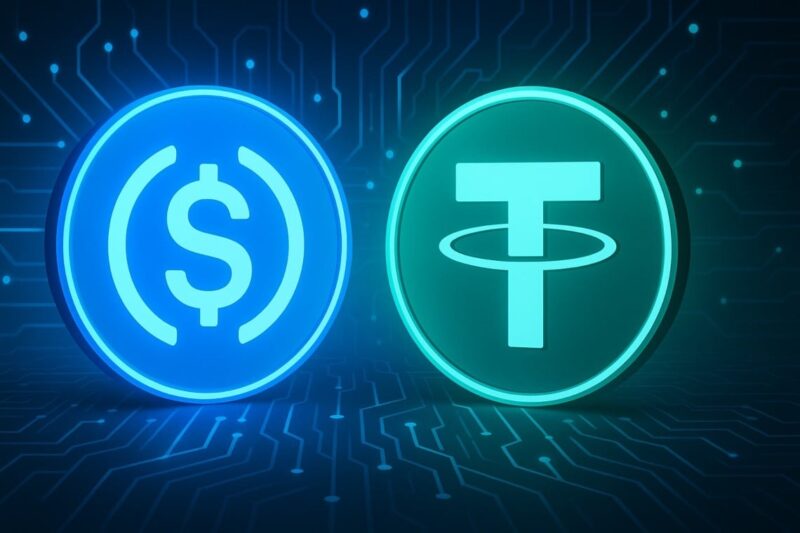
Culturally, stablecoin adoption is being framed as a loyalty game. Memes portray USDT, USDC, and other competitors as rival sports teams, each with passionate fan bases. Influencers debate the merits of different issuers, turning financial choices into lifestyle statements. For Gen Z, choosing a stablecoin is often about identity as much as utility. This cultural dimension intensifies competition, giving the wars a human face beyond market metrics.
Risks of Fragmentation
Analysts warn that the proliferation of stablecoins may create risks. If liquidity fragments across too many issuers, markets could lose efficiency. Smaller stablecoins may struggle to maintain pegs, undermining trust. In worst-case scenarios, sudden collapses could destabilize entire ecosystems. The challenge for users and regulators alike is to balance diversity with resilience, ensuring that competition does not compromise stability.
Global Stakes of the Wars
The implications go far beyond retail. For emerging markets, the choice of a dominant stablecoin could shape access to global trade and financial inclusion. For developed economies, stablecoins pose challenges to central bank influence over money supply. The wars are not just about technology or finance. They are about geopolitical power and the architecture of the future financial system.
Conclusion
The stablecoin wars of 2025 are reshaping digital finance. Retail adoption drives momentum, whales and corporations escalate competition, AI dashboards amplify visibility, and regulators shape outcomes. Cultural narratives turn tokens into symbols of loyalty, while risks of fragmentation loom large. The battles unfolding today will determine which stablecoins dominate tomorrow’s global payments infrastructure. For billions worldwide, the stakes are clear. The winner of the wars will control not only digital transactions but also the trust that underpins money itself.