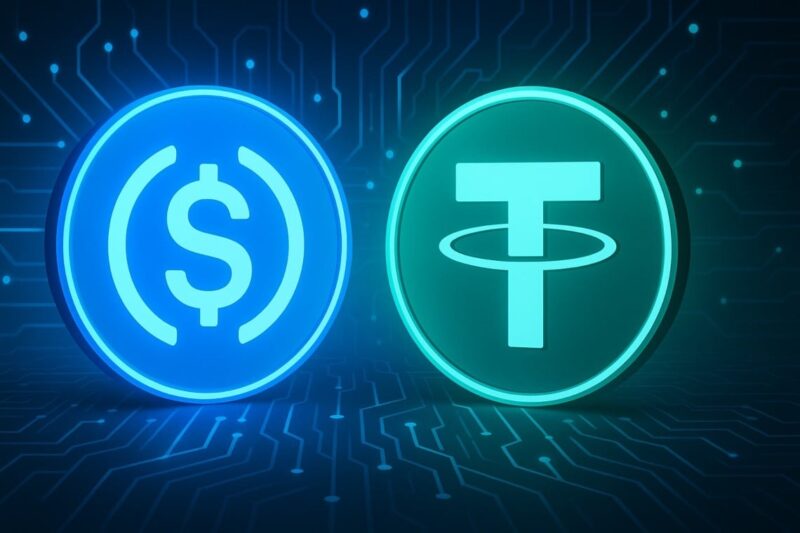
Stablecoin regulation reshapes issuer strategies
Stablecoin regulation is increasingly dictating what stablecoins can do, who can distribute them, and which institutions will support them. Issuers and integrators are narrowing product design to fit licensing, disclosure, and reserve expectations rather than chasing universal use. Circle framed its U.S. expansion as a compliance-driven move after it secured trust bank approval on 2026-07-10, CoinDesk reported. In payment rails, treasury tooling, and exchange settlement, this policy shift is often treated by market participants as a product constraint that can determine where a token circulates and which counterparties onboard it. This trend could encourage more specialization and fewer all-purpose claims.
Licensing and reserve rules shift liquidity and partners
Regulatory updates are widely viewed as steering liquidity and partnerships as much as short-term incentives, with platforms adjusting listing criteria, redemption policies, and custody standards. A practical example of institutional throughput is captured in Visa expands stablecoins, AI and tokenization efforts, which links stablecoin settlement to broader payments modernization initiatives and suggests larger networks prefer clear operating rules. In the EU, MiCA timelines have reportedly pushed many firms to prioritize compliant issuance paths and clearer disclosures, while in the UK the rulemaking approach is being shaped through Financial Conduct Authority and Bank of England consultations that emphasize safeguarding and systemic risk controls. Market participants are also tracking how these compliance expectations affect distribution, including wallet integrations and corporate adoption that depends on documented controls and audit trails.
How major stablecoins compete under stablecoin regulation
Competition is tightening around transparency, redemption operations, and jurisdictional access rather than headline supply alone. Coverage of corporate pilots adds context for how stablecoins are operationalized beyond trading, including Hyundai Completes Stablecoin Remittance Pilot with USDT, which describes a branded remittance trial using USDT. Tether and Circle remain central to exchange settlement in many markets, but differentiation increasingly rests on which counterparties they can serve and the compliance posture those partners require. Related planning in Asia also signals how regulated institutions may prefer a defined perimeter, as described in Korea Bank’s Stablecoin Plan Anchors on Regulated Banking. For users, key comparison points include reserve disclosures, mint and burn controls, and the strength of banking and custody relationships in each market. These contrasts can matter most when rules change who can hold, transfer, and redeem at scale.
Compliance-led infrastructure outlook for 2026 and beyond
In 2026, growth is expected by some industry observers to be channeled into permissioned distribution, clearer attestations, and integration with established payment and custody stacks. Industry efforts to connect token settlement to legacy infrastructure are reflected in Swift Ledger Pilot Targets Cross-Border Payments, which emphasizes interoperability and bank-grade processes. Firms designing cross-border settlement are increasingly aligning token flows with compliance checks, messaging standards, and reconciliation expectations similar to traditional rails, according to market commentary. That direction may favor stablecoins that can support strong controls across issuance, secondary market handling, and redemption pathways. It can also reduce tolerance for ambiguous reserve practices, since regulated partners typically need documentation that can survive supervisory review. Across markets in 2026, the emerging pattern is often described as stablecoins becoming infrastructure components, not just trading collateral.
Case studies show where stablecoin regulation enables scale
Recent deployments suggest that stablecoins tend to win when they solve narrow, measurable problems inside compliant operating environments with clear oversight. Corporate pilots in manufacturing and logistics indicate internal settlement can reduce reconciliation time when controls are built in, and CoinDesk reported on 2026-07-10 that Hyundai introduced internal stablecoin transfers to support operational movement of value. That report, CoinDesk report on Hyundai internal stablecoin transfers, is often cited as a practical signal of stablecoin regulation shaping what can be run inside corporate systems. In parallel, trading venues and prime brokers continue to rely on stablecoins for rapid collateral mobility, but many counterparties are increasingly emphasizing stricter screening, documented controls, and predictable redemption terms. Across these examples, stablecoin regulation is often acting less like a barrier and more like a framework that can determine which use cases scale and which remain experimental.