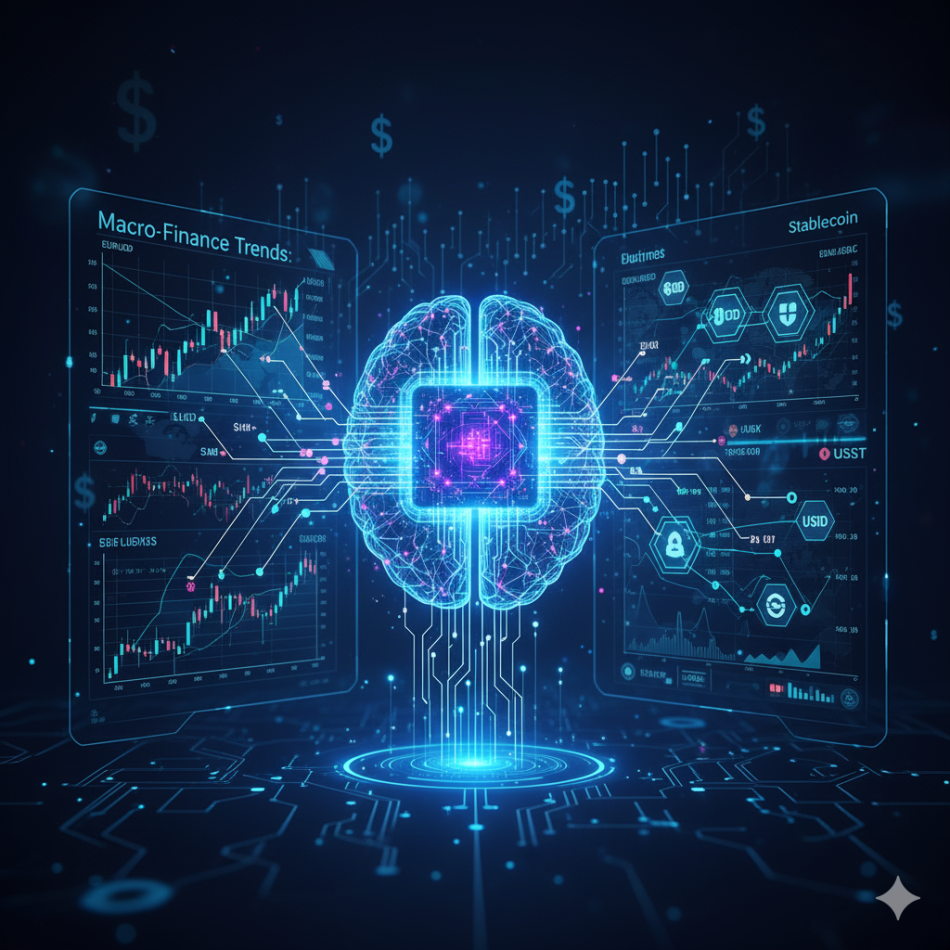
Artificial intelligence is increasingly shaping macro-finance trends by transforming the analysis, forecasting, and trading of both traditional foreign exchange (forex) and digital stablecoin markets. Advanced AI tools are enabling institutional investors, hedge funds, and financial analysts to respond to market volatility, optimize liquidity, and forecast currency fluctuations with unprecedented precision. The integration of AI is enhancing risk management, decision-making, and strategic planning across multiple financial domains.
AI in Forex Market Analysis
The global forex market is characterized by high volume, rapid price changes, and complex interactions between macroeconomic variables. Traditional forecasting methods often struggle to process the vast data flows necessary for accurate decision-making. AI-powered algorithms, including machine learning and deep learning models, can analyze historical exchange rates, economic indicators, central bank policies, and geopolitical developments in real time.
Predictive analytics models identify correlations between interest rate changes, trade balances, and capital flows, providing traders with actionable insights. AI systems also detect anomalies in order books and trading behavior, enabling early identification of market stress or irregular trading patterns. The ability to process multiple datasets simultaneously gives institutions a competitive edge in forex trading and macroeconomic forecasting.
Impact on Stablecoin Markets
Stablecoins, digital assets pegged to fiat currencies, have emerged as critical instruments for liquidity management, cross-border payments, and decentralized finance. AI models analyze stablecoin velocity, redemption flows, and peg stability to forecast potential stress events and optimize market positioning.
Machine learning tools can detect deviations in stablecoin reserves, assess counterparty exposure, and monitor cross-chain liquidity. This provides institutional investors and exchanges with real-time insights that support efficient trading, hedging strategies, and regulatory compliance.
Cross-Market Interactions
AI integration enables simultaneous monitoring of forex and stablecoin markets, highlighting correlations and emerging trends. For example, fluctuations in major currency pairs can influence the demand for stablecoins in cross-border settlements. Conversely, stablecoin liquidity shifts may affect short-term currency flows and trading volumes.
By analyzing these interactions, AI models support macro-financial decision-making, helping institutions optimize hedging strategies, manage risk exposure, and adjust portfolio allocations dynamically. These insights are especially valuable during periods of market turbulence, geopolitical uncertainty, or monetary policy shifts.
Institutional Adoption and Advantages
Hedge funds, commercial banks, and asset managers increasingly adopt AI for macro-finance analysis. Real-time monitoring and predictive forecasting allow institutions to react quickly to market developments, mitigating risk and capitalizing on arbitrage opportunities.
AI-driven insights enhance portfolio diversification by quantifying correlations across asset classes, including forex, commodities, equities, and digital currencies. This enables more precise risk-adjusted decision-making and improves overall capital efficiency.
Regulatory Considerations
The integration of AI in forex and stablecoin markets raises regulatory considerations. Central banks and financial authorities emphasize the importance of transparency, model interpretability, and compliance with anti-money laundering and market conduct regulations.
AI tools provide audit trails, predictive risk scoring, and anomaly detection that support regulatory oversight. Institutions using AI can demonstrate adherence to risk management standards, while regulators gain visibility into potential systemic risks and emerging market trends.
Challenges and Limitations
Despite its benefits, AI in macro-finance faces challenges:
- Data Quality: Inaccurate or incomplete datasets can produce flawed predictions.
- Model Interpretability: Complex AI algorithms may operate as black boxes, making it difficult to explain decisions to stakeholders or regulators.
- Market Adaptation: Unforeseen economic shocks or geopolitical events can reduce model reliability.
- Systemic Risk: Widespread reliance on similar AI models could amplify correlated trading behaviors, increasing volatility.
Institutions must complement AI-driven insights with human judgment, scenario analysis, and risk oversight to maintain robust decision-making frameworks.
Technological Infrastructure
Effective AI deployment requires high-performance computing, secure cloud infrastructure, and real-time data integration. Institutions leverage APIs, data pipelines, and visualization dashboards to process massive amounts of market data. Continuous model retraining ensures adaptability to evolving forex and stablecoin market conditions, enhancing predictive accuracy over time.
Future Outlook
AI is expected to play an increasingly central role in both forex and stablecoin markets. Advanced models incorporating reinforcement learning, sentiment analysis, and cross-asset correlations will enhance predictive capabilities, liquidity management, and operational efficiency.
Macro-financial institutions that adopt AI strategically are likely to benefit from improved risk management, faster response to market dynamics, and better capital allocation. Additionally, AI integration may facilitate enhanced regulatory reporting, transparency, and investor confidence in rapidly evolving markets.
Conclusion
AI is transforming macro-finance by providing actionable insights into forex and stablecoin markets. Through predictive modeling, anomaly detection, and cross-market analysis, AI enables institutions to manage risk, optimize liquidity, and respond efficiently to market volatility.
While challenges such as model reliability, interpretability, and systemic risk remain, AI’s integration into financial analysis offers significant advantages for institutional participants. By combining advanced analytics with human expertise, macro-finance stakeholders can enhance decision-making, improve resilience, and capitalize on emerging trends in both traditional and digital asset markets.
As AI technologies evolve, their role in shaping the future of global finance will continue to expand, reinforcing the importance of real-time, data-driven insights for sustainable market operations.