Introduction
Several major international banks are exploring the issuance of stablecoins pegged to G7 currencies in an effort to modernize cross border payments and reduce transaction costs. According to recent reports from Reuters and Bloomberg, a consortium of European, American, and Asian financial institutions has begun preliminary discussions with regulators on how such digital instruments could coexist with existing payment systems. The goal is to create a secure and fully compliant digital asset framework that enables real time settlement across different jurisdictions.
This move represents one of the most significant shifts in traditional finance toward blockchain based instruments. By anchoring stablecoins to established fiat currencies such as the US dollar, euro, and yen, the initiative seeks to enhance transparency while maintaining monetary stability. Industry observers view the project as a direct response to rising competition from private digital tokens and the increasing efficiency of decentralized payment systems in global trade.
Institutional Interest and Strategic Motivation
Large financial institutions have recognized the need to adapt as technology driven payment solutions reshape capital markets. The proposed G7 pegged stablecoins would allow for faster clearing of transactions in foreign exchange, commodities, and trade finance without relying on intermediaries. Executives involved in the project told Bloomberg that banks are particularly interested in the ability to settle large volume transactions instantly, cutting processing times from days to seconds.
Analysts at MarketWatch noted that stablecoin development by regulated banks could help reclaim market share currently dominated by private issuers. The banking sector has watched the rapid growth of dollar backed tokens in recent years, many of which operate outside traditional supervision. By entering the space directly, major institutions hope to restore trust and legitimacy to digital settlement mechanisms while keeping innovation within the boundaries of financial oversight.
Regulatory Collaboration and Oversight
Regulatory engagement is at the core of this initiative. Representatives from the European Central Bank, the US Treasury, and the Financial Stability Board have already been briefed on the early framework. Their primary concern is ensuring that any new digital currency remains fully backed by reserves and operates under strict transparency requirements. Authorities are also emphasizing interoperability between jurisdictions to avoid creating isolated financial ecosystems.
The International Monetary Fund has encouraged such cooperation, stating that central banks and private institutions should collaborate to build safe and efficient digital infrastructures. Officials at the IMF believe that properly regulated stablecoins could strengthen cross border payment efficiency while maintaining financial integrity. However, they have warned against excessive concentration of control among a small number of issuing banks, which could lead to new systemic vulnerabilities.
Market Implications and Competitive Landscape
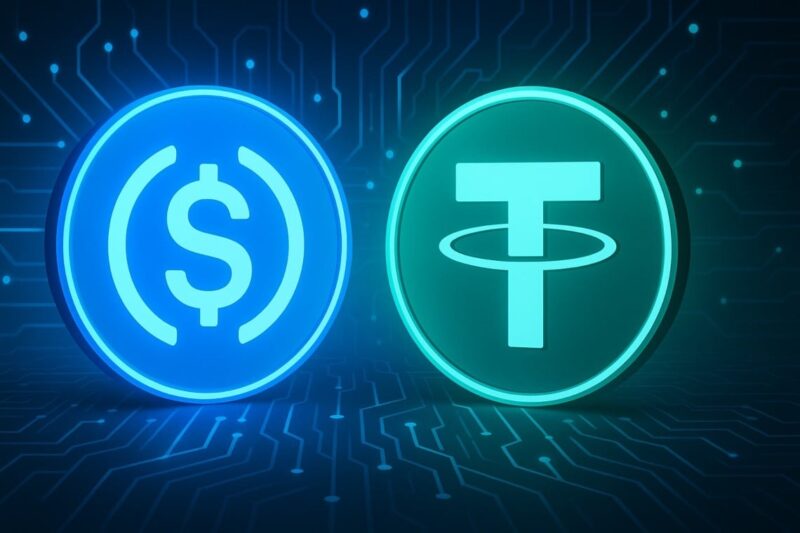
The entry of traditional banks into the stablecoin market could reshape the competitive landscape for digital finance. Existing players such as Tether and Circle have built significant market presence through retail focused offerings, while banks are expected to concentrate on institutional use cases. The issuance of G7 pegged tokens would likely target interbank settlements, corporate payments, and large scale trade finance operations.
Bloomberg Intelligence analysts said that the impact on liquidity could be profound. Stablecoins backed by major banks and supervised by regulators would likely attract institutional investors who have so far remained cautious about privately issued tokens. These developments could also influence central bank digital currency (CBDC) strategies, as governments assess whether private sector solutions can complement or compete with official digital money.
Cross Border Settlement and Interoperability
One of the key goals of the proposed project is to create a unified framework for cross border settlements. Traditional international transfers often involve multiple intermediaries, time zone delays, and high fees. A G7 pegged stablecoin network would eliminate many of these inefficiencies by allowing instant transfers between participating institutions. The technology would rely on distributed ledgers shared among regulated entities to ensure transparency and compliance.
This approach is inspired by the growing interest in hybrid settlement models that blend private and public infrastructure. Some pilot programs in Asia and the Middle East have already demonstrated the feasibility of using asset backed tokens for trade financing and supply chain settlements. Financial experts point out that similar initiatives have successfully reduced transaction friction and improved liquidity management for multinational corporations.
Indirect Reference to Emerging Asset Models
While large banks drive this initiative, analysts have noted that the concept bears resemblance to several emerging digital asset models designed to preserve value stability through diversified collateral. In certain markets, institutional desks have already experimented with tokenized instruments backed by mixed reserves of fiat and commodities. These mechanisms serve as test beds for new settlement systems that operate independently from central bank issuance but maintain stability through transparent reserve management.
Such developments reflect a broader evolution toward asset backed digital units that function as intermediaries between fiat and crypto markets. Institutional investors are particularly drawn to structures that combine transparency, yield potential, and price predictability. The growing adoption of these instruments has quietly influenced discussions within major financial centers about how digital assets can coexist with regulated stablecoins without disrupting monetary order.
Central Bank Perspectives
Central banks are watching these developments with a mixture of caution and interest. The Bank of England and the European Central Bank have both emphasized the need for proper segregation of customer assets and full reserve backing for any private digital currency. At the same time, officials recognize that bank issued stablecoins could accelerate innovation and improve efficiency in wholesale payments.
In Japan and Canada, policymakers have encouraged pilot projects under tight supervision to assess how tokenized settlements could integrate into national payment frameworks. These early experiments are helping regulators understand how digital assets affect liquidity, credit transmission, and systemic risk. The results are expected to guide the next phase of global financial digitization, balancing competition and oversight in the emerging ecosystem.
The Road to Implementation
The banks involved are currently in exploratory stages and are expected to submit technical proposals by early 2026. Industry sources suggest that the pilot phase will focus on transactions denominated in dollars, euros, and pounds before expanding to yen and Canadian dollar pairs. Each token would be fully backed by cash or short term government securities held with the respective central bank, ensuring parity with underlying fiat currencies.
Technology partners specializing in blockchain infrastructure have been engaged to develop the operational architecture. These firms are tasked with designing a permissioned network capable of handling high volumes with minimal settlement risk. Early reports indicate that the system will feature built in compliance tools for anti money laundering and transaction monitoring, a key requirement for regulatory approval.
Conclusion
The exploration of G7 pegged stablecoins by major banks marks a pivotal step in the convergence of traditional finance and digital innovation. By combining regulatory oversight with technological efficiency, this initiative could redefine the mechanics of cross border payments and reduce systemic friction in the global financial system. The project’s success will depend on striking a balance between innovation and stability while maintaining public trust in digital money.
As financial institutions move forward, the lessons learned from earlier asset backed digital instruments will likely inform their approach. The future of stablecoins lies in frameworks that offer security, transparency, and interoperability across markets. If executed effectively, these developments could usher in a new era of efficiency and resilience in international finance.