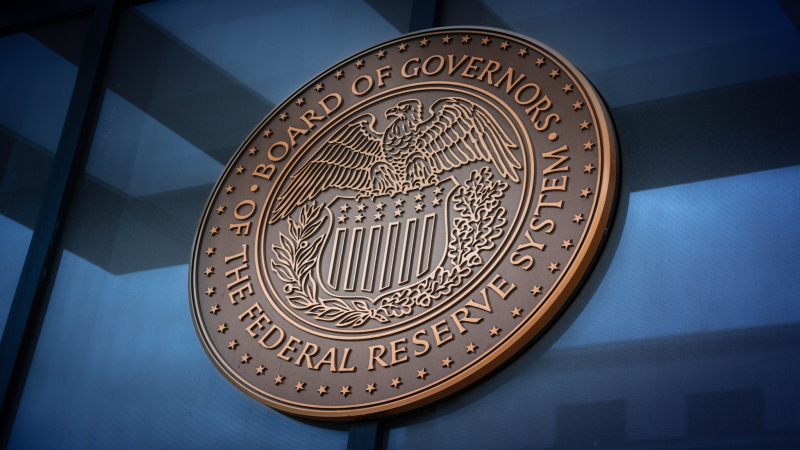
The U.S. Federal Reserve has identified artificial intelligence as a growing potential risk to financial stability, marking the first time the technology has featured prominently in its semiannual survey of market participants. The findings, released in the Fed’s Financial Stability Report, reveal that 30 percent of respondents now consider AI-driven market activity a potential source of instability within the next 12 to 18 months. The concern stems from the rapid rise in equity valuations tied to AI-related sectors, and fears that a sudden reversal in investor sentiment could lead to sharp losses across broader markets.
The report highlights how investor optimism surrounding AI’s economic promise has contributed to record gains in technology stocks, raising questions about inflated asset prices and systemic leverage. Officials cautioned that sentiment-driven rallies, if unsupported by fundamentals, could amplify volatility and expose vulnerabilities across hedge funds, insurers, and credit markets. Despite these risks, the Fed noted that banks and broker-dealers remain well capitalized, providing some cushion against potential market shocks. Still, analysts say the inclusion of AI in the stability report underscores how deeply integrated machine learning and automation have become in trading, lending, and asset management operations.
Alongside AI-related risks, the Fed’s survey found that policy uncertainty and threats to central bank independence have overtaken global trade as leading sources of concern among financial institutions. Around 61 percent of respondents cited political unpredictability, weakened economic data access during the federal shutdown, and pressure on the Fed’s policy autonomy as key risks to market confidence. The dismissal of Fed Governor Lisa Cook and public criticism of Chair Jerome Powell by President Trump have heightened sensitivities over the institution’s ability to act independently amid political intervention. These developments, combined with persistent inflation and rising long-term interest rates, have intensified scrutiny of the Fed’s policy direction going into 2026.
Despite these challenges, the report struck a measured tone, noting that market liquidity in U.S. Treasuries has stabilised and commercial real estate prices are showing signs of levelling off after years of weakness. However, the Fed warned that large volumes of real estate debt are set to mature in the coming year, which could trigger volatility if refinancing conditions tighten. The central bank also cited rising student loan and consumer debt delinquencies as areas requiring close monitoring. While the U.S. economy continues to show resilience, the inclusion of AI as a formal financial risk signals a new phase in how technology is shaping systemic oversight.