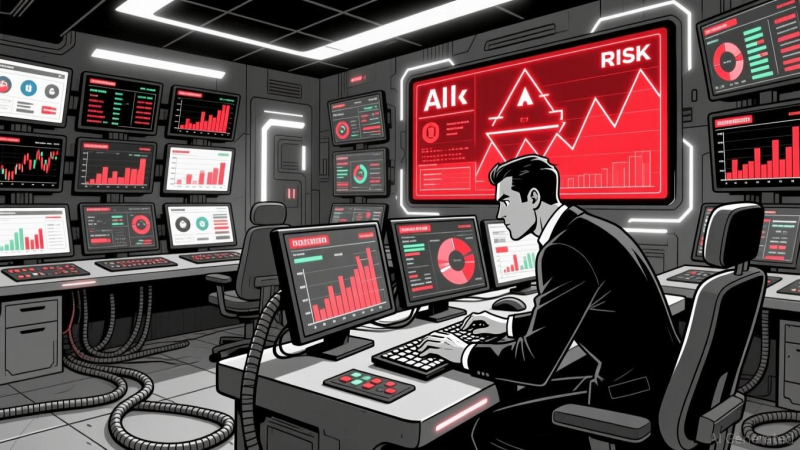
Whale activity across major blockchains is beginning to highlight a new pattern of cross chain movement that appears linked to hedging against AI driven volatility. As artificial intelligence plays a greater role in trading models and market analysis, volatility spikes have become more frequent during periods when algorithmic systems react simultaneously to global signals. Large holders are now shifting assets across multiple chains to position for these conditions, creating routes that analysts interpret as hedging strategies.
These movements reflect a more sophisticated approach to liquidity management among whales. Instead of remaining concentrated on a single chain, large wallets are distributing capital across networks that offer different liquidity depths, stable asset pools, and transaction speeds. This diversified routing suggests whales are preparing for rapid shifts in market conditions that can be triggered by sudden AI based trading reactions.
Why whales are hedging against AI related volatility
AI driven trading systems process market data at speeds far beyond human capability. When these systems detect changes in macro signals, order flow, or sentiment, many of them react simultaneously. This creates short but intense periods of volatility across digital asset markets. Whales, who manage large positions, often hedge in advance to ensure they can navigate these rapid shifts without incurring significant losses.
One of the primary hedging strategies involves spreading assets across chains that offer strong stablecoin liquidity and faster settlement environments. This ensures whales can shift positions quickly when AI systems begin moving markets. By allocating capital into multiple stable pools or synthetic dollar assets, whales reduce their exposure to price swings while maintaining flexibility.
Another reason whales are hedging is the increasing alignment between AI sentiment signals in traditional markets and price movements in digital assets. As correlations strengthen, volatility driven by global news or economic data can spill over into crypto markets more rapidly. Whales preparing for these events use cross chain movements to position efficiently before volatility expands.
How analysts detect cross chain hedging behavior
On chain analytics platforms identify cross chain whale routes by monitoring large transactions that bridge assets between blockchains. These transfers often occur in structured patterns, where capital flows from native assets into stablecoins, moves across a bridge, and is redeployed on a secondary chain. When many whales follow similar routes within a narrow time frame, analysts interpret it as coordinated hedging.
Recent tracking has shown whales consolidating assets on chains with deep USD liquidity before distributing them across networks with favorable yield opportunities or safer trading environments. The synchronized nature of these movements suggests algorithmic triggers recognizing rising volatility conditions linked to AI based trading systems.
The rebalancing pattern typically includes movement into chains with lower transaction congestion or stablecoin pools that can absorb large inflows. This allows whales to preserve liquidity options while minimizing execution risk.
Why cross chain strategies help manage rapid volatility changes
Cross chain routes give whales more tools to navigate unpredictable markets. By using liquidity from multiple networks, whales reduce dependence on a single chain’s trading conditions. If one market becomes unstable, assets held on alternative chains can be used to hedge or redeploy capital without delay.
Additionally, some blockchains offer specialized financial products, deeper derivatives markets, or more efficient automated market makers. Whales can allocate assets strategically across these venues to remain agile. During AI driven volatility spikes, this agility becomes essential. Diversified positioning helps mitigate large drawdowns and provides a buffer while markets adjust.
Cross chain strategies also help whales capture arbitrage opportunities created during periods of rapid price dislocation. When AI systems react to signals at high speed, price gaps across exchanges and chains can widen temporarily. Whales positioned across networks can exploit these gaps effectively.
Could cross chain hedging become a long term trend among whales
The recent pattern suggests cross chain hedging may become a permanent feature of whale strategy. As AI based trading systems continue to expand, volatility may arrive more frequently and with less warning. Whales that operate across several chains gain a structural advantage by maintaining access to diverse liquidity pools and reducing operational risk.
However, long term adoption will depend on improvements in bridging security, cross chain settlement reliability, and the development of unified liquidity layers. If these areas continue to advance, cross chain hedging may evolve into a standard practice for large digital asset holders.
Conclusion
Whale activity across multiple blockchains indicates a rising focus on hedging against AI driven volatility swings. By moving assets through cross chain routes, whales are positioning for rapid market changes and preserving liquidity flexibility. These patterns highlight the growing intersection between AI trading dynamics and strategic on chain positioning.