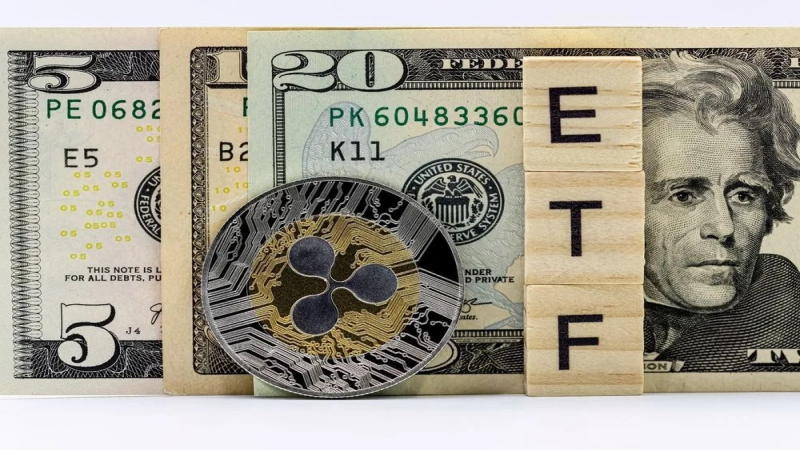
Investor positioning within crypto exchange traded funds is showing signs of rotation as capital increasingly shifts away from bitcoin and ether products toward funds linked to XRP. Recent market commentary highlighted by CNBC points to a growing preference among institutional investors for XRP exposure through regulated ETF structures. Analysts tracking ETF flows say XRP focused products have begun to post stronger relative inflows compared with established bitcoin and ether funds, suggesting a reassessment of where long term value may lie. The shift comes at a time when investors are placing greater emphasis on regulatory clarity and real world utility rather than purely narrative driven assets. ETFs have played a central role in this transition by offering transparent access to digital assets within familiar investment frameworks.
Market participants note that ETF flows often reflect institutional conviction more clearly than spot market trading, where short term speculation can dominate price action. XRP’s appeal is increasingly tied to its role in cross border payments and settlement infrastructure, areas where speed and cost efficiency remain critical. Unlike proof of work networks, XRP’s design has long focused on facilitating high volume financial transfers, aligning it more closely with enterprise and banking use cases. Analysts say this positioning resonates with institutions seeking exposure to blockchain applications tied to payments rather than store of value narratives alone. As capital rotates, XRP ETFs are benefiting from demand driven by investors looking to balance growth potential with regulatory alignment.
Technical and regulatory developments have also contributed to renewed interest in XRP linked products. Improvements across the XRP Ledger have enhanced transaction throughput and reliability, reinforcing its reputation as a network built for operational scale. At the same time, the emergence of compliant ETF structures has lowered barriers for institutions that previously avoided direct exposure to digital assets. Market observers point out that while bitcoin and ether remain dominant by market capitalization, ETF investors are increasingly selective, favoring assets with clearer use cases and lower operational friction. This has resulted in differentiated flow patterns rather than broad based crypto exposure.
The reallocation of capital highlights a broader shift in how digital assets are being evaluated within portfolios. Rather than treating crypto as a single risk bucket, investors are segmenting exposure based on function, infrastructure maturity, and regulatory visibility. XRP’s recent ETF inflows suggest it is being viewed as a practical component of future financial systems rather than a speculative alternative. While the trend does not signal an exit from bitcoin or ether, it underscores evolving preferences within institutional capital. As ETF flows continue to shape market structure, XRP’s growing presence reflects changing priorities across the digital asset investment landscape.