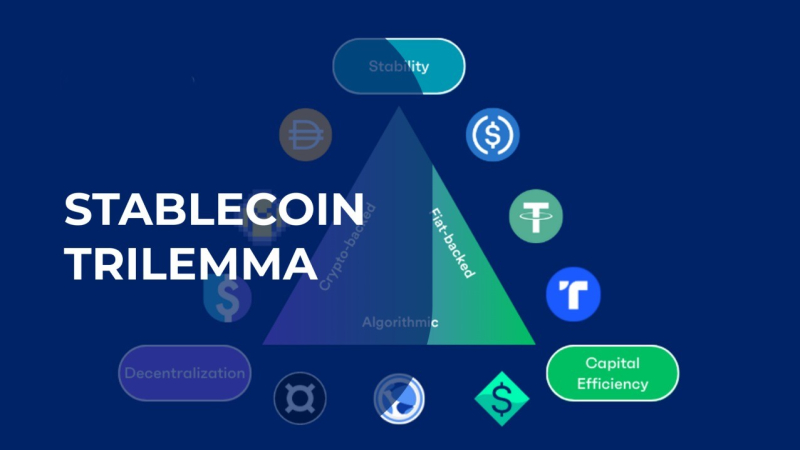
Stablecoins promise a simple idea. A digital unit that holds value, moves instantly, and works everywhere. In practice, delivering on all three goals at once has proven difficult. As stablecoins grow more important to markets and policymakers, a clear constraint is emerging. Scale, safety, and sovereignty cannot be fully maximized at the same time.
This tension is not theoretical. It shows up in regulation, market structure, and design choices. Every major stablecoin implicitly prioritizes two of these goals while compromising on the third. Understanding this trilemma explains why policy debates feel intense and why stablecoin models are starting to diverge.
Why Scale Conflicts With Control
Scale is what makes stablecoins powerful. Global usage, deep liquidity, and constant availability allow them to function as settlement tools across markets and borders. Once scale is achieved, stablecoins begin to resemble infrastructure rather than products.
This is where tension begins. Large scale private money reduces the ability of any single authority to influence how it is used. Transaction flows span jurisdictions, platforms, and regulatory regimes. Oversight becomes fragmented.
Policymakers worry less about technology and more about loss of influence. A stablecoin used at global scale can shape payment behavior and liquidity patterns independently of domestic policy goals. That makes scale inherently uncomfortable for sovereign authorities.
Safety Requires Constraints
Safety means confidence that a stablecoin will hold value in all conditions. That confidence depends on reserve quality, redemption clarity, governance, and operational resilience.
Delivering safety usually requires constraints. Limits on issuance, conservative reserve composition, and strong oversight reduce risk. These features improve trust, especially for institutions.
But safety measures slow expansion. Strict rules reduce flexibility and increase costs. Some use cases become uneconomic. Growth becomes deliberate rather than explosive.
This is the trade off. Maximizing safety often caps scale. Stablecoins that prioritize safety tend to grow steadily but cautiously.
Sovereignty Is About Monetary Influence
Sovereignty refers to a state’s ability to shape monetary conditions within its economy. This includes controlling the unit of account, influencing liquidity, and transmitting policy decisions effectively.
When stablecoins are widely used, especially if denominated in a foreign currency or operating outside domestic frameworks, sovereignty weakens. Even partial displacement in key sectors can reduce policy effectiveness.
This is why governments focus on denomination, governance, and location of control. They are not only managing risk. They are protecting influence.
Stablecoins that respect sovereignty usually operate within tight regulatory boundaries. That alignment improves acceptance but limits cross border ambition.
How the Trilemma Forces Design Choices
Every stablecoin model reflects a choice within this trilemma.
Some prioritize scale and safety. They aim for broad usage and strong backing but operate in ways that challenge sovereignty, especially outside their home jurisdiction.
Others prioritize safety and sovereignty. They integrate closely with domestic frameworks and regulators but sacrifice global reach.
A third group prioritizes scale and sovereignty in specific regions, accepting higher risk in exchange for speed and reach.
There is no free option. Picking two defines the third.
Why Regulation Makes the Trilemma Visible
As regulation matures, the trilemma becomes harder to ignore. Clear rules force issuers to declare priorities implicitly.
If a stablecoin complies fully with domestic frameworks, it signals commitment to safety and sovereignty. If it pushes global adoption aggressively, it signals tolerance for regulatory friction.
Markets respond accordingly. Institutions gravitate toward safety and clarity. Some users prefer scale and neutrality. Fragmentation increases.
This is not failure. It is differentiation driven by constraints.
The Role of Public Digital Money
Public digital money enters the picture as a counterbalance. Central bank issued digital options prioritize safety and sovereignty by design. Scale is possible domestically but limited internationally.
These systems coexist with stablecoins rather than replacing them. Each occupies a different point in the trilemma.
The interaction between public and private digital money will shape future settlement behavior. The trilemma ensures that no single system dominates all use cases.
What This Means for Markets
For markets, the trilemma explains why stablecoin liquidity is consolidating around certain models while others struggle. It explains why some stablecoins gain institutional trust but remain regionally focused.
It also explains why policy debates are intense but unresolved. The constraints are structural. There is no perfect answer.
Participants must choose which trade offs they accept.
What to Watch Going Forward
Watch which stablecoins gain access to regulated financial infrastructure. That signals prioritization of safety and sovereignty.
Watch which stablecoins dominate cross border digital activity. That signals prioritization of scale.
Also watch how these groups interact. Interoperability may reduce some trade offs, but it will not eliminate the trilemma.
Conclusion
The stablecoin trilemma forces hard choices. Scale, safety, and sovereignty cannot all be maximized at once. Every stablecoin design reflects a decision about which goals matter most. Understanding this constraint clarifies regulatory debates, market behavior, and why stablecoin models are diverging rather than converging.