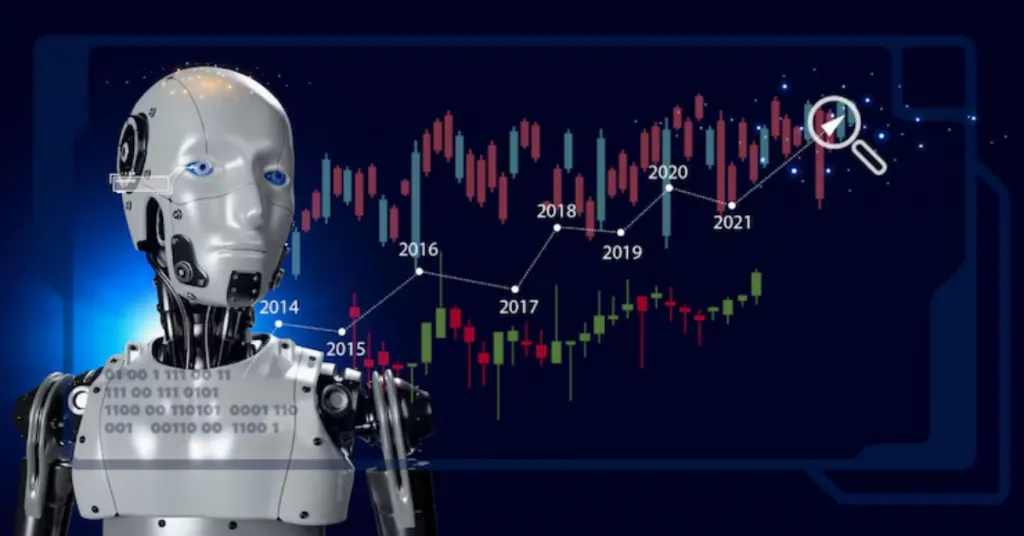
AI powered trading tools have officially entered a new era and the markets are reacting in real time. What started as a handful of automated strategies has evolved into a full ecosystem of predictive engines, smart order routers and sentiment analyzers that are changing how traders think, react and manage risk. This week delivered another wave of updates that pushed AI trading deeper into the spotlight.
The buzz came not from a single headline but from a stream of new integrations, performance reports and platform expansions. From equities to forex to crypto, more traders are leaning on AI enhanced tools to navigate volatile conditions. As adoption grows, market behavior itself is shifting in ways that are fast, data driven and increasingly automated.
Why AI Tools Are Transforming Trading Right Now
The most important reason for the surge in AI trading adoption is the growing need for speed and accuracy. Markets are moving faster than ever, and traders want tools that interpret patterns instantly. AI engines process millions of data points in seconds and push out signals that outperform manual analysis. In a world where micro trends can move entire markets, that speed becomes a decisive edge.
New AI systems are also becoming more accessible. Retail platforms now offer machine driven sentiment indicators, pattern detection systems and predictive models that were once limited to institutions. This democratization has shifted the balance of power across markets as more traders gain access to advanced tools that expand their capabilities.
Performance data is adding fuel to the momentum. Several trading desks reported improved execution quality when combining AI routed orders with traditional strategies. These improvements include reduced slippage, better timing on breakouts and more accurate volatility assessments. This kind of measurable impact is pushing broader adoption across asset classes.
Markets Adjust to AI Driven Trading Patterns
Financial markets are reacting to the rise of AI in noticeable ways. Order books show tighter clustering around key ranges as algorithms try to anticipate each other’s moves. Liquidity pockets shift faster as AI systems reposition based on fresh data. Volatility spikes become more controlled as automated systems smooth out reactions during high pressure events.
Equity markets saw rising interest in AI influenced sectors as traders sought stocks benefiting from technological upgrades. Meanwhile, quantitative funds expanded their models to integrate new machine driven datasets. The result was a marketplace operating with more automated feedback loops than ever before.
In forex markets, AI powered decision tools helped traders navigate micro fluctuations tied to policy comments and geopolitical noise. With currency markets moving on subtle tone shifts, AI sentiment trackers gave traders an advantage by highlighting changes before price action fully reflected them.
Global Markets Observe the AI Influence
International markets tracked the AI shift with sharp attention. European traders leaned on predictive analytics to manage risk during regional policy updates. Asian markets used AI enhanced liquidity tools to handle higher frequency order flow. These global reactions showed that AI adoption is not just a US trend but a worldwide acceleration.
Regulators also started watching closely as AI driven trading becomes more influential. While no major restrictions surfaced this week, discussions about transparency, fairness and model oversight became more common. Markets know that regulation will eventually catch up, but the innovation cycle is moving faster than policy for now.
Institutional adoption rose across banks, hedge funds and asset managers. Many expanded their AI trading pipelines and connected them to legacy systems. This merging of old and new infrastructure created hybrid environments where human oversight and machine prediction operate side by side.
Crypto Traders Lean Into the AI Wave
Crypto markets felt the AI shift instantly. Bitcoin trading bots saw higher usage as traders embraced models designed to detect accumulation zones, liquidity walls and whale activity ahead of time. These tools helped traders manage volatile conditions with more confidence and accuracy.
Stablecoin flows reflected higher automation as well. AI driven portfolio allocators pushed capital across exchanges based on risk metrics, funding rates and sentiment maps. Altcoins saw increased algorithmic trading volume, especially in tokens tied to AI, infrastructure or high volatility narratives.
DeFi platforms joined the wave by integrating smart execution layers that automate routing between liquidity pools. Some protocols launched predictive vaults that adjust yields based on machine generated insights. These innovations showed how deeply AI is embedding itself into the crypto ecosystem.
Conclusion
AI driven trading tools are reshaping market behavior by accelerating decision making, refining execution and altering liquidity patterns. From equities to crypto, traders are adopting machine enhanced strategies to stay competitive in faster markets. As AI continues to evolve, its influence will reshape the next phase of global trading dynamics.