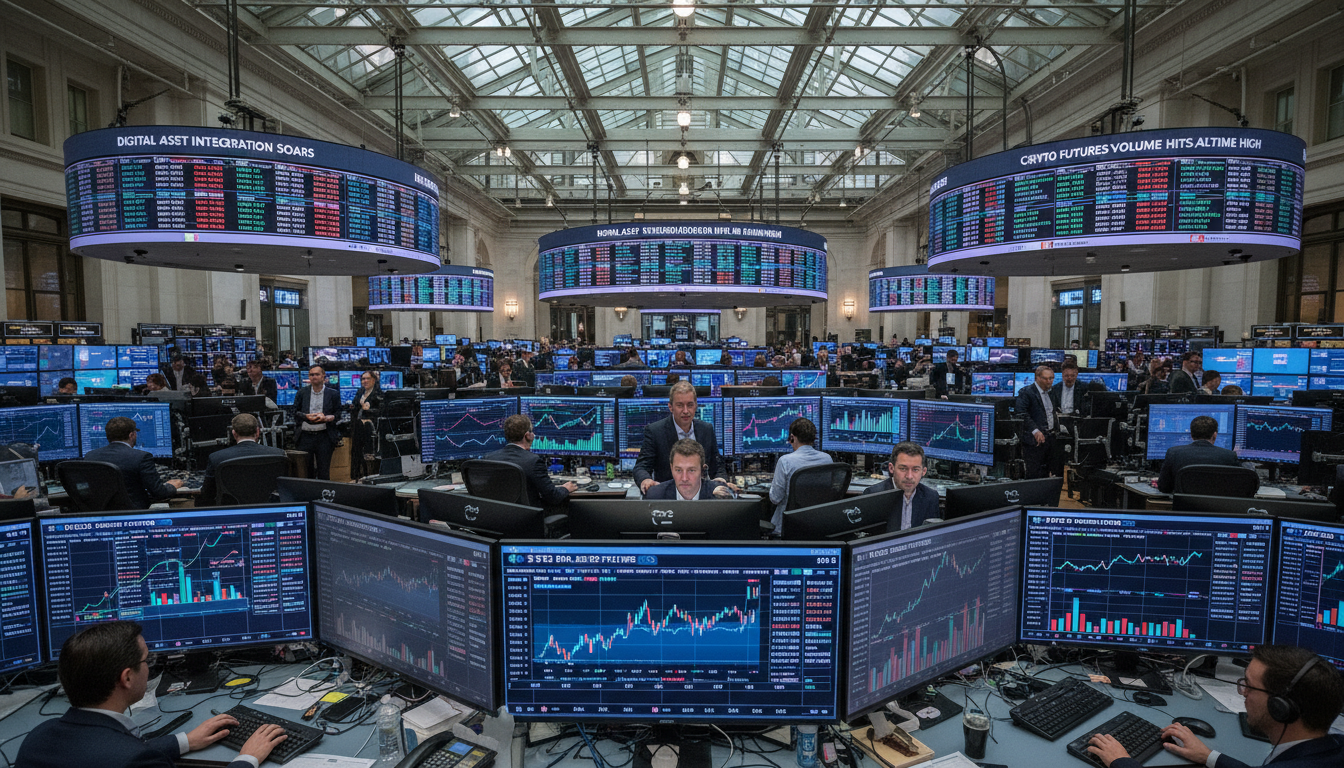
CME and Nasdaq Expand Futures Offerings
Derivatives desks are treating the next listing wave as a test of how quickly mainstream venues can package broad crypto risk. Today, executives and brokers are framing the rollout as a way to consolidate demand that is already flowing through listed crypto products and over the counter swaps. In the middle of the order flow, crypto index futures are being positioned as a bridge between single asset contracts and diversified benchmarks, with BTC, ETH, SOL, and XRP cited in early marketing. Live market conditions, including wider intraday ranges, are pushing more attention toward margin efficiency and predictable clearing. An Update from major futures intermediaries has focused on onboarding timelines, block trade procedures, and how client suitability checks will be handled.
Features of the New Crypto Index Futures
Product design is expected to lean on standardized reference rates and a clearing model familiar to macro funds. Today, the pitch centers on regulated exposure, with compliance teams emphasizing position limits, surveillance, and the ability to hedge spot or ETF holdings inside one risk framework. For institutional risk managers, crypto index futures may reduce operational friction compared with maintaining multiple venue connections across coins and stablecoin rails. Live discussions on desk calls have also compared the contract behavior with BTC futures, especially around roll costs and basis dynamics when volatility spikes. An Update circulated by some brokers highlights how contract sizing, settlement methodology, and eligible collateral policies can alter who can trade the product at scale.
Impact on Cryptocurrency Market
Cross asset traders are watching whether index pricing changes correlations between majors and high beta names. In recent cycles, the altcoin season index has often moved alongside liquidity conditions, and a listed basket could amplify that link by making rotation trades easier to express. For context on how liquidity signals can spill into crypto flows, market participants have been comparing this listing window with stablecoin supply changes described in Tether mints 1 billion USDT, while live positioning data will matter more if the contracts attract systematic funds that rebalance frequently. Today, an Update from market makers has stressed that deeper hedging tools can tighten spreads, but it can also speed up deleveraging when funding turns.
Investor Reactions and Predictions
Buy side commentary has centered on whether index futures will provide cleaner hedges during sharp sentiment swings. Portfolio managers tracking the fear greed index crypto are focusing on how fast risk can be reduced when sentiment flips, rather than on directional bets alone. In parallel, some desks are calibrating coin specific risk after recent price action in ether, including analysis from Ethereum rally near 2.4K shows exhaustion signs, while live feedback from execution teams has highlighted the importance of transparent settlement and clearing, because hidden mark methodology can distort hedges. Today, an Update from prime brokers has emphasized that larger institutional tickets will likely depend on margin offsets, cross margin rules, and the final list of eligible counterparties.
Future of Crypto-Linked Financial Products
The broader question is how quickly regulated venues will extend beyond simple benchmarks into yield, volatility, and multi asset structures. Today, product planners are also looking at how collateral and funding interact with dollar conditions, because tight reserves can change the cost of carrying derivatives. In that context, the Federal Reserve Board provided fresh detail on bank reserve management practices in its release of survey results, which is available at Federal Reserve Board survey release on reserve strategies. Live market microstructure will influence whether crypto index futures become the default hedging layer for funds that hold spot, ETFs, or tokenized exposure. An Update from clearing members has suggested that adoption will track how efficiently positions can be margined, monitored, and reported across venues.