

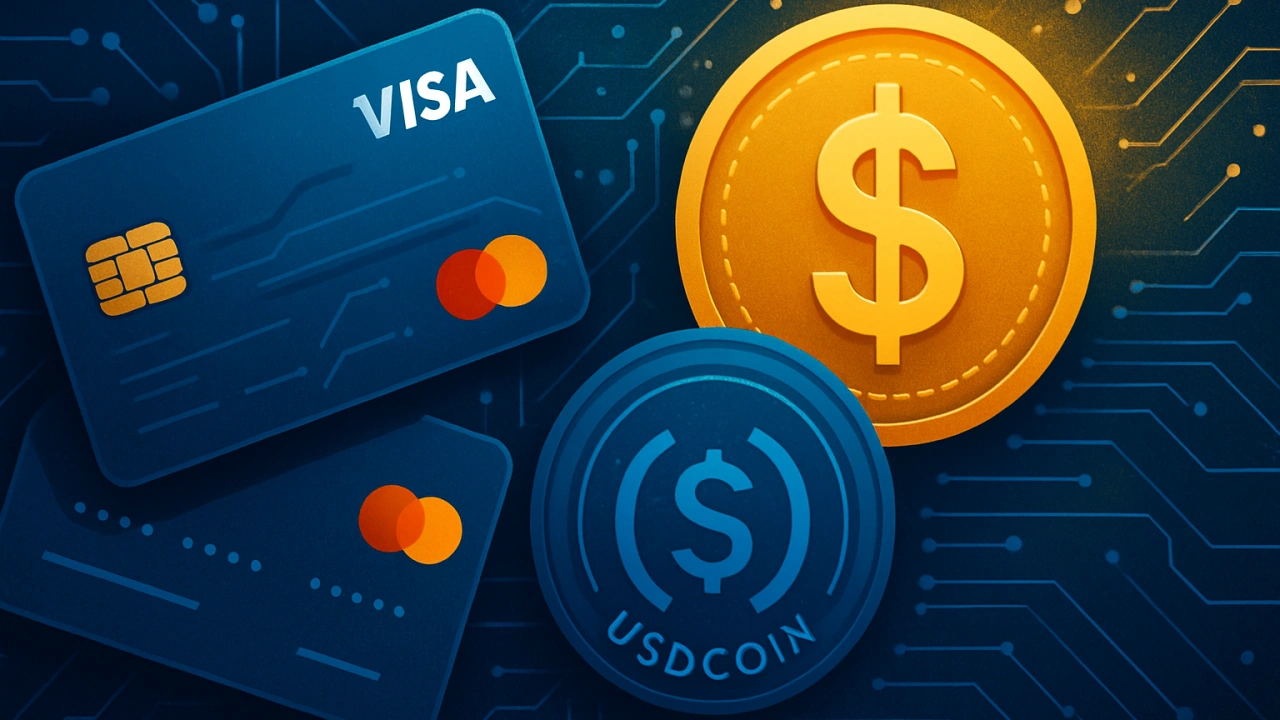
Mastercard has begun testing a new settlement model that integrates regulated stablecoins into its card payment infrastructure, marking a significant shift in how global transactions could be processed in the future. The initiative is part of a broader effort to modernize payment systems by moving interbank settlement away from traditional financial rails and toward blockchain based digital currency networks. While consumers will continue to pay using cards as usual, the backend systems that process and settle those payments may increasingly rely on tokenized forms of money designed to improve speed and efficiency.
The pilot program is being developed in collaboration with Mastercard, SoFi Technologies, and its Galileo platform, which provides the technological infrastructure for digital banking and payment services. At the center of the trial is SoFiUSD, a dollar backed stablecoin issued by SoFi Bank. This digital asset is designed to maintain a stable value equivalent to the US dollar while enabling faster settlement between financial institutions. The goal is to test whether stablecoins can improve liquidity management and reduce the time required to complete card based transactions.
According to the companies involved, the pilot is part of Mastercard’s Multi Token Network strategy, which focuses on using tokenized money to streamline global payment flows. In traditional systems, card transactions often take several days to fully settle between banks, requiring complex intermediary processes. By contrast, stablecoin based settlement could allow near instant clearing of funds, reducing operational friction and potentially lowering costs for financial institutions. Mastercard’s approach aims to preserve the existing consumer experience while upgrading the underlying financial infrastructure.
The move also reflects growing competition in the digital payments sector, particularly as other major players explore similar technologies. Rival networks such as Visa have already tested stablecoin based systems for cross border payments and merchant settlements, signaling a broader industry shift toward blockchain enabled financial services. Analysts suggest that as regulatory frameworks around stablecoins continue to evolve, traditional payment networks may increasingly adopt digital assets to remain competitive in a rapidly changing financial landscape.
The integration of stablecoins into mainstream payment systems represents a broader transformation in global finance, where digital assets are moving beyond cryptocurrency markets into regulated financial infrastructure. If successful, Mastercard’s pilot could pave the way for widespread adoption of tokenized settlement systems across banking and retail networks. While the technology is still in its early stages, its potential to enhance efficiency, reduce transaction times, and improve liquidity management is driving strong interest from both financial institutions and technology providers.