

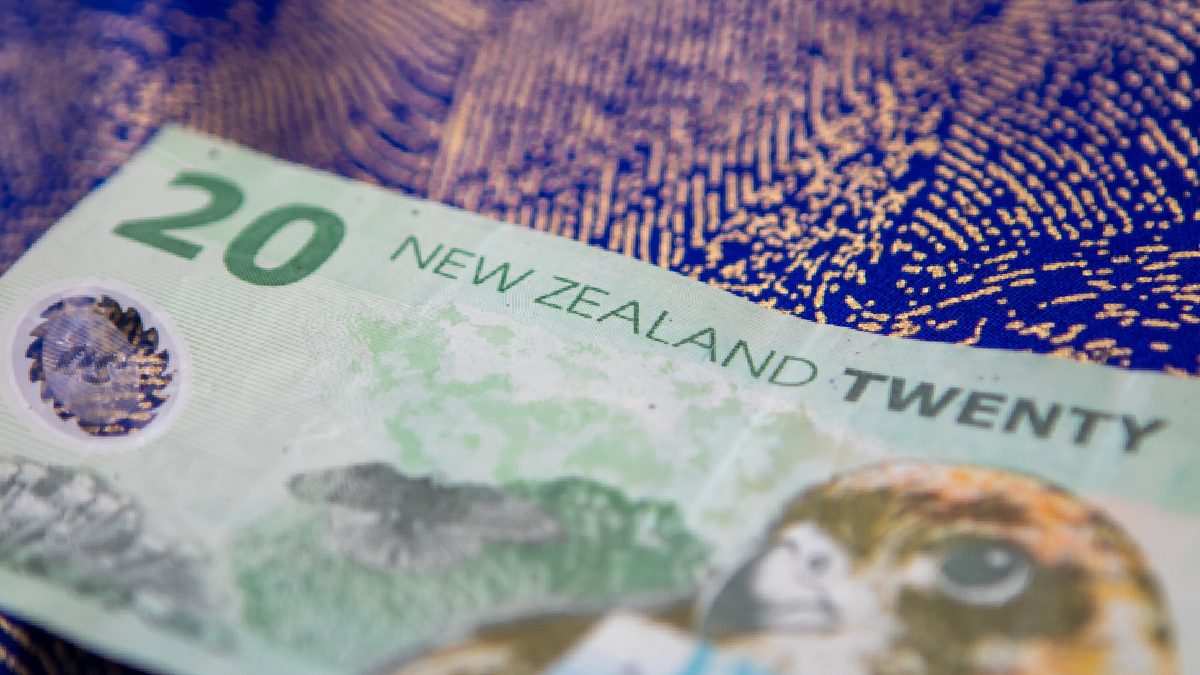
The New Zealand dollar has softened against the US dollar, with NZD/USD easing toward the 0.5850 level as global markets continue to favor safe haven assets amid heightened geopolitical uncertainty. The US dollar’s recent strength, driven by renewed risk aversion linked to Middle East tensions, has placed additional pressure on higher beta currencies such as the New Zealand dollar, which typically performs better in stable, risk on environments. Despite this short term weakness, market analysts remain divided on the medium term direction, with some forecasting a gradual recovery later in 2026 as global monetary policy dynamics begin to shift.
According to Rabobank, the New Zealand dollar has been one of the stronger performers among G10 currencies this year, supported largely by expectations that the Reserve Bank of New Zealand will maintain a relatively hawkish policy stance. Recent inflation data has reinforced the view that domestic price pressures remain persistent, prompting markets to price in more than 100 basis points of additional tightening over the coming year. This has provided structural support for the currency, even as external global factors continue to create volatility in the short term. Rabobank notes that the New Zealand dollar’s resilience reflects a combination of strong relative rate expectations and improved domestic economic indicators compared with earlier periods of weakness.
However, the outlook is not without caution. The bank highlights that much of the anticipated monetary tightening may already be reflected in current financial conditions, meaning the upside potential for the currency in the near term could be limited. Additionally, global risk sentiment remains a key driver, and any escalation in geopolitical tensions is likely to trigger renewed demand for the US dollar, putting further downward pressure on NZD/USD. In such scenarios, safe haven flows tend to dominate currency markets, often overwhelming domestic fundamentals and interest rate expectations.
Looking further ahead, Rabobank maintains a more constructive view for the New Zealand dollar later in 2026. The bank expects that potential Federal Reserve rate cuts in the United States could weaken the dollar’s dominance and allow the NZD to recover some ground. Under this scenario, NZD/USD could gradually edge higher as global monetary conditions become more balanced and risk appetite improves. However, this recovery is expected to be gradual rather than sharp, reflecting lingering uncertainty in global markets and the sensitivity of the currency to shifts in investor sentiment.
In the short term, analysts continue to emphasize that the direction of NZD/USD will largely depend on external factors rather than domestic developments alone. While New Zealand’s inflation and interest rate outlook provide underlying support, global risk conditions remain the dominant force shaping currency flows. As a result, the New Zealand dollar is likely to remain under pressure in the immediate term, with any sustained recovery dependent on a broader stabilization in geopolitical conditions and a shift away from safe haven demand for the US dollar.