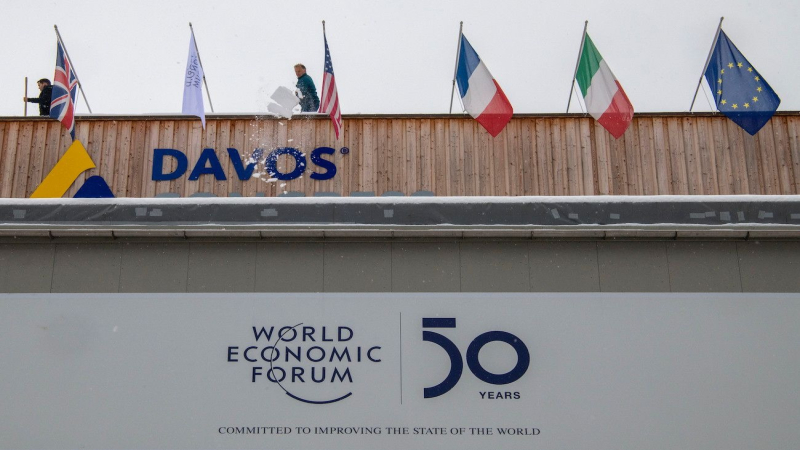
Tokenization is beginning to move beyond pilot programs and into real financial activity, according to policymakers and industry leaders speaking this week at the World Economic Forum in Davos. Panel participants said falling costs, faster settlement, and reduced cross-border friction are helping tokenized assets gain practical traction, particularly in payments and settlement. Rather than disrupting existing systems, tokenization is increasingly being framed as an upgrade to current market infrastructure. Financial market operators highlighted early institutional use cases, including tokenized short-term instruments and settlement processes, as signs that coordinated adoption across issuers, investors, and infrastructure providers is taking shape. The discussion suggested that tokenization has quietly progressed while attention focused elsewhere, positioning it for broader adoption as technical and operational hurdles ease. Speakers emphasized that scale will depend less on experimentation and more on whether tokenized systems can deliver measurable efficiency, reliability, and access improvements within established financial frameworks.
Stablecoins were repeatedly cited as the first tokenized product to achieve meaningful scale, particularly in cross-border payments. Industry executives described stablecoins as a working example of how tokenized representations of value can reduce settlement delays and transaction costs while expanding access across jurisdictions. Cross-border transfers, trade settlement, and liquidity management were identified as areas already showing tangible benefits. At the same time, panelists stressed that stablecoin growth must be accompanied by clear guardrails. Banks and central banks argued that trust and financial stability require oversight, especially as private issuers gain influence. Policymakers warned that unregulated private money could weaken monetary control, particularly in smaller economies, while acknowledging that regulated tokenized money can coexist with public systems. The consensus view was that regulation, if designed properly, can act as an enabler by providing confidence and consistency rather than limiting innovation.
Looking ahead, speakers pointed to trust, regulation, and yield as the factors that will determine which tokenized products scale next. Debate emerged around whether stablecoins should offer yield, with some arguing that rewards improve competitiveness and consumer outcomes, while others saw tokens primarily as neutral payment instruments rather than savings vehicles. Tokenization of real-world assets such as collateral and securities was also highlighted as an area of growing momentum, provided it delivers clear operational advantages. While some participants raised broader questions about bitcoin and alternative monetary models, central bank officials reiterated the need for a public anchor in any future financial system. Despite differing views, the overall tone was cautiously optimistic, with many agreeing that tokenization and stablecoins are set to play a more visible role in global finance over the coming year.