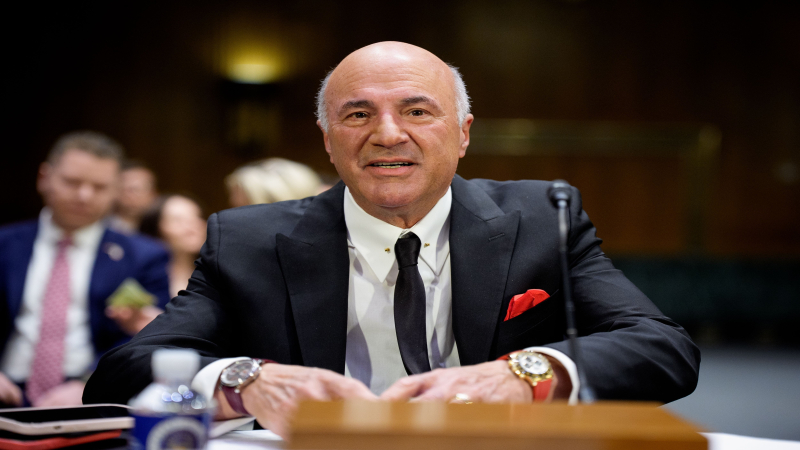
Investor and media personality Kevin O’Leary is significantly expanding his exposure to crypto and artificial intelligence by focusing on physical infrastructure rather than digital tokens. O’Leary said he now controls roughly 26,000 acres of land across multiple regions, including 13,000 acres in Alberta and another 13,000 acres in locations currently moving through permitting. His strategy centers on preparing low cost, utility ready sites that can support bitcoin mining operations, cloud computing facilities, and future AI data centers. Rather than building the facilities himself, O’Leary plans to lease fully permitted sites to operators once power, water, fiber, and air rights are secured. He views this approach as a real estate style play, arguing that access to land and long term power contracts is becoming the most critical bottleneck in the next phase of digital infrastructure expansion.
O’Leary believes the current surge in announced data center projects masks deeper execution risks across the sector. He estimates that nearly half of the data centers announced over the past three years will never be built due to a lack of secured land, power agreements, and regulatory approvals. In his view, the market has entered a land grab phase without sufficient understanding of the complexity involved in bringing large scale infrastructure online. Some of the power contracts tied to his sites offer electricity pricing below six cents per kilowatt hour, which he considers more valuable over time than exposure to volatile digital assets. O’Leary already holds stakes in bitcoin mining ventures and likens the business to commercial real estate, where long term returns are driven by control of scarce inputs rather than short term price movements.
While expanding his infrastructure footprint, O’Leary has become increasingly selective about crypto assets themselves. He said institutional capital remains concentrated almost entirely in bitcoin and ether, with little appetite for smaller tokens that suffered steep drawdowns in prior market cycles. About 19 percent of his portfolio is now allocated to crypto related investments, including digital assets, infrastructure, and land. He also tied broader institutional adoption to regulatory developments in the United States, particularly legislation governing stablecoins and market structure. O’Leary argued that restrictions on offering yield for stablecoin holders discourage participation and tilt the playing field toward traditional banks. Despite ongoing debates, he remains optimistic that regulatory adjustments will eventually unlock larger institutional flows, reinforcing his belief that infrastructure, not speculative tokens, will underpin the next stage of growth in crypto and AI markets.