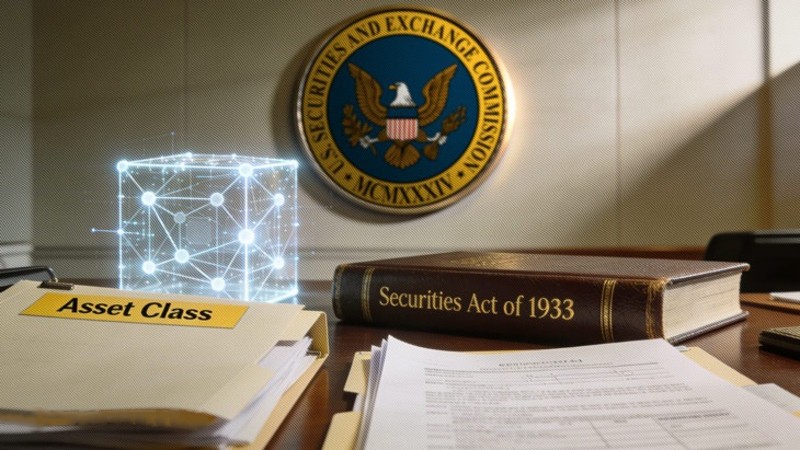
The U.S. Securities and Exchange Commission has issued fresh guidance clarifying how federal securities laws apply to tokenized securities, offering greater regulatory clarity to firms exploring blockchain based capital market infrastructure. The joint statement, released by multiple SEC divisions, addresses both issuer sponsored and third party sponsored tokenization models and underscores that existing securities laws remain fully applicable regardless of technological format.
The guidance defines tokenized securities as traditional financial instruments that qualify as securities under federal law but are represented as crypto assets with ownership records maintained partially or entirely on blockchain networks. The SEC emphasized that placing a security onchain does not alter its regulatory status. Offers and sales must comply with registration requirements unless an exemption applies, and transactions involving these instruments are treated as securities transactions.
In the issuer sponsored model, companies issue securities directly in tokenized form, integrating distributed ledger technology into their recordkeeping systems. Transfers of the token correspond with updates to official ownership records. The SEC noted that whether a security is recorded onchain or offchain does not change compliance obligations. In some structures, a digital token may serve as a representation of an underlying offchain security, with blockchain transfers triggering updates to the issuer’s master securityholder file.
The regulator also addressed third party sponsored tokenization. In custodial models, a third party holds the underlying securities and issues crypto tokens representing entitlements to those assets. Transfers of the token update entitlement records but do not change the fundamental regulatory treatment. In synthetic structures, a third party may issue a crypto asset that provides exposure to an underlying security without conferring direct ownership rights. Such arrangements may involve additional requirements, particularly when structured as security based swaps or similar instruments.
The statement follows remarks by SEC Chair Paul Atkins supporting efforts to modernize capital markets through compliant blockchain adoption. The agency has encouraged market participants to seek interpretive guidance when developing tokenization strategies.
Recent developments reinforce this direction. The Depository Trust Company received a no action letter from the SEC allowing it to launch a pilot program for tokenized securities services. Under the pilot, eligible participants may convert traditional book entry positions into tokenized entitlements within a controlled framework. Meanwhile, Nasdaq has proposed rule changes to facilitate trading of tokenized securities under the DTC pilot structure, with the SEC publishing the proposal for public comment.
Together, these steps signal a cautious but constructive regulatory stance. While innovation in tokenized securities is advancing, the SEC’s message is clear. Blockchain based formats do not create regulatory shortcuts. Market participants must structure offerings and trading systems in full alignment with established securities law principles.