Banks should not treat stablecoin yield products as a threat to their traditional business model, according to White House crypto adviser Patrick Witt, who is urging cooperation rather than confrontation between financial institutions and digital asset platforms.
Speaking in a recent interview, Witt argued that the ability of crypto platforms to share yield with stablecoin holders does not fundamentally undermine banks. Instead, he suggested that banks have the option to develop similar offerings under existing regulatory pathways. In his view, the tension between the two sectors is misplaced at a time when regulatory clarity is urgently needed.
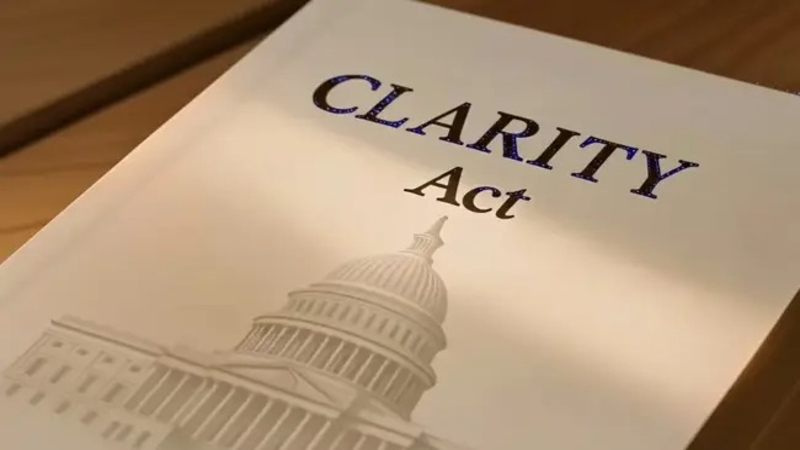
The debate over whether stablecoin issuers and crypto platforms can provide rewards to users has become a sticking point in negotiations around the proposed CLARITY Act. The bill seeks to establish clearer oversight of digital assets by defining regulatory boundaries between the Securities and Exchange Commission and the Commodity Futures Trading Commission. It would also introduce a formal asset classification framework for cryptocurrencies.
Some banking industry voices have expressed concern that stablecoin yields could attract deposits away from traditional accounts, particularly if crypto platforms are able to pass through returns generated from reserve assets. Witt countered that banks are not barred from entering the same space. He noted that many financial institutions are already exploring applications for Office of the Comptroller of the Currency charters that would allow them to provide crypto related services, including stablecoin linked products.
From the White House perspective, the disagreement is delaying broader progress. The administration’s crypto policy team is aiming to secure passage of the CLARITY Act before the 2026 midterm election cycle intensifies. Political uncertainty could complicate or even reverse current regulatory efforts if control of Congress shifts. Treasury Secretary Scott Bessent has acknowledged that a change in the balance of power in the House of Representatives would make a bipartisan deal far more difficult.
Witt described the current legislative window as limited. Lawmakers face competing priorities, and once campaign season accelerates, complex financial market structure reforms may struggle to gain floor time. For crypto markets, the absence of clear rules continues to create uncertainty for issuers, exchanges, and institutional investors.
The stablecoin yield debate highlights a broader shift in financial services. Digital dollar tokens are increasingly used not only for trading but also for payments, remittances, and treasury management. As these tokens become more integrated into mainstream finance, questions about deposit competition and interest distribution are surfacing.
Rather than viewing innovation as displacement, Witt suggested that banks could leverage their compliance infrastructure and customer trust to expand into tokenized products. If regulatory frameworks provide equal footing, traditional institutions and crypto platforms may find more opportunities for collaboration than conflict.
The outcome of the CLARITY Act negotiations will likely shape how stablecoins evolve within the US financial system. Whether banks choose to compete directly or partner with crypto firms, the direction of policy in the coming months will be critical for both sectors.