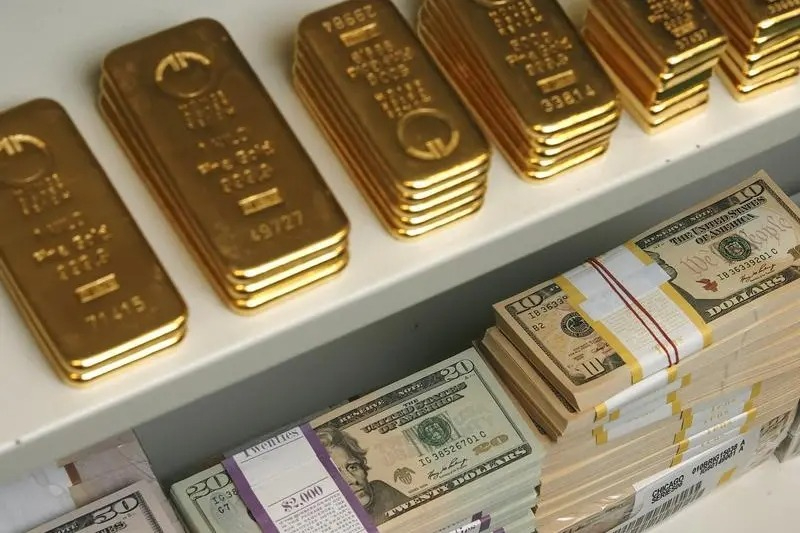
Renewed geopolitical tensions in the Middle East have triggered another wave of uncertainty across global markets, prompting investors to reconsider which assets offer the most reliable protection during periods of financial stress. Traditionally, safe haven investments include the United States dollar, government bonds, gold, and certain currencies such as the Japanese yen or Swiss franc. However, recent market movements show that these traditional refuges are behaving less predictably than in past crises. As volatility spreads across financial markets, investors are increasingly comparing the relative safety and liquidity of different defensive assets.
The U.S. dollar has emerged as one of the strongest performers during the latest market turbulence. Demand for the currency increased sharply as investors sought the safety of highly liquid assets amid escalating geopolitical risks. The dollar index, which tracks the currency against a basket of major international currencies, has risen noticeably during the week. Interestingly, the dollar strengthened even against traditional safe haven currencies such as the Swiss franc and Japanese yen. Analysts say the move reflects strong demand for short term dollar liquidity as investors adjust portfolios and secure access to funding during uncertain market conditions.
Despite the dollar’s recent strength, some analysts believe its safe haven status depends heavily on the broader economic environment. While the currency often benefits during global crises, concerns about fiscal policy, inflation, and geopolitical developments can sometimes weaken investor confidence. Recent shifts in U.S. policy debates and global economic dynamics have raised questions about whether the dollar will maintain the same level of dominance during future market shocks. Still, in the current environment, investors continue to rely heavily on the dollar as the primary source of global financial liquidity.
Government bonds, which have historically been viewed as one of the safest investments during economic turmoil, have not experienced the same strong demand in the latest market episode. Instead of attracting large inflows, bond markets have been driven primarily by inflation expectations and government borrowing concerns. Rising yields on several major sovereign bonds suggest investors are becoming cautious about the long term fiscal outlook of many economies. As governments increase borrowing to support economic activity, the traditional appeal of sovereign debt as a defensive asset may be gradually weakening.
Gold continues to maintain its reputation as one of the most trusted safe haven assets despite occasional price swings. Over the past decade, the precious metal has recorded substantial gains as investors sought protection against inflation, currency volatility, and geopolitical uncertainty. Analysts say gold’s long term role as a store of value remains intact even when short term market conditions cause temporary price fluctuations. Portfolio managers note that gold is still underrepresented in many investment portfolios compared with historical allocation levels, suggesting there may be room for increased institutional demand.
Currency markets have also shown mixed results among traditional refuge currencies. The Swiss franc and Japanese yen have not strengthened as much as expected during the latest market stress. Both currencies typically benefit during global crises, but recent political and policy developments have complicated their outlook. In Japan, uncertainty around interest rate policy has created additional volatility for the yen. Meanwhile, concerns about potential intervention by the Swiss National Bank could limit the franc’s appreciation if it rises too quickly against other currencies.
The evolving behavior of safe haven assets reflects broader structural changes in global financial markets. Investors now operate in an environment shaped by higher interest rates, rising geopolitical tensions, and shifting economic alliances. These factors are influencing how capital moves during periods of market stress and may gradually reshape the traditional hierarchy of defensive assets used by investors seeking stability during uncertain times.