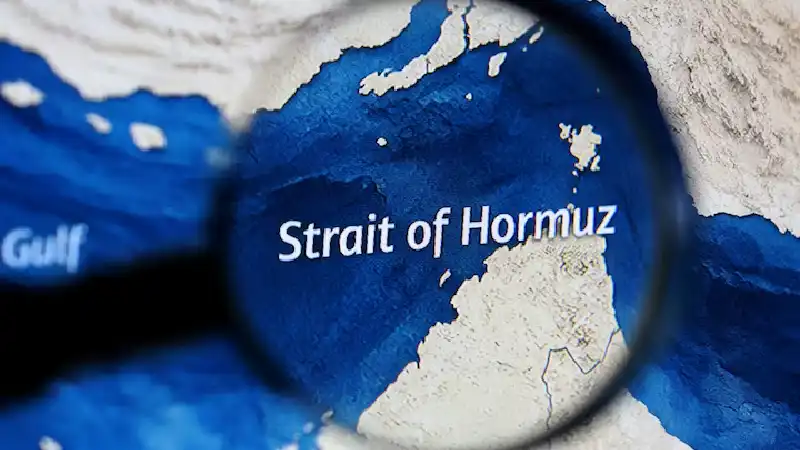
Iran has informed global authorities that non hostile vessels may continue to pass through the Strait of Hormuz under specific coordination rules, offering a limited signal of stability in one of the world’s most critical energy corridors. The communication comes as ongoing conflict in the region has disrupted the flow of oil and liquefied natural gas, affecting nearly one fifth of global supply routes. Markets reacted cautiously, with energy traders and currency desks closely watching whether this conditional access could ease supply fears or further complicate global shipping dynamics.
The message was delivered to key international bodies responsible for maritime safety and global security, outlining that vessels not linked to hostile operations would be allowed safe transit if they comply with Iranian regulations. However, the framework excludes ships associated with military actions or support roles connected to ongoing hostilities. This selective access has introduced a new layer of uncertainty for shipping companies and insurers, as operators must now assess geopolitical risk alongside compliance requirements before navigating one of the most strategically sensitive waterways.
The Strait of Hormuz remains a central artery for global energy trade, making any restriction or conditional access a major trigger for volatility across oil markets and currency flows. Rising energy prices have already begun feeding into inflation expectations, putting pressure on central banks and reshaping interest rate outlooks. For the US dollar, traditionally seen as a safe haven during geopolitical stress, the situation is more complex as elevated oil prices and global uncertainty create competing forces that can both support and weaken demand depending on capital flows and policy responses.
Market analysts note that the conditional transit policy reflects an attempt to balance military positioning with economic signaling. By allowing limited passage, Iran may be seeking to prevent a complete shutdown of global supply chains while maintaining strategic leverage. This approach has left investors navigating mixed signals, as the possibility of sudden escalation remains present. Energy traders are pricing in a risk premium, while currency markets are adjusting to potential shifts in trade balances and capital allocation driven by higher energy costs.
The broader backdrop shows how geopolitical tensions are increasingly shaping financial market behavior beyond traditional conflict zones. Supply chain disruptions, insurance costs, and rerouted shipping lanes are all contributing to higher operational expenses for global trade. These pressures are feeding into commodity prices and influencing how institutions manage exposure to both energy and currency risk. At the same time, alternative financial infrastructure, including digital settlement systems, is gaining attention as businesses look for more resilient ways to manage cross border transactions in volatile conditions.
Recent developments also highlight the growing interconnection between energy security and financial stability. Countries heavily dependent on imported energy are facing rising costs, while exporters are experiencing shifting revenue dynamics influenced by both price surges and logistical constraints. This imbalance is contributing to uneven economic outcomes across regions, adding another layer of complexity for global policymakers. Financial institutions are increasingly factoring geopolitical risk into long term strategy, particularly in areas linked to energy flows and currency stability.
In parallel, global markets are witnessing increased volatility across equities, commodities, and foreign exchange as traders react to each new signal from the region. Oil price movements are being closely tied to expectations around shipping safety, while the dollar’s trajectory is influenced by both safe haven demand and inflation driven policy shifts. Investors are also exploring diversified asset exposure, including commodities and digital assets, as part of broader risk management strategies in an environment defined by uncertainty and rapid geopolitical change.
For now, attention remains fixed on whether the conditional access framework will hold or give way to further escalation. Shipping activity, insurance responses, and military developments will all play a role in shaping the next phase of market reaction. The situation continues to evolve rapidly, with each update carrying implications not only for energy supply but also for currency markets, global trade flows, and the broader financial system.