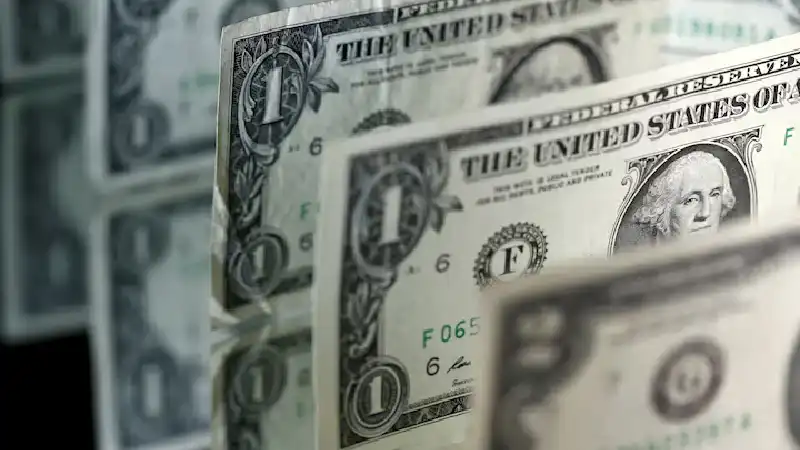
The US dollar moved higher as fading expectations for a quick de escalation in the Iran conflict pushed investors back toward safe haven assets. Markets reversed earlier optimism after mixed geopolitical signals and renewed military developments raised the risk of a prolonged standoff. The dollar index gained momentum after briefly weakening, while major currencies including the euro and pound lost ground. Investors reacted quickly to headlines indicating increased military presence in the region, reinforcing demand for the dollar as global uncertainty intensified and financial markets adjusted to shifting risk sentiment.
The currency’s advance was supported by a combination of geopolitical tension and rising expectations around interest rates. The dollar climbed against the yen and strengthened broadly against a basket of currencies, marking one of its strongest monthly performances in recent months. At the same time, European currencies came under pressure as economic signals pointed to slowing growth. The shift highlights how quickly global capital flows can respond to conflict driven uncertainty, with investors reallocating funds into dollar denominated assets during periods of heightened risk.
Market analysts say the dollar’s resilience reflects its dual role as both a safe haven and a yield driven asset. Rising US Treasury yields, driven by expectations that inflation could accelerate due to higher energy costs, are making dollar assets more attractive. This dynamic is being reinforced by reduced expectations of interest rate cuts from the Federal Reserve, as policymakers face the challenge of balancing growth risks with inflation pressure. The combination of geopolitical instability and shifting monetary policy outlook is creating strong underlying support for the currency.
The broader economic impact of the conflict is also becoming more visible across major economies. Business activity in both Europe and the United Kingdom has slowed, indicating that rising energy costs and supply disruptions are beginning to affect real economic output. In the United States, business activity has also weakened, reaching its lowest level in nearly a year. Despite these signs of slowing growth, markets remain more focused on inflation risks, particularly as energy prices continue to fluctuate in response to developments in the Middle East.
Energy markets remain at the center of the current volatility, with disruptions in key shipping routes significantly affecting global supply. The Strait of Hormuz, a critical channel for oil and gas transport, has seen reduced flows, pushing prices higher and adding pressure across supply chains. These developments are feeding into inflation expectations worldwide, influencing central bank strategies and shaping investor behavior. The link between energy prices and currency strength is becoming increasingly pronounced, especially for economies heavily exposed to global trade flows.
Additional pressure is emerging from shifting expectations around global monetary policy. Investors are now pricing in a more hawkish stance from several central banks, including the Federal Reserve, the European Central Bank, and the Bank of England. The rise in short term bond yields reflects this shift, as markets anticipate tighter financial conditions to counter inflation risks. This environment is supporting the dollar while placing strain on other currencies, particularly those tied to slower growing economies or higher exposure to energy imports.
Recent market movements also highlight the growing sensitivity to geopolitical headlines, with currencies and commodities reacting rapidly to each new development. Traders are closely monitoring both diplomatic signals and military actions, as even minor updates can trigger significant shifts in sentiment. This heightened sensitivity is contributing to increased volatility, making short term market direction more difficult to predict while reinforcing the importance of macro driven trading strategies.
For now, the dollar’s trajectory will depend on how the conflict evolves and how central banks respond to the resulting economic pressures. Continued escalation could further strengthen safe haven demand, while any credible signs of de escalation may reverse recent gains. Investors remain focused on incoming economic data, energy price trends, and policy signals, all of which will play a critical role in shaping currency markets in the coming weeks.