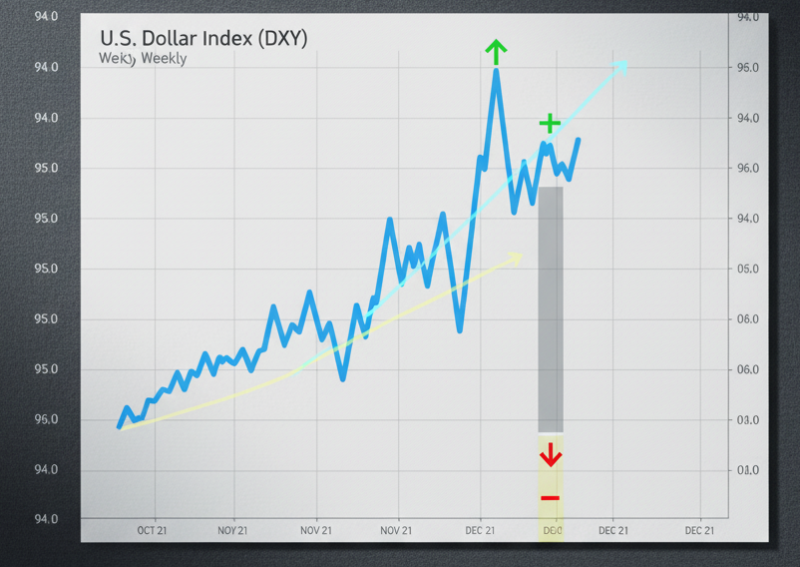
The U.S. Dollar Index (DXY) surged to its highest levels in recent months following renewed signals from the Federal Reserve that interest rates will remain elevated for an extended period. Investors quickly reassessed capital flows, adjusting positions across currency, bond, and equity markets. The sustained dollar strength reflects confidence in the U.S. economy relative to other major economies and underscores the central role of monetary policy in global financial stability. Analysts note that the dollar’s trajectory continues to influence commodity pricing, emerging market capital flows, and corporate hedging strategies worldwide.
Policy Reaction
The Federal Reserve, in its latest policy statement, emphasized that it will maintain the current federal funds target range until inflation expectations are clearly contained and economic growth stabilizes. Fed Chair Jerome Powell highlighted that while economic growth has moderated, labor markets remain tight and inflation remains above the central bank’s 2 percent target. Powell stated that “the committee is prepared to keep policy restrictive for as long as necessary to ensure inflation moves sustainably toward our objective.”
Other Fed officials, including Vice Chair for Supervision Michael Barr and Governor Christopher Waller, reiterated that monetary policy will remain data-dependent, with any rate adjustments carefully calibrated to balance growth and inflation. This policy stance reinforces the message of “higher for longer” rates, signaling that short-term cuts are unlikely despite moderating GDP growth.
Market participants responded immediately, with the DXY climbing above 104, reflecting increased demand for U.S. dollars against a basket of major currencies. Treasury yields reacted in tandem, with the 10-year note rising to 4.15 percent, marking a multi-month high. The 2-year note yield also increased to 4.35 percent, reflecting market expectations of continued short-term policy tightness. Analysts highlight that the combination of persistent inflation, robust employment data, and geopolitical uncertainty has contributed to the dollar’s appeal as a safe-haven asset.
Market Impact
The stronger dollar has several immediate implications for global markets. In forex markets, emerging market currencies such as the Indian rupee, Brazilian real, and South African rand depreciated against the dollar as capital flows shifted toward U.S. assets. The euro fell 0.8 percent and the Japanese yen declined 1.1 percent, demonstrating the relative strength of the dollar in the global currency basket. Currency traders adjusted positions in anticipation of further Fed guidance, employing forwards and swaps to hedge risk.
Commodities priced in USD, including oil and gold, experienced downward pressure. Brent crude fell by 1.8 percent and gold dipped 1.2 percent during the same trading session, reflecting the inverse correlation between dollar strength and commodity pricing. Copper, platinum, and other industrial metals also experienced modest declines, indicating that a strong dollar can influence both energy and base metal markets globally. Higher energy costs for non-U.S. markets have prompted some importers to explore hedging strategies and adjust procurement plans.
Bond markets have been significantly affected. Elevated U.S. yields increase borrowing costs globally, especially for countries and corporations with dollar-denominated debt. Central banks in Asia, Latin America, and Europe have signaled increased vigilance over currency stability and capital outflows. Corporations are adjusting hedging strategies, pricing, and operational planning to mitigate the impact of higher financing costs and a stronger dollar. Multinational firms in sectors such as technology, industrials, and energy are particularly sensitive to changes in foreign exchange rates, affecting revenue forecasts and profit margins.
Equity markets are also influenced by the stronger dollar. Export-oriented U.S. firms may benefit from improved overseas purchasing power, but companies earning revenue internationally can see reduced profit margins due to currency translation effects. Investors are increasingly evaluating sector-specific exposure, with technology and industrial sectors showing heightened sensitivity to foreign exchange movements.
Emerging Market Perspective
International investors continue to shift capital toward U.S. assets in search of higher yields and currency stability. Sovereign wealth funds and institutional investors are recalibrating portfolios, increasing allocations to Treasuries, U.S. equities, and dollar-denominated fixed-income instruments. Emerging market central banks are diversifying reserve holdings to manage currency exposure, including increasing holdings in euros, yen, and local currencies where feasible.
Countries with significant dollar-denominated debt, such as Brazil, India, and Turkey, are closely monitoring the Fed’s communications to manage risks. Central banks may intervene in forex markets, adjust reserve compositions, or implement capital controls to stabilize local currencies. These measures are increasingly necessary as dollar strength creates additional pressure on emerging market economies with heavy reliance on USD financing.
Corporate Impact
Dollar strength affects corporate strategy across multiple dimensions. Multinational corporations must evaluate hedging strategies, currency risk exposure, and pricing policies. U.S.-based firms with substantial foreign revenue may experience lower translated earnings, while international firms importing U.S. goods face higher costs. Treasury teams are monitoring DXY trends closely to optimize cash management, while procurement teams adjust sourcing strategies to mitigate the impact of stronger USD.
Outlook
Analysts expect the dollar to remain resilient as long as the Fed maintains its current stance and other major central banks adopt neutral or accommodative policies. Scenario analysis suggests:
- Continued Dollar Strength: If U.S. inflation moderates slowly and the Fed maintains high rates, the DXY could reach new highs.
- Short-Term Volatility: Unexpected inflation spikes or economic shocks could trigger temporary pullbacks in the dollar.
- Emerging Market Adjustments: Countries may accelerate de-dollarization efforts, using alternative currencies or digital financial tools for cross-border trade.
Investors must balance potential returns against currency risks, adjusting portfolio allocations accordingly. Corporate strategy and capital flow management are increasingly crucial in this environment of prolonged dollar strength.