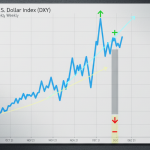
Global oil markets experienced heightened volatility this week, creating ripple effects across currency, bond, and equity markets. The U.S. dollar strengthened in response, reflecting both its role as a safe-haven currency and the interconnectedness between energy prices and monetary policy. Investors are closely monitoring how fluctuations in oil supply, geopolitical tensions, and central bank policies are influencing the dollar, global inflation expectations, and emerging market stability.
Policy Reaction
The Federal Reserve’s continued commitment to maintaining higher interest rates has reinforced dollar demand amid oil market uncertainty. Fed Chair Jerome Powell noted that persistent inflationary pressures, coupled with a robust labor market, necessitate a cautious approach to monetary easing. Powell stated that “the committee is prepared to maintain a restrictive stance for as long as necessary to ensure inflation moves sustainably toward our objective.”
Other Fed officials, including Vice Chair for Supervision Michael Barr and Governor Christopher Waller, emphasized that monetary policy remains data-driven. Barr highlighted that oil price volatility directly influences inflation expectations and global capital flows, noting that central banks must remain vigilant in calibrating policy to stabilize markets. Waller added that sustained U.S. economic resilience supports a strong dollar, which has implications for international trade and emerging markets. Analysts suggest that these statements reinforce the expectation of prolonged high interest rates, boosting investor confidence in dollar-denominated assets.
In contrast, other central banks maintain more neutral or accommodative stances. The European Central Bank signaled that it will assess inflation trends carefully before further rate adjustments, while the Bank of Japan continues to implement ultra-loose monetary policy. These divergent approaches contribute to the strengthening of the dollar relative to other major currencies, particularly the euro, yen, and sterling.
Energy-producing nations have also taken actions affecting global currency markets. Saudi Arabia and other OPEC members announced potential production adjustments to stabilize oil prices, impacting global supply expectations. These moves influence the dollar as oil remains a USD-denominated commodity, and central banks in oil-importing countries are recalibrating policies to manage inflationary pressures.
Market Impact
Oil price volatility has a direct correlation with dollar movements due to the commodity’s USD-denominated pricing. Brent crude surged by 3.2 percent this week following supply concerns in the Middle East, while West Texas Intermediate (WTI) rose by 2.9 percent. A stronger dollar increases the cost of oil for non-U.S. importers, potentially reducing consumption and placing pressure on emerging market currencies.
Forex markets reflected these dynamics. The Brazilian real depreciated by 0.9 percent, the Indian rupee weakened by 0.7 percent, the Turkish lira fell by 1.1 percent, and the Japanese yen declined by 1.0 percent against the dollar. Traders are actively adjusting positions, using forwards and options to hedge risk against dollar appreciation and oil price swings. Analysts note that volatility in oil prices creates simultaneous shifts in global FX markets, especially in countries reliant on energy imports.
Bond markets reacted strongly. U.S. Treasury yields rose, with the 10-year note reaching 4.12 percent and the 2-year note at 4.35 percent. Higher yields in the U.S. attract foreign capital, strengthening the dollar further and influencing global borrowing costs. Emerging market governments with dollar-denominated debt face increased funding pressures, prompting interventions in forex markets or adjustments in reserve allocations to stabilize domestic currencies.
Commodities other than oil and gold were also affected. Copper fell by 1.5 percent, platinum declined by 1.1 percent, and natural gas futures increased slightly amid energy supply concerns. These fluctuations highlight the broader impact of a strong dollar on global commodity markets and emphasize the need for careful risk management by corporates and investors.
Equity markets experienced mixed reactions. Energy sector equities rallied due to higher oil prices, while transportation, manufacturing, and energy-intensive industries saw moderate declines. U.S. export-oriented firms benefited from stronger overseas purchasing power, but companies with significant international revenue faced challenges due to currency translation effects. Investors are increasingly evaluating sector-specific exposures, balancing energy gains against inflationary risks.
Emerging Market Perspective
Emerging markets are particularly sensitive to dollar strength and oil volatility. Countries with significant dollar-denominated debt, including Brazil, India, Turkey, and South Africa, are closely monitoring Fed communications. Central banks in these regions may intervene in currency markets, adjust reserve compositions, or implement short-term policy measures to mitigate risks.
Higher oil prices elevate import costs, contributing to inflationary pressures that may force central banks to tighten domestic monetary policy despite weaker growth. Some emerging markets are accelerating diversification strategies, including increasing reserves in alternative currencies, adopting digital cross-border settlement platforms, and hedging oil price exposure through futures and swaps. Analysts note that the combination of stronger USD and energy market volatility can amplify capital flow pressures, particularly in countries with high foreign borrowing.
Sovereign wealth funds and institutional investors are recalibrating portfolios, increasing allocations to U.S. Treasuries and dollar-denominated equities to manage risk. This shift in capital flows reinforces dollar strength and creates a feedback loop that further pressures non-U.S. currencies.
Corporate Impact
Corporations with international operations are adjusting strategies in response to oil and currency volatility. Multinational firms in sectors such as aviation, shipping, technology, and industrials are revising hedging strategies, re-evaluating procurement costs, and managing foreign exchange risk. Treasury teams are actively monitoring DXY trends, while procurement departments are assessing alternative supply chains to mitigate rising energy costs.
Higher oil prices and stronger dollars impact corporate earnings and cost structures. Companies heavily reliant on imported goods or materials are likely to face margin compression, while exporters to the U.S. may benefit from favorable exchange rates. Risk management strategies, including derivatives and currency swaps, are essential to protect profitability in this environment.
Outlook
Analysts expect oil-driven volatility to remain a significant driver of currency markets in the short term. Scenario analysis indicates:
- Continued Dollar Strength: If the Fed maintains high rates and OPEC production remains tight, the dollar could continue its upward trajectory.
- Volatile Corrections: Unexpected increases in oil supply or geopolitical stability may cause temporary dollar pullbacks.
- Emerging Market Adjustments: Countries will continue to explore currency diversification, local settlement alternatives, and digital finance solutions to mitigate USD exposure.
The medium-term outlook suggests that oil price volatility combined with prolonged Fed tightening could influence global inflation, capital flows, and commodity demand. Investors and corporations must adopt flexible strategies, including hedging, reserve management, and portfolio diversification, to navigate the evolving macroeconomic landscape.