Introduction
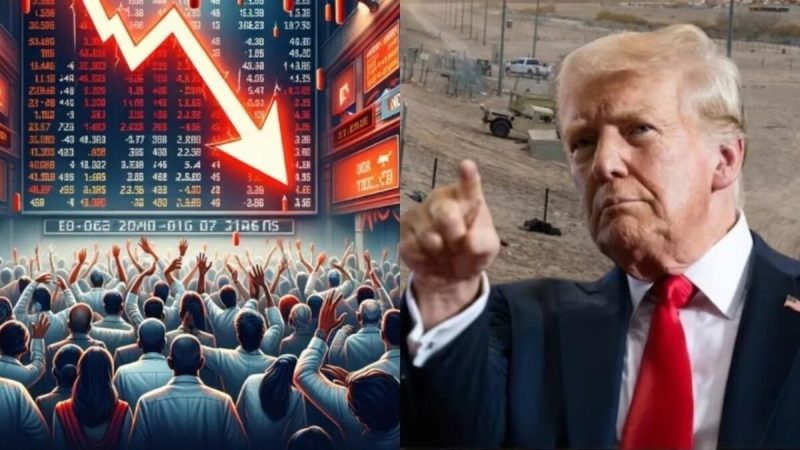
Global equity markets retreated on Friday after renewed trade tensions between the United States and China unsettled investors. According to Reuters, market sentiment turned cautious following remarks by former President Donald Trump suggesting that his administration, if re elected, would impose substantially higher tariffs on Chinese goods. The announcement sparked concerns over a potential escalation in global trade friction, leading to declines across major stock indexes and modest weakness in the US dollar.
Investors reacted swiftly to the rhetoric, with traders reassessing risk exposure amid fears that a new wave of tariffs could disrupt supply chains, raise input costs, and dampen global growth. The MSCI World Index slipped 0.6 percent, while European and Asian markets posted similar losses. Analysts noted that the market’s response reflects not only the immediate implications of tariff policy but also broader anxiety about the durability of global trade relationships.
Market Reaction Across Regions
In the United States, all three major indexes ended lower as trade sensitive sectors came under pressure. The S&P 500 declined 0.7 percent, led by losses in industrial and technology shares, while the Dow Jones Industrial Average fell 0.5 percent. The Nasdaq Composite dropped nearly 1 percent as investors moved away from high growth equities that are particularly vulnerable to global supply disruptions. Treasury yields eased slightly, reflecting a mild shift toward safer assets.
European markets mirrored the downward trend, with the Stoxx 600 index closing 0.8 percent lower. German automakers and French luxury goods producers were among the biggest losers, given their reliance on Chinese demand. In Asia, the Nikkei 225 fell 1.1 percent, and Hong Kong’s Hang Seng index dropped 0.9 percent amid weakness in exporters and technology firms. Market strategists at Bloomberg said that the synchronized decline across continents highlights how interconnected trade and equity performance have become in an era of globalized production.
Currency and Commodities Response
Currency markets reflected a mixed reaction to the news. The dollar initially strengthened as risk aversion boosted demand for safe haven assets but later gave up gains as Treasury yields slipped. The dollar index ended the day around 104, slightly lower than its weekly peak. The Japanese yen and Swiss franc edged higher, reflecting typical defensive flows during market stress.
Commodity prices moved in different directions depending on perceived trade impacts. Oil futures fell modestly as traders weighed the possibility of reduced industrial demand if tariffs slow global manufacturing. Gold prices rose for the second consecutive session, climbing toward 2,400 dollars per ounce as investors sought safety amid geopolitical uncertainty. Analysts at Trading Economics observed that market positioning remains defensive, with rising interest in assets that typically perform well during periods of economic volatility.
Investor Sentiment and Economic Implications
The renewed trade tension comes at a time when global markets are already grappling with slowing growth in Europe and uneven data from China. Economists fear that additional tariffs could exacerbate these trends by disrupting cross border investment and trade flows. MarketWatch reported that several multinational corporations have begun reviewing supply chain exposure to the United States and China, a process that could accelerate if protectionist measures expand.
Investors are also reassessing their outlook for corporate earnings in export oriented sectors. Tariffs on intermediate goods tend to raise production costs, compressing profit margins for manufacturers and importers. Some firms are exploring diversification into alternative markets such as Southeast Asia, but analysts caution that supply chain realignment takes time and often increases operational complexity. The resulting uncertainty has kept volatility elevated across global markets.
Political Context and Policy Reactions
Trump’s comments mark a continuation of his long standing position on trade imbalances with China. During his previous term, tariff measures affected hundreds of billions of dollars’ worth of goods, reshaping global trade routes and prompting retaliatory actions from Beijing. While current market reactions remain contained, economists warn that any concrete steps toward reintroducing broad tariffs could reignite economic tensions similar to those seen in 2018 and 2019.
In Beijing, officials expressed concern about the remarks but refrained from direct criticism, signaling a cautious approach as China seeks to stabilize its economic outlook. The Ministry of Commerce reiterated its commitment to open trade and dialogue but warned that “unilateral tariff actions harm global supply stability.” European leaders also urged restraint, emphasizing the need for cooperative trade policies amid fragile global growth. These diplomatic reactions underscore the widespread unease over renewed protectionist rhetoric.
Broader Economic Themes
The broader macroeconomic backdrop has made markets particularly sensitive to policy headlines. The International Monetary Fund and World Bank have both warned that escalating trade barriers could shave nearly one percentage point off global GDP growth over the next two years if implemented. Central banks, already managing divergent monetary policies, may find it more difficult to stabilize inflation and growth if trade disruptions intensify.
At the same time, some strategists view the sell off as a temporary adjustment rather than the start of a prolonged downturn. They argue that global liquidity remains ample and that long term investors may use short term volatility as a buying opportunity. However, much depends on whether political rhetoric translates into policy action. A sustained escalation could lead to capital flow disruptions and renewed uncertainty in currency markets.
Dollar Outlook and Trade Balance Considerations
Despite the mild decline following the tariff headlines, the dollar remains fundamentally supported by interest rate differentials and a robust domestic economy. Analysts at Société Générale pointed out that while tariffs can initially weigh on sentiment, they may ultimately boost the dollar if they lead to higher domestic inflation and tighter monetary policy. The US trade balance could worsen in the short term as imports become more expensive, but strong service sector exports may offset part of the gap.
Emerging market currencies, particularly those in export dependent economies, could face additional pressure if global trade volumes decline. The Indian rupee and South Korean won both fell modestly in late trading, reflecting broader risk aversion. Central banks in these regions may need to consider targeted interventions to prevent excessive currency volatility.
Investor Strategies and Market Outlook
Investors are now closely watching for official policy clarifications or follow up statements from US officials. Until there is greater certainty, portfolio managers are expected to maintain defensive positioning. Many are increasing allocations to US Treasuries, gold, and dividend paying equities while reducing exposure to cyclical and trade sensitive sectors. Hedge funds have also reduced leverage, anticipating potential short term turbulence in equity markets.
From a long term perspective, analysts at Reuters believe that while tariff headlines can trigger temporary pullbacks, the underlying resilience of corporate earnings and liquidity conditions should prevent a deep correction. However, they caution that repeated shocks to confidence could weigh on valuations if political rhetoric persists into the election season. The coming weeks will likely determine whether markets stabilize or enter a more sustained phase of risk aversion.
Conclusion
The global sell off following renewed tariff talk underscores how sensitive markets remain to geopolitical developments. Trade policy uncertainty continues to exert outsized influence on investor psychology, amplifying volatility across currencies, equities, and commodities. While fundamentals in the United States remain strong, sustained rhetoric around protectionism could gradually erode investor confidence and disrupt global growth momentum.
For now, investors are navigating a delicate balance between optimism about economic resilience and caution over policy unpredictability. The direction of markets in the coming days will hinge on whether trade tensions escalate into concrete actions or remain confined to political posturing. Until then, defensive positioning and diversification remain the key strategies for weathering a volatile global landscape.