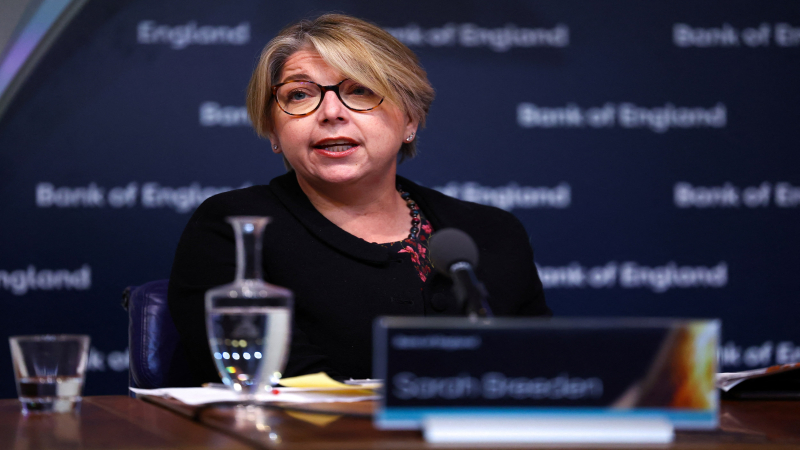
Bank of England Deputy Governor Sarah Breeden has urged regulators in the United Kingdom and the United States to strengthen cooperation on stablecoin policy, emphasizing that cross-border coordination is essential for maintaining financial stability. Her comments come ahead of the Bank of England’s consultation on systemic stablecoins, scheduled for November 10, which will outline new rules for digital payment instruments operating within the UK’s financial system.
Breeden highlighted that as stablecoins gain traction globally, inconsistent national regulations could create risks for markets and consumers. She stated that aligning policy frameworks between major economies is critical to ensuring safe innovation while preventing regulatory arbitrage. The remarks were delivered during a financial technology forum in London and followed recent discussions with U.S. officials on digital currency supervision.
The upcoming consultation paper will set out how the Bank plans to regulate stablecoins that could become large enough to influence payment networks or monetary stability. It is expected to clarify how issuers will be licensed, how reserves should be managed, and what standards will apply to redemption and operational transparency. These guidelines are being developed alongside the UK Treasury’s Financial Services and Markets Act, which formally brings stablecoin oversight within the country’s regulatory perimeter.
According to Breeden, central banks must act jointly to ensure that stablecoin innovation contributes positively to the global financial system. She emphasized that while blockchain-based payments offer efficiency, they must be backed by credible regulation and appropriate capital safeguards.
Analysts believe this consultation could serve as a model for other central banks, particularly if the UK and US can demonstrate consistent policy outcomes. The Bank of England’s approach appears to favor stability and consumer protection over speed of adoption, reflecting lessons learned from previous periods of crypto market volatility.
The timing of Breeden’s comments is significant, as both the Bank of England and the U.S. Federal Reserve are examining the implications of privately issued digital currencies. Shared supervisory principles could help establish common standards for stablecoin issuance, potentially improving interoperability and reducing risks linked to cross-border transactions.
Market participants are closely watching whether the UK’s stablecoin framework will include requirements for audit transparency, segregation of reserves, and contingency mechanisms for redemption. These are expected to be key features of the consultation paper, providing clarity to firms seeking to operate within the UK’s regulated financial ecosystem.
Breeden’s call for transatlantic collaboration underscores the growing recognition that stablecoin regulation cannot be developed in isolation. As central banks modernize payment systems and explore digital currencies, a unified approach could ensure trust, accountability, and resilience in the evolving digital finance landscape.