Momentum is building across Europe as the EU prepares a tougher trade posture toward China, with Germany’s recent political and economic pivot emerging as one of the strongest signals driving the shift. The bloc is set to unveil a new economic security doctrine that reassesses how Europe manages exposure to Chinese supply chains, rare earth dependencies and subsidized imports that have reshaped competitive dynamics. Market analysts tracking global policy indicators say Germany’s reversal is particularly striking because it has long been one of the EU’s most cautious voices on confronting Beijing. Its decision to reassess security relevant trade ties, question the role of Chinese components in future mobile networks and address overcapacity concerns marks a significant recalibration. AI driven policy tracking tools monitoring cross border trade narratives highlight increasing alignment across major EU economies, suggesting that Europe may be preparing for a more assertive approach to protecting key industries and reducing reliance on critical Chinese inputs.
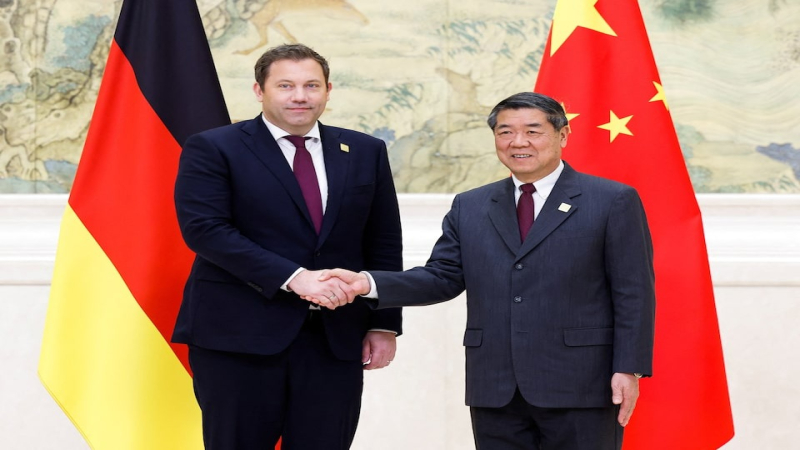
At the center of the shift is a growing realization that Europe’s trade deficit with China has widened dramatically, while Beijing’s industrial expansion has altered the balance of the relationship. Germany’s finance minister raised concerns during recent meetings in China, signaling that Europe intends to avoid repeating the dependency patterns exposed by past energy crises. With rare earth access, electric vehicle competitiveness and advanced manufacturing capacity all at stake, the timing of the EU doctrine suggests a broader strategy aimed at reinforcing economic safeguards while building alliances with partners that support open and reciprocal trade. AI enhanced monitoring of commodity movements and supply chain stress points shows rising volatility, reinforcing why European institutions are emphasizing export controls, investment screening and tools designed to counter coercive trade practices. As these measures advance, investors are watching how Beijing responds, particularly as Germany’s alignment could reduce one of China’s most reliable bridges inside the EU.
Spain’s warmer stance toward Chinese investment adds complexity to the moment, hinting at internal divergences Europe will need to manage as it moves toward a unified position. Spanish industries benefiting from tariff structures and new agreements with China present challenges for EU wide consensus, especially as Brussels pushes for more stringent frameworks. Analysts observing political signals note that the EU’s ability to deploy its strongest tools depends heavily on member unity, creating a tension between national interests and broader European strategy. Meanwhile, technology transfer concerns and recent episodes involving critical chip suppliers demonstrate the strategic weight behind the discussion. AI policy dashboards tracking governmental shifts indicate growing pressure on the EU to ensure that supply chain resilience aligns with long term security objectives. As Europe recalibrates its approach, global markets are analyzing these signals closely, recognizing that the evolution of EU China relations will shape trade flows, industry competition and the next stage of the region’s digital and economic transformation.