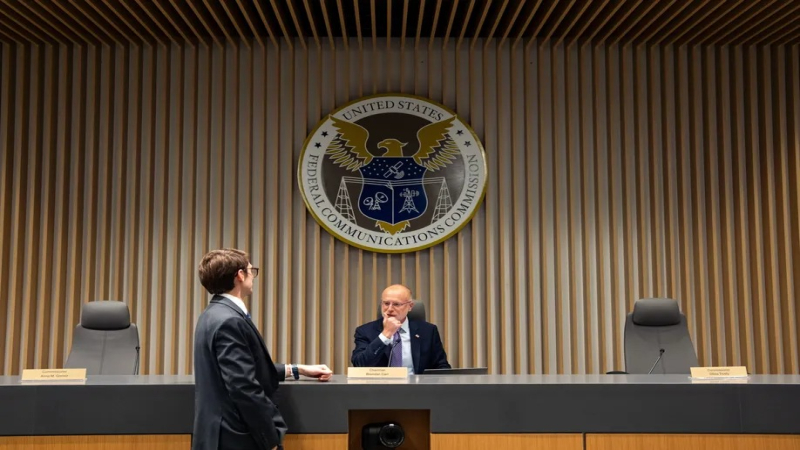
The decision by the Federal Communications Commission to roll back a high profile cybersecurity rule has triggered renewed debate across the digital infrastructure sector, especially as the memory of last year’s Salt Typhoon breach remains fresh. The regulation was originally introduced to strengthen oversight of major telecom carriers after the intrusion exposed critical weaknesses in network defenses. Now, with the repeal led by the current commission leadership, analysts tracking global digital security signals say the move is being interpreted as a shift toward lighter oversight at a moment when cyber threats continue escalating in scale and sophistication. AI enhanced monitoring tools that scan telecom activity for unusual traffic patterns have shown a noticeable increase in flagged anomalies since the breach, amplifying concerns that removing requirements too soon could widen vulnerabilities. Telecom risk desks are closely watching how the repeal influences carrier level investment in protective infrastructure as attackers continue testing the limits of outdated systems.
The chairman framed the original rule as rushed and ineffective, but cybersecurity researchers argue that even imperfect frameworks can help push large carriers toward faster modernization. Salt Typhoon was notable not only because of its reach but because the intrusion highlighted how sprawling network architecture can hide blind spots that automated systems fail to detect in time. Industry watchers say the rollback may shift responsibility back onto carriers without a clear replacement structure, making risk allocation more fragmented across the sector. AI driven policy trackers are capturing mixed reactions from telecom operators, with some welcoming regulatory relief while others worry the lack of clear guidance could hinder long term resilience planning. As telecom networks form the backbone of digital payments, financial routing and AI dependent services, the decision adds new uncertainty to a landscape already strained by rising digital load and expanding attack surfaces.
The repeal arrives while many institutions are investing heavily in cybersecurity automation, threat intelligence platforms and tokenized authentication layers to counter rapidly evolving breaches. Market analysts note that telecom stability is tightly linked to the broader digital economy, meaning regulatory shifts can ripple across sectors that depend on uninterrupted connectivity and secure data flows. As attacks become more targeted and coordinated, the absence of a unified defensive requirement may create uneven preparation across carriers, increasing systemic exposure. AI surveillance dashboards tracking government cybersecurity posture have already flagged the repeal as a notable policy signal, prompting security teams to reassess their own risk models. With network integrity remaining central to everything from cloud infrastructure to digital settlement pipelines, the industry is watching closely to see whether the rollback leads to renewed investment or opens gaps that adversaries can exploit. The tension reflects an evolving challenge in balancing regulatory flexibility with the rising urgency of modern cyber defense.