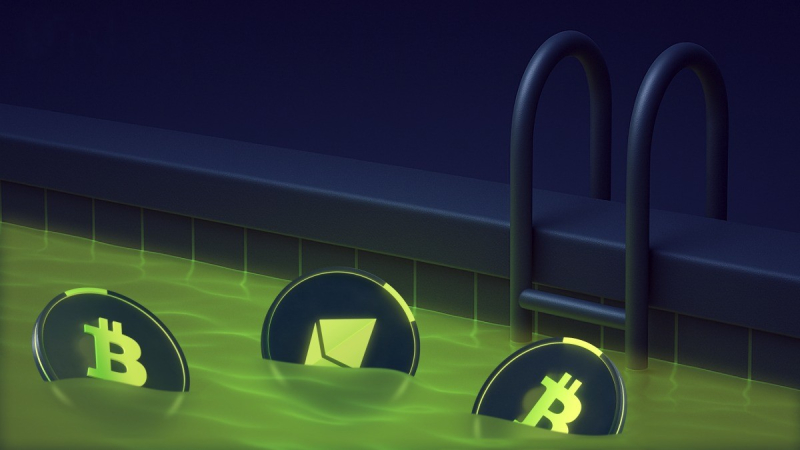
Large on chain holders often move capital before broader market behavior changes. These movements rarely reflect short term speculation. Instead, they signal shifts in liquidity preference, risk management, and settlement strategy. Recently, whale wallets have increasingly rotated toward dollar linked liquidity pools, offering insight into how sophisticated capital is positioning itself.
This rotation does not imply panic or exit from digital markets. It reflects a measured response to evolving financial conditions. Dollar linked liquidity pools provide stability, deep settlement capacity, and flexibility during periods of uncertainty. Whale behavior suggests that capital is prioritizing resilience over aggressive exposure.
Whale Behavior Reveals Liquidity Priorities
Whales operate with scale, which makes liquidity their primary concern. They cannot enter or exit positions easily without affecting markets. As a result, their movements often focus on where liquidity is deepest and most reliable.
Dollar linked pools offer predictable settlement and broad acceptance across platforms. When whales rotate toward these pools, it indicates a preference for instruments that can absorb large flows without friction. This behavior often emerges when market momentum slows or when macro signals become less supportive.
Rather than chasing volatility, whales shift toward liquidity structures that preserve optionality. Dollar linked pools fulfill this role effectively.
Why Dollar Linked Pools Attract Large Capital
Dollar linked liquidity pools combine price stability with transactional efficiency. For whales managing significant portfolios, this combination reduces operational risk. Capital can be deployed or redeployed quickly without exposure to excessive price swings.
These pools also serve as strategic parking zones. During periods of reassessment, whales use them to hold value while monitoring market conditions. This allows capital to remain active within the ecosystem rather than exiting entirely.
The appeal lies not in yield maximization but in balance. Stability enables strategic flexibility, which is critical for large holders.
On Chain Rotation Signals Caution Not Fear
It is important to distinguish between caution and fear. Whale rotation toward dollar linked pools does not signal loss of confidence in digital assets. It signals disciplined risk management.
On chain data often shows whales consolidating positions, reducing exposure to volatile pairs, and increasing dollar linked liquidity during uncertain phases. This behavior aligns with how institutional capital behaves in traditional markets during transitional periods.
Such rotations often precede broader market adjustments. They reflect preparation rather than reaction.
How These Movements Influence Market Dynamics
When whales concentrate liquidity in dollar linked pools, market dynamics adjust. Volatility may decline as speculative activity slows. Liquidity becomes more centralized around stable settlement instruments.
This can lead to calmer market conditions even as underlying uncertainty persists. Retail participants may misinterpret this calm as strength. Whale behavior suggests it reflects balance and patience.
Understanding these signals helps explain why markets can feel stable yet directionless. The real shift is happening in liquidity allocation rather than price action.
What This Means For Market Participants
For observers, whale rotation offers valuable context. It highlights where informed capital perceives safety and efficiency. Monitoring these flows provides insight into broader market sentiment without relying solely on price movements.
This behavior also reinforces the role of the dollar as a central anchor within digital markets. Even in decentralized environments, large capital gravitates toward dollar linked liquidity during periods of adjustment.
Recognizing this pattern helps participants align expectations with underlying market structure.
Conclusion
Whale wallets rotating toward dollar linked liquidity pools reflect strategic caution and liquidity discipline. These movements prioritize stability, flexibility, and settlement reliability over speculation. By observing whale behavior, markets gain insight into how capital prepares for change while reinforcing the dollar’s central role in digital liquidity systems.