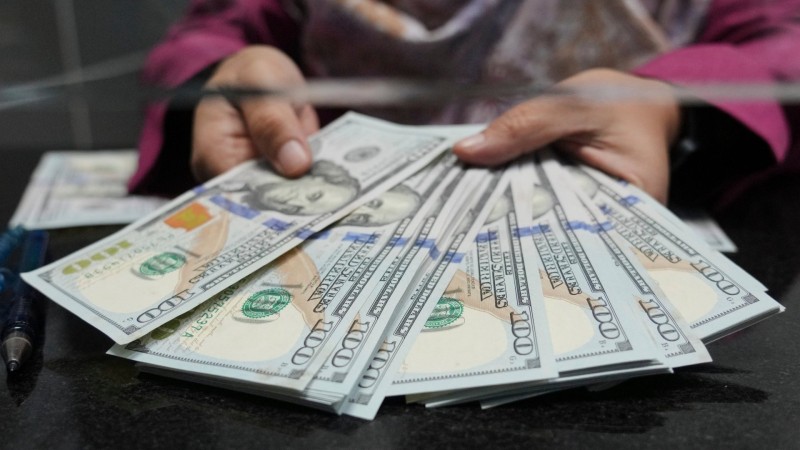
Large on chain transfers often reveal more about market structure than short term price movement. When substantial capital shifts between wallets or liquidity venues, it reflects deliberate decisions made by experienced participants. Recently, an increase in large transfers toward dollar linked instruments has highlighted a growing preference for stability over speculation.
This trend does not suggest fear or retreat. Instead, it shows a calculated response to evolving market conditions. As uncertainty increases and liquidity becomes more selective, large holders prioritize assets that preserve value, offer deep settlement capacity, and remain widely accepted. Dollar stability fulfills these requirements across both traditional and digital markets.
Large Transfers Reflect Strategic Capital Reallocation
Large transfers rarely occur without intent. They often represent portfolio rebalancing, liquidity management, or preparation for future deployment. When capital flows consistently toward dollar based instruments, it signals a reassessment of risk rather than an abandonment of opportunity.
Dollar stability provides a neutral base from which investors can respond quickly to changing conditions. Holding value in dollar linked structures allows large holders to remain flexible while avoiding unnecessary exposure to volatility.
These reallocations tend to happen quietly before broader sentiment shifts. By the time price action reflects caution, large transfers have often already taken place.
Why Dollar Stability Attracts Large Capital
The dollar remains the most trusted settlement currency globally. Its deep liquidity, predictable behavior, and broad acceptance make it the preferred choice during periods of adjustment. For large capital holders, these qualities reduce friction and uncertainty.
Dollar linked assets allow for efficient movement across platforms and markets. This is especially important for participants managing scale, where execution risk can outweigh potential gains. Stability becomes a strategic advantage rather than a passive choice.
As a result, large transfers increasingly favor dollar anchored instruments during transitional market phases.
On Chain Transfer Patterns Reveal Market Confidence Shifts
On chain data shows that large holders tend to consolidate around stable assets when confidence in short term market direction weakens. This does not imply a negative outlook. It reflects a pause in aggressive positioning.
Confidence shifts are subtle. They appear in how capital is stored rather than where prices move. Large transfers into dollar stable environments suggest that participants value optionality and readiness.
This behavior mirrors institutional practices in traditional markets, where capital often moves into cash equivalents during uncertain periods.
Stability Does Not Mean Inactivity
Dollar stability should not be confused with inactivity. Capital parked in stable environments remains ready to move when conditions improve. Large holders use this positioning to monitor developments without committing prematurely.
This approach supports disciplined participation rather than reactive trading. By prioritizing stability, large capital maintains control over timing and exposure.
Markets often interpret stability as lack of conviction. In reality, it reflects deliberate restraint.
What These Signals Mean For Broader Markets
Large transfers toward dollar stability influence overall market behavior. Liquidity concentrates around stable instruments, reducing speculative excess. Volatility may decline even as uncertainty persists.
This environment can feel uneventful, but it sets the stage for future movement. When clarity returns, capital positioned in stable structures can redeploy efficiently.
Observing these patterns helps market participants understand underlying dynamics rather than relying solely on surface level price action.
Conclusion
Large transfers signaling a preference for dollar stability reflect disciplined capital management rather than fear. These movements highlight a strategic focus on liquidity, flexibility, and settlement reliability. As markets navigate uncertainty, dollar stability continues to serve as the foundation for informed positioning and future opportunity.