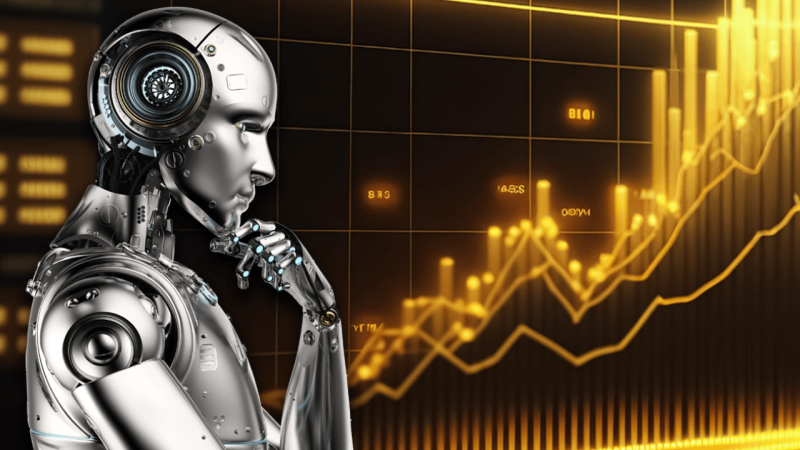
When artificial intelligence first entered trading desks, many assumed it would make markets faster. Quicker signals, instant execution, and automated decisions were expected to compress timelines even further. Some of that happened, but the deeper impact of AI moved in the opposite direction.
AI did not simply speed up trading. It intentionally slowed decision making. By adding layers of analysis, validation, and risk checks, AI forced market participants to pause before acting. This was not a flaw. It was a design choice shaped by the realities of modern markets.
AI introduced friction to reduce costly mistakes
The most important role AI plays today is not execution but restraint. Modern markets move quickly enough on their own. The real risk comes from acting too fast on incomplete information.
AI systems process vast datasets and present probability ranges rather than single conclusions. This forces traders and institutions to consider multiple scenarios instead of reacting to one signal. Decision making becomes more deliberate, even when execution remains fast.
By slowing judgment, AI reduces impulse driven trades. It helps participants avoid chasing noise and reacting emotionally to short term fluctuations.
Why speed became a liability rather than an advantage
In earlier market environments, speed offered an edge. Information traveled slowly, and acting first mattered. Today, information is instant. Everyone sees the same headlines at the same time.
In this context, speed increases error risk. Acting milliseconds faster does not improve outcomes if the signal itself is unstable. AI addresses this by emphasizing confirmation over immediacy.
Models often require alignment across multiple inputs before signaling action. This deliberate pacing filters out false positives that would otherwise lead to losses.
AI changed how risk is evaluated before trades
AI systems do not just analyze price. They evaluate liquidity, positioning, volatility regimes, and correlation behavior simultaneously. This multidimensional view complicates decisions, but it also improves them.
Instead of asking whether a trade might work, AI asks whether conditions support it. That distinction matters. Trades are delayed or avoided when risk signals conflict.
This approach slows decision making but improves consistency. Fewer trades are taken, but those that are executed are better contextualized.
Slower decisions produce more stable market behavior
As AI slowed decision making across institutions, market behavior adjusted. Volatility became more structured. Sudden reactions still occur, but they often follow visible buildup rather than surprise.
This does not eliminate sharp moves. It changes their character. Markets unwind faster once thresholds are crossed, but they hesitate longer before crossing them.
AI contributes to this dynamic by making risk visible early and discouraging premature action.
Why traders misinterpret AI driven restraint
Many traders assume inactivity signals indecision or weakness. In reality, it often reflects discipline. AI systems recommend waiting when conditions are unclear.
This restraint can be frustrating in quiet markets. Opportunities appear to pass by. Over time, however, avoiding low quality trades improves performance more than constant engagement.
The value of AI lies as much in the trades it prevents as in the trades it enables.
What this means for future market cycles
Future cycles will not be defined by speed alone. They will be defined by judgment. AI supports this shift by prioritizing context over reaction.
Markets will continue to move fast, but decisions will increasingly be gated by systems designed to slow human impulse. This balance between speed and restraint is intentional.
AI did not fail to accelerate trading. It succeeded in making trading more thoughtful.
Conclusion
AI slowed decision making on purpose because modern markets needed restraint more than speed. By adding context, confirmation, and risk awareness, AI improved discipline across trading strategies. In a world of instant information, slowing down became the real advantage.