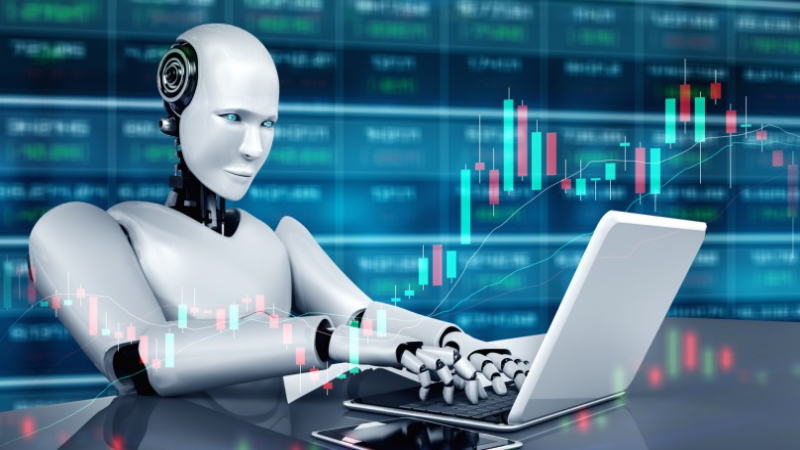
Artificial intelligence has reshaped modern trading across crypto and digital markets, but its evolution is often misunderstood. Many traders expect AI driven systems to constantly produce buy and sell signals, assuming more activity equals better performance. As markets head into late 2025, that assumption is proving increasingly flawed.
AI trading models are becoming quieter by design. Instead of firing frequent alerts, they are showing restraint, longer decision cycles, and selective engagement. This shift reflects how markets themselves have changed, not a decline in model effectiveness.
Why quieter AI models often signal healthier market intelligence
Silence in AI systems is often a sign of maturity. Advanced trading models are optimized for risk adjusted outcomes rather than volume. When price action lacks clear direction or liquidity conditions weaken, high quality models reduce output to avoid unnecessary exposure.
In crypto markets, early AI tools benefited from constant volatility and retail driven inefficiencies. As these inefficiencies fade, models adapt by raising confidence thresholds. Fewer signals mean the system is filtering out noise and waiting for conditions that statistically justify risk.
This mirrors how institutional quantitative strategies evolved in traditional finance. Success increasingly came from avoiding low probability trades rather than chasing constant activity.
From signal generation to risk suppression
Earlier AI trading frameworks focused on pattern recognition and signal frequency. Newer models prioritize downside protection, volatility awareness, and capital preservation. The objective is not to predict every move but to participate when expected returns outweigh structural risk.
This evolution explains why traders see longer inactive periods. AI systems now act as defensive filters during sideways or uncertain markets. When signals do appear, they tend to carry higher conviction and clearer risk parameters.
Rather than forcing engagement, these models recognize that patience often delivers better long term results.
Macro stability reshaped AI behavior
The macro environment has become less erratic compared to earlier cycles. Inflation trends, policy expectations, and liquidity conditions are more evenly priced in. This reduces the frequency of surprise driven price movements that AI models previously exploited.
With central bank guidance stabilizing expectations, markets spend more time consolidating. AI systems adapt by stepping back rather than generating low quality signals. This protects capital during flat regimes and prepares the model for directional phases when volatility returns.
Traders ignoring this shift often overtrade manually, stepping into setups that AI systems deliberately avoid.
Why silence challenges trader psychology
Human decision making struggles with inactivity. Many traders associate constant engagement with control, especially in crypto markets known for speed. When AI dashboards grow quiet, users assume the system has lost relevance.
In reality, silence reflects discipline. AI systems operate on statistical thresholds, not emotion. When market conditions fail to meet those thresholds, inactivity is the correct response.
Professional traders increasingly value AI tools that say no more often than yes. These systems reduce emotional errors and help traders avoid noise driven decisions.
Conclusion
AI trading models becoming quieter is not a warning sign but a reflection of smarter market participation. Silence indicates improved filtering, stronger risk control, and adaptation to maturing market structure. Traders who learn to respect inactivity will be better positioned for the next phase of volatility, while those chasing constant signals risk fighting both the market and the model.