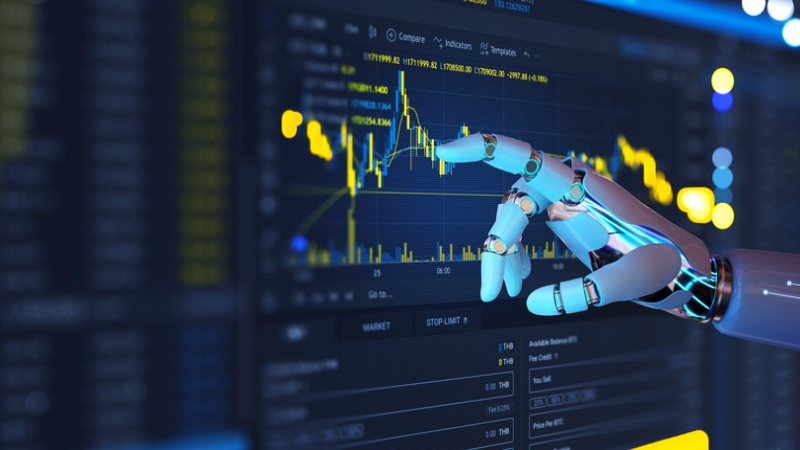
The crypto market has always been known for sharp price swings and sudden volatility spikes. What is changing now is not the nature of crypto itself, but how volatility is being interpreted, predicted, and traded. Artificial intelligence driven trading models are increasingly shaping market behavior in ways that are subtle but structurally important.
Rather than reacting to price movements after they happen, newer AI systems are learning to anticipate volatility patterns before they fully form. This shift is influencing liquidity placement, order execution, and even how traders define risk in digital asset markets.
How AI Models Are Changing the Structure of Crypto Volatility
Traditional crypto trading strategies relied heavily on technical indicators, momentum signals, and human interpretation of charts. AI models approach volatility differently. They process large volumes of historical price data, order book activity, funding rates, and derivatives positioning simultaneously. This allows them to identify volatility clustering, where periods of calm are statistically more likely to be followed by sharp moves.
As more firms deploy these models, volatility itself becomes less random. Sudden price swings are increasingly tied to liquidity thresholds and structural signals rather than emotional trading. This does not eliminate volatility, but it changes when and how it appears across major tokens.
Signal Compression and Faster Market Reactions
One noticeable effect of AI trading systems is signal compression. Information that once took hours or days to reflect in prices is now absorbed within minutes. AI models continuously scan market conditions and execute trades automatically when predefined volatility or liquidity signals are triggered.
This compression leads to faster market reactions and shorter-lived price dislocations. When volatility emerges, it often resolves more quickly than in previous cycles. This is particularly visible during macro announcements or large on chain transfers, where price reactions are swift but less chaotic than before.
Liquidity Mapping Is Replacing Simple Price Forecasting
Modern AI trading models place greater emphasis on liquidity rather than pure price direction. Instead of asking where the price will go, these systems ask where liquidity will thin or concentrate. By identifying areas of low liquidity, AI models anticipate zones where volatility is more likely to spike.
This approach changes trading behavior across the market. Liquidity providers adjust spreads dynamically, while large traders avoid triggering sharp moves unintentionally. As a result, volatility becomes more event driven and less purely speculative.
Volatility Clusters Are Becoming More Predictable
Crypto markets often experience volatility clusters where multiple large moves occur close together. AI systems excel at detecting the early stages of these clusters. By analyzing funding imbalances, leverage buildup, and correlation shifts across assets, models can flag when markets are entering unstable phases.
This predictability encourages earlier risk adjustment. Traders reduce leverage sooner, automated systems rebalance portfolios faster, and sudden liquidations become less disorderly. Volatility still occurs, but its shape and duration are increasingly influenced by algorithmic anticipation rather than surprise.
What This Means for Retail and Institutional Traders
For retail traders, the rise of AI driven volatility modeling means fewer prolonged inefficiencies but sharper short term moves. Opportunities exist, but they require faster decision making and better risk controls. Simple trend following strategies are less effective in isolation.
Institutional participants benefit from greater market depth and improved execution quality. AI models allow them to deploy capital with reduced slippage, even during volatile periods. This further accelerates institutional adoption, reinforcing the structural changes already underway.
Conclusion
AI trading models are not reducing crypto volatility, but they are redefining it. Volatility is becoming more structured, more predictable in clusters, and increasingly tied to liquidity dynamics rather than emotion. As AI adoption deepens, crypto markets are evolving from reactive systems into anticipatory ones, quietly reshaping how risk and opportunity are distributed.