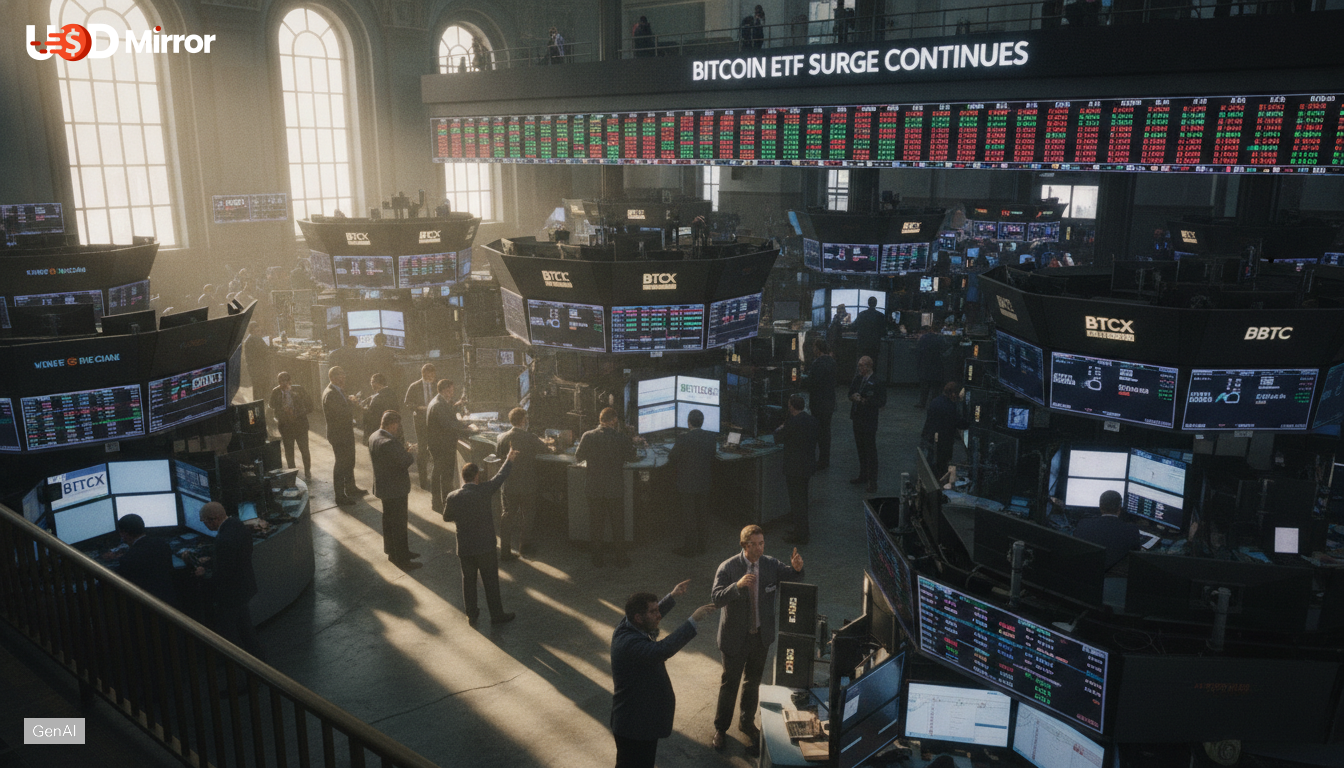
Record Inflows in Bitcoin ETFs
Bitcoin ETFs attracted increased demand as U.S. spot products reportedly recorded a significant single-day inflow since early May, based on Bloomberg-tracked totals. Some trading desks suggested this surge in creations and secondary-market buying seemed to tighten intraday spreads and might have encouraged more buyers. According to those Bloomberg-tracked figures, the total net intake was $517 million for the session, a level occurring alongside a notable rise in BTC. For many institutions, spot Bitcoin ETF products are often considered a preferred regulated wrapper versus direct custody, especially when allocations need quick adjustments. Overall, the flow was interpreted as a potential signal that risk appetite might be returning with stronger price action.
Factors Behind the Inflow Spike
Several elements contributed to the surge in demand, with positioning and liquidity being more significant than narrative alone. Investors facing quarter-end constraints often utilize listed ETF products to rebalance without altering custody or compliance. CoinDesk noted that Bitcoin’s move above $71,000 helped create a bullish golden cross pattern, a technical trigger many trend followers watch, in CoinDesk analysis of the golden cross setup. Policy focus on market structure has also maintained attention on regulated access points, including SEC crypto regulation proposal targets clearer trading rules. In practical terms, steadier short-dated futures basis can also support creations when hedging costs are more predictable, although this can vary by venue and day.
Market Impact of Large Creations
Large creations can impact the underlying market through execution dynamics and expectations, even when they do not directly correlate to immediate spot buying. When a single-day inflow reaches nine figures, authorized participants typically source liquidity across venues while managing hedges, although execution methods differ by firm. For more context on the regulatory backdrop shaping institutional behavior, see Crypto regulation: Trump pushes CLARITY Act fast, even as Bitcoin ETFs remain a key channel institutions use to express directional exposure. If flows cluster, dealers may increase hedge activity, potentially compressing volatility while prices rise, but outcomes are inconsistent. That feedback loop matters as a firmer tape can attract additional investors who benchmark against liquid, exchange-traded instruments. As liquidity centralizes in the largest funds, price discovery may also shift toward the ETF trading window, market participants note.
Comparison with Early May Inflows
The $517 million inflow appears to reverse the stop-start pattern that followed the early May peak in creations, according to the same Bloomberg-tracked totals mentioned above. Recent months’ flow tallies suggest that prior spikes often coincided with breakouts but then faded when macro rate expectations changed or crypto beta rotated into altcoins, although attribution varies by desk. For context on how widely circulated targets can influence client rebalancing, see Bitcoin price prediction: Standard Chartered sees $100K, with Bitcoin ETFs as a primary venue where that positioning can quickly appear in creations. This time, the inflow came with a firmer market structure, with Bitcoin maintaining key levels rather than reversing quickly, according to market commentary. Historically, sustained positive creations have been associated with steadier spot volume and less sell-side pressure from long-only holders reducing into strength, though correlations may weaken in swift-changing conditions.
Future of Bitcoin ETFs and Institutional Demand
If inflows continue, issuers and market makers will likely compete more on spreads, securities lending terms, and primary-market efficiency, which could reduce frictional costs for allocators. This dynamic might also integrate more wealth platforms into model portfolios, especially if volatility remains contained and tracking stays consistent. For the broader ecosystem, increased spot Bitcoin ETF liquidity could shift the marginal buyer from retail spot to professionally managed allocations, possibly changing how rallies develop and where leverage accumulates. Regulators will observe these mechanics closely, as concentrated ownership in a small set of vehicles can raise operational resilience and market-impact questions, particularly after Aug. 20, 2026’s $517 million inflow indicated how rapidly positioning can scale. The short-term takeaway is that Bitcoin ETFs have regained momentum, and product structure is once again central to how investors express directional belief.