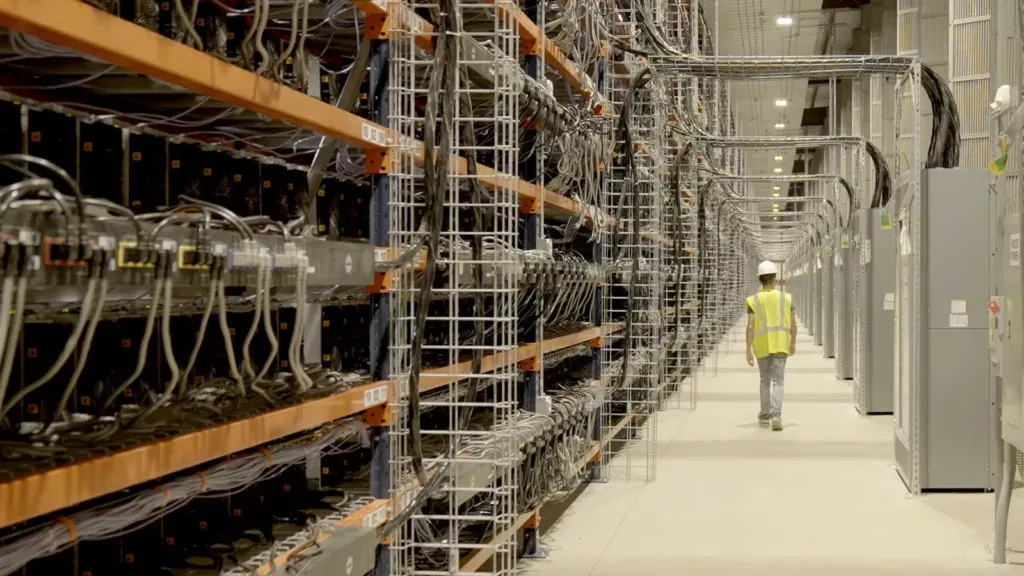
Hash power infrastructure repurposed for machine learning demand.
From Mining to Machine Learning
In 2025, Bitcoin mining firms are undergoing a strategic pivot. After years of relying on volatile crypto rewards, many are repurposing their infrastructure to support the booming demand for artificial intelligence data centers. The same facilities that once powered hash computations are being adapted for AI workloads, creating a bridge between two of the most energy-intensive industries in the digital economy. This shift highlights how mining companies are reinventing themselves to stay profitable in an era of rising energy costs and uncertain block rewards.
Why the Pivot Is Happening
Bitcoin halving cycles and regulatory pressures have squeezed profitability for miners. With rewards shrinking and energy prices climbing, firms are searching for alternative revenue streams. The AI industry’s explosive growth offers an attractive solution. Training large language models and machine vision systems requires massive computational power, much of which overlaps with the hardware miners already own. Instead of shutting down rigs or selling them off, firms are retooling facilities to host AI clients.
Retail Narratives of Adaptation
Retail traders and investors are closely watching this evolution. On TikTok and Discord, influencers describe the pivot as a survival strategy, framing miners as “digital landlords” renting space to the AI boom. Memes show mining rigs transforming into AI servers, symbolizing adaptation and resilience. For Gen Z audiences, the story resonates as a lesson in reinvention, turning what could have been decline into opportunity.
Whales Back the Transition
Whales are supporting the pivot through direct investment. On-chain data shows large wallets funding mining firms that announce AI-focused initiatives, betting on long-term profitability. Some whales are also diversifying their portfolios by allocating capital to both crypto and AI infrastructure projects, ensuring exposure to two industries with global growth potential. Their participation is accelerating the transition, providing miners with liquidity to scale operations.
AI Dashboards Showcase Utilization
AI dashboards are amplifying awareness of the shift. Push notifications highlight metrics such as “mining firm achieves 70 percent capacity repurposed for AI clients” or “data center revenue surpasses mining rewards.” Screenshots of these alerts circulate widely, reinforcing the perception that AI integration is not just a side project but a core business model. For traders and institutions, dashboards provide validation that mining firms are successfully adapting to new realities.
Institutions Drive Demand
Institutions are playing a central role by fueling demand for AI data centers. Tech giants, research institutes, and startups all require massive computational resources for model training. Mining firms with existing energy contracts and cooling infrastructure are well-positioned to fill the gap. Some are signing long-term agreements with AI companies, ensuring stable revenue flows that contrast sharply with the volatility of Bitcoin mining rewards.
Regulatory Landscape
Regulators are taking note of the pivot. In some jurisdictions, governments welcome the move as a way to make better use of energy-intensive infrastructure, particularly when tied to renewable sources. In others, concerns about energy consumption persist, with critics arguing that shifting from Bitcoin to AI does little to solve sustainability issues. Analysts note that regulatory outcomes will heavily influence how sustainable the pivot proves to be.
Cultural Narratives of Reinvention
Culturally, the pivot is being framed as a redemption story. Memes celebrate mining firms as survivors reinventing themselves, while influencers highlight case studies of companies turning losses into profits. For younger audiences, the story is about resilience and the ability to pivot quickly in a fast-changing digital economy. This cultural framing strengthens the narrative that mining is not dying but evolving.
Risks That Remain
Despite optimism, challenges remain. Not all mining hardware is easily adaptable for AI workloads, requiring costly upgrades. Competition among data centers is intensifying, potentially squeezing margins. Energy concerns continue to loom large, with critics warning that both mining and AI contribute to unsustainable consumption. For firms making the pivot, success will depend on balancing profitability with sustainability and innovation.
Conclusion
Bitcoin mining firms are pivoting toward AI data centers in 2025, repurposing infrastructure to meet surging demand for machine learning. Retail narratives frame it as an adaptation, whales provide capital, AI dashboards amplify visibility, and institutions drive demand. Regulators remain divided, but culturally, the move is celebrated as reinvention. Risks persist, yet the shift marks a turning point. Mining companies are no longer just securing Bitcoin. They are powering the next generation of artificial intelligence, ensuring their relevance in a rapidly evolving digital economy.