

CBDC ban in Congress: what the 2030 restriction does
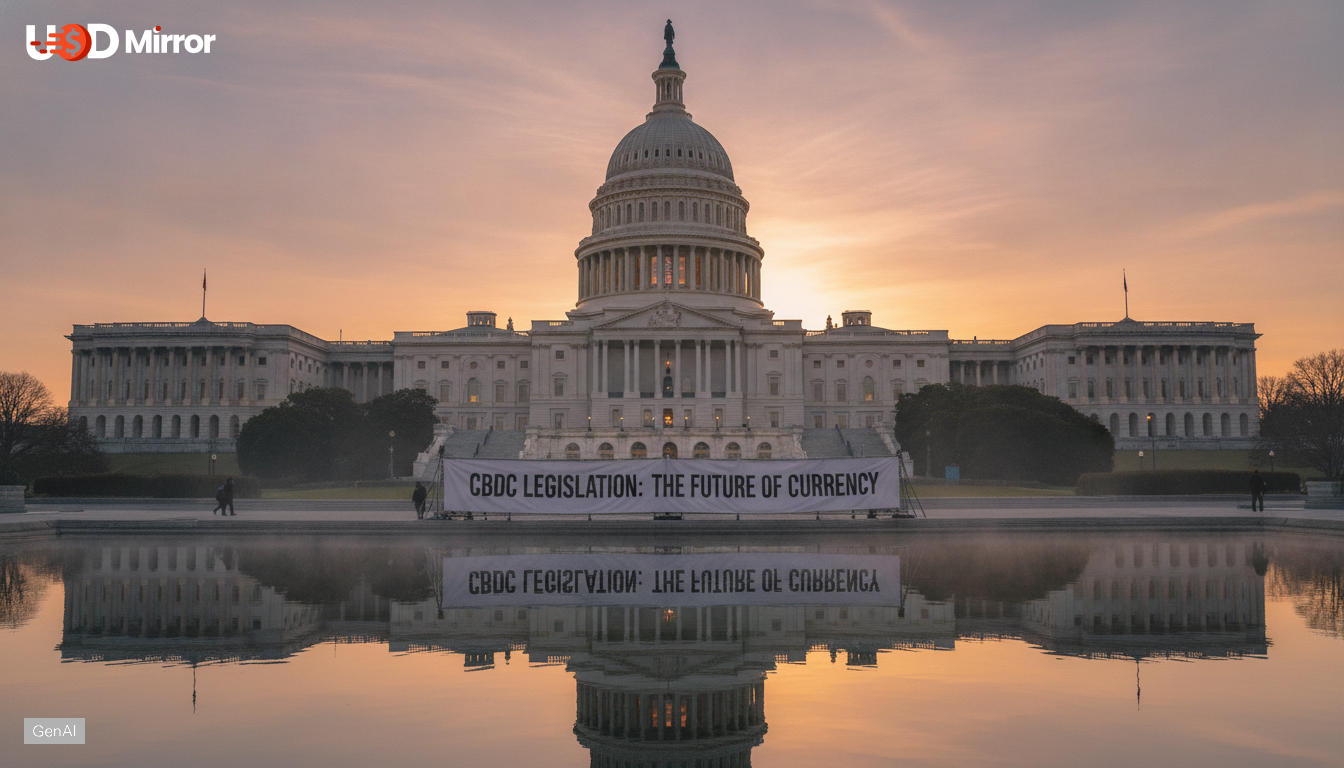
According to available reports, the CBDC ban provision added to a housing package may restrict any U.S. central bank digital currency program through 2030, potentially putting clearer limits on the Federal Reserve’s ability to issue a retail payment instrument directly to the public. Supporters describe the restriction as a guardrail meant to prevent a government-issued wallet model from reaching households without explicit authorization. Opponents argue it could narrow future options even if a digital dollar were designed through intermediaries. The dispute has focused on whether the CBDC ban would allow pilots, intermediated models, or account-based systems to proceed under existing authorities, and how Congress would supervise any digital dollar effort during the 2026 to 2030 window.
House housing package and the CBDC ban language
The House advanced a housing package that includes language aimed at restricting a U.S. central bank digital currency initiative through 2030. A related account of the housing bill’s CBDC provision is detailed here: US Senate housing bill adds CBDC ban through 2030, and backers say the measure clarifies that payment innovation should come from private sector networks and regulated issuers rather than a new central bank liability distributed to the public. The legislative text also raises congressional oversight expectations for any digital dollar concept, including how the Fed would structure access and what constraints would apply to consumer-facing accounts.
Payments impact: stablecoins, tokenized deposits, and pilots
If the restriction holds, the immediate effect could be to reduce the probability of a near-term U.S. retail digital currency rollout while Congress debates longer-term payment policy. For banks and payment firms, the signal is that regulated stablecoin models and tokenized deposit networks may receive more attention than a government-issued wallet approach, and for context on bank-led settlement experimentation, see: Chainlink stablecoin FX settlement pilots with 47 banks. Industry participants have also pushed for faster settlement and clearer rules that keep deposits inside supervised institutions, especially if a retail CBDC route is blocked through 2030. The policy debate has been shaped by the Fed’s 2022 digital dollar discussion paper and subsequent hearing cycles that kept retail and intermediated designs in focus.
Trump signing decision and the 2026 legislative standoff
The bill’s path now runs through the executive branch, where President Donald Trump’s decision could determine whether the restriction becomes law. On June 24, 2026, CoinDesk reported that Trump refused to sign legislation containing a U.S. CBDC ban and tied his position to demands around an elections bill, and the report is here: Trump refuses to sign law with U.S. CBDC ban, demands approval of elections bill, creating leverage over timing and final text. If negotiators revise the housing package, the practical scope of restrictions could shift, including whether limits apply to wholesale settlement experiments or only to public-facing wallets.
Global context: U.S. perimeter versus EU CBDC frameworks
The U.S. debate is unfolding as other jurisdictions pursue different timelines and governance models for digital currency, often emphasizing retail payment efficiency and cross-border settlement. In Europe, legislative work has continued on a central bank digital currency framework, and a reference point is: EU vote advances central bank digital currency bill, which is frequently cited in U.S. hearings as a benchmark for privacy controls and institutional roles. The contrast is that American policymakers are attempting to set a hard perimeter first and then evaluate what private issuance, tokenized deposits, and regulated stablecoins can deliver under existing law. Within that perimeter, the CBDC ban functions as both a brake and a forcing mechanism.