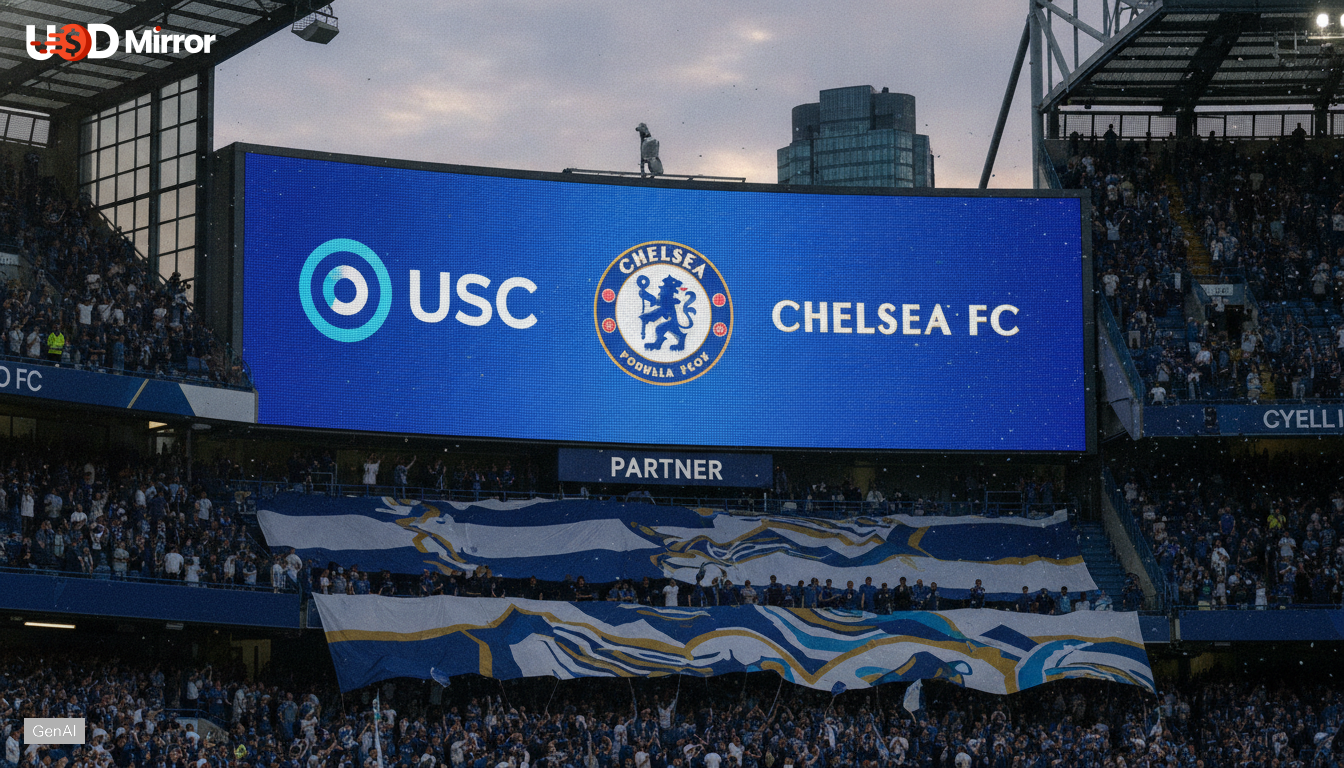
Chelsea and Circle stablecoin sponsorship explained
According to reports, Chelsea FC appears to have added Circle to its commercial roster, with the club’s public communications framing it as payments-led rather than speculative. Based on what Chelsea has publicly said so far, the tie-up is positioned as a way to broaden global fan commerce and modernize digital touchpoints around matchday and merchandising. Chelsea also indicated that any fan-facing promotions would need to align with UK financial marketing expectations. Financial terms were not disclosed, so the value, duration, and performance triggers remain unknown at publication.
What the Chelsea Circle partnership includes
Circle, the issuer of USDC Stablecoin, is the named partner, and the agreement appears centered on visibility and payments-oriented activations rather than a new token launch, based on the public announcement language. For institutional context, Banks use stablecoin technology to speed loan funding outlines how similar rails are being applied beyond crypto trading. Circle has pointed to USDC reserve disclosures and attestations in its own communications, which it presents as reassurance for enterprise partners. CoinDesk has also covered how regulation timing is influencing infrastructure planning in The Clarity Act slipped to September. Banks are building anyway. Chelsea did not say whether USDC will be used for ticketing or retail checkout.
Why stablecoin sponsorship now fits football commerce
Across European football, including the Premier League, commercial teams appear to be reassessing crypto categories after widely reported exchange failures and stricter advertising scrutiny, which can make a payments-focused stablecoin sponsorship easier to defend internally than trading-led deals. For a parallel view on how large institutions are approaching digital dollar rails, JPMorgan Stablecoin Plan Targets Digital Dollar Payments details how established players are planning for stablecoin-enabled payments. A USDC Stablecoin-linked partnership can shift the narrative away from leverage and trading toward payments infrastructure, which may be easier to justify to boards and risk teams. Brands considering similar partnerships are likely to seek clearer disclosures, defined approval workflows, and contract language designed to limit reputational spillover.
UK FCA expectations for stablecoin sponsorship messaging
The UK FCA has said that cryptoasset financial promotions must be fair, clear, and not misleading, and that firms approving financial promotions must be properly authorized, according to FCA financial promotion rules and guidance. That backdrop matters for any football partnership that uses stablecoin sponsorship language in fan-facing campaigns, especially where messaging could be interpreted as encouraging investment behavior or implying safety beyond evidence, and for related UK policy signals on stablecoin oversight, see BoE stablecoin innovation mandate shifts UK rules. Chelsea’s public positioning has leaned toward payments utility rather than price upside, which may reduce, but not eliminate, promotion risk. Chelsea has not disclosed its approval chain for campaign materials.
What this means for future sports crypto deals
Rights holders are increasingly splitting crypto into narrower buckets, based on how clubs and leagues have discussed risk management and partner suitability in recent years. Circle’s enterprise positioning has been visible in corporate payments coverage such as Corpay Stablecoin Integration: Circle Mints $1B USDC, which shows how stablecoins are marketed as back-office infrastructure. In that environment, a payments-oriented partnership may persist when a sponsor can point to reserve reporting, redemption mechanics, and marketing governance that meets local rules. Clubs also need to separate fan rewards from anything that could reasonably be read as an inducement to invest, particularly in the UK where promotion standards are actively enforced, according to FCA expectations for compliant messaging. If activations stay focused on commerce and transparency, this model could become a template for other top-tier teams.