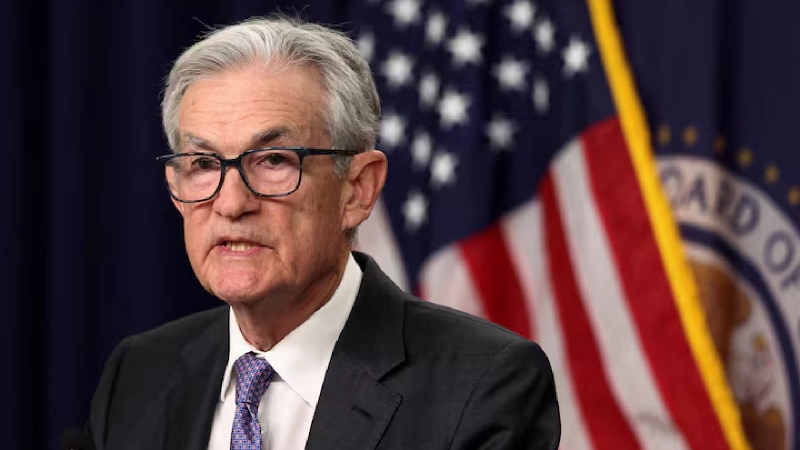
The Federal Reserve is closely monitoring the private credit sector for potential risks, though it does not currently see signs that issues in the space could trigger broader financial instability. Jerome Powell emphasized that regulators are paying close attention to developments within this growing segment of the financial market, particularly looking for any connections that could transmit stress into the traditional banking system. His comments come as private credit continues to expand rapidly, attracting institutional capital in search of higher yields.
Powell noted that while risks exist within the sector, they appear contained for now and do not pose an immediate systemic threat. He acknowledged that losses may occur among participants in private credit markets, which often operate outside traditional banking frameworks, but stressed that such outcomes are not uncommon in evolving financial segments. The central bank is particularly focused on understanding how these risks might interact with regulated financial institutions, ensuring that any potential spillover effects remain limited.
The private credit market, often described as a less transparent or opaque part of the financial system, has grown significantly in recent years as investors seek alternatives to traditional fixed income products. These investments typically involve direct lending to companies, bypassing traditional banks. While this structure can offer higher returns, it also introduces challenges related to liquidity, valuation, and risk assessment, especially during periods of economic stress or tightening financial conditions.
Regulators are actively gathering data and insights from market participants, including financial institutions and firms operating within the private credit space. Powell indicated that authorities are maintaining a clear understanding of banks’ exposure to these assets, which is critical in assessing the potential for contagion. This ongoing monitoring reflects lessons learned from past financial crises, where hidden linkages between sectors amplified systemic risks.
Despite the rapid growth of private credit, Powell described it as a relatively small portion of the broader financial ecosystem. This limited scale reduces the likelihood that disruptions in the sector could have widespread consequences. However, the Federal Reserve remains cautious, recognizing that rapid expansion and increasing complexity can introduce vulnerabilities over time if not properly managed and supervised.
Market participants are paying close attention to the Fed’s stance, as it signals how regulators may approach oversight of alternative credit markets in the future. Increased scrutiny could lead to tighter regulations or reporting requirements, particularly if signs of stress begin to emerge. For now, the central bank appears to be balancing vigilance with reassurance, acknowledging risks without signaling immediate concern.
The comments also come amid a broader environment of economic uncertainty, where rising interest rates and geopolitical tensions are influencing investor behavior across asset classes. In this context, private credit has attracted attention as both an opportunity and a potential source of risk. The Federal Reserve’s ongoing assessment will play a key role in shaping market expectations as the sector continues to evolve within the global financial system.