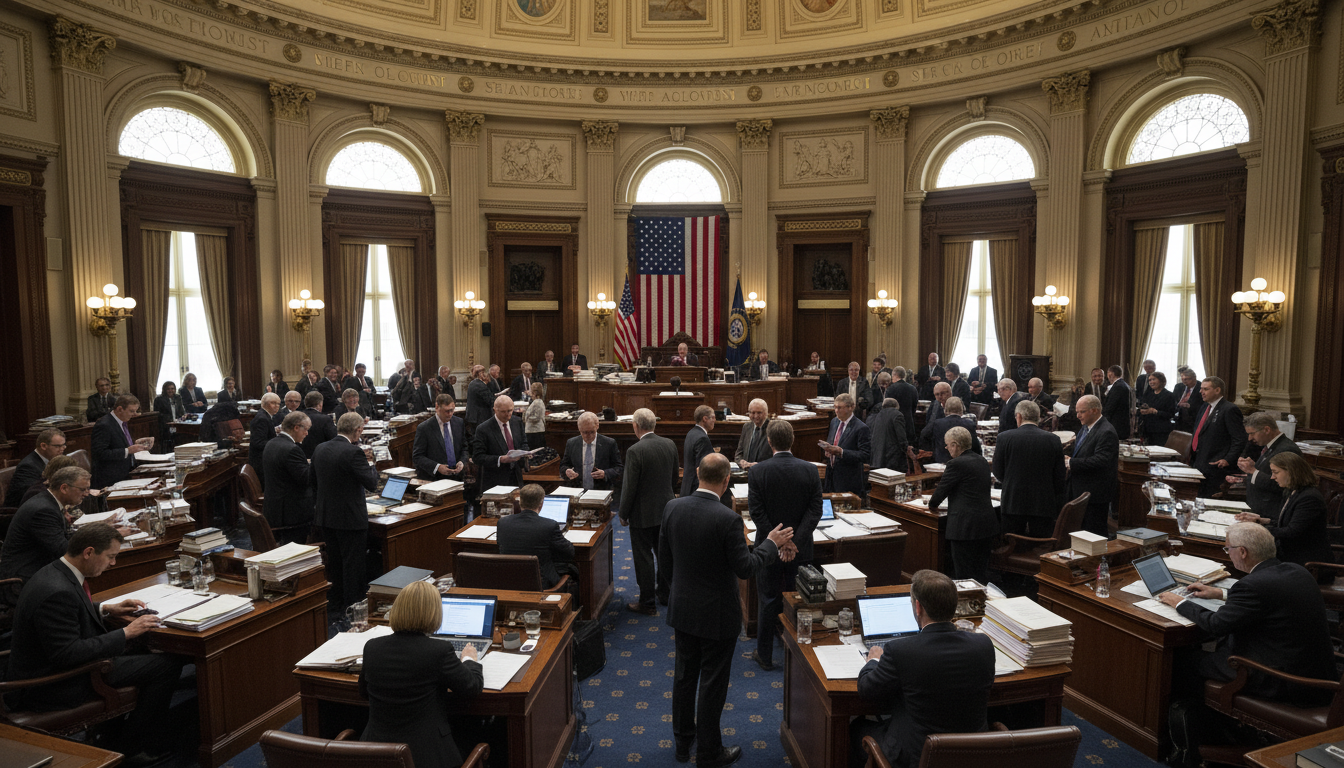
Senate Achieves Legislative Milestone
Senators approved the GENIUS framework in a rare bipartisan vote that hands the digital asset sector its first sweeping Washington victory on stablecoin regulation. The measure moves from years of competing drafts to a single, enforceable approach that puts reserve quality, redemption rights, and supervision at the center. Markets treated the result as a concrete signal that lawmakers want dollar linked tokens inside a regulated perimeter rather than in limbo. Today, desks tracking Washington risk repriced issuer uncertainty, and Live coverage from major outlets framed the vote as a turning point for the sector’s relationship with Congress.
Understanding the GENIUS Bill
The GENIUS bill, as passed, aims to standardize what qualifies as a payment stablecoin and what obligations issuers must meet to operate at scale in the United States. It concentrates on high quality liquid backing, timely redemption, and baseline disclosures that can be audited and enforced, with clear pathways for state and federal oversight to interact instead of collide. That structure matters because it narrows room for opaque reserve claims and sets predictable compliance expectations for bank affiliated and nonbank issuers. A related policy thread is already developing around supervisory design, as detailed in FDIC plan under GENIUS Act reshapes stablecoin rules, which outlines how prudential standards could be applied across different charter types.
Implications for the Stablecoin Sector
For issuers, the bill’s operational impact lands in treasury management, attestations, and customer protection processes that must be built to survive examination, not just market stress. The stablecoin industry now faces a clearer choice between meeting standardized reserve and reporting rules or limiting products to jurisdictions with looser expectations. That shift also changes how exchanges and payment platforms assess counterparty risk, because a regulated token with enforceable redemption terms can be treated differently in listing decisions and settlement flows. An Update in risk models is already evident in how trading firms categorize stablecoin exposure alongside cash equivalents. Liquidity conditions can be influenced indirectly as issuance concentrates among compliant players and marginal issuers lose distribution.
Crypto Industry Reactions
Industry reaction split along familiar lines between firms that already operate with conservative reserve practices and those built around faster growth and lighter disclosures. Lobbying groups that pushed for crypto legislation called the vote proof that Congress can legislate in complex financial tech domains when consumer protection and systemic risk are framed in plain terms. Payments oriented companies highlighted the pathway to integrate regulated tokens into merchant flows, while some DeFi aligned voices criticized the approach for reinforcing centralized issuance models. In market data, sentiment improved even as traders watched macro headlines and crypto fund flows. A separate Live narrative around risk appetite has persisted, including cross asset moves referenced by Bitcoin holds $67K as market signals split sharply as investors weigh legislative progress against broader volatility.
Future of Stablecoin Regulation
Next steps are procedural and technical, turning Senate language into implementation that regulators can execute without conflicting interpretations. The most immediate tasks include defining examination standards, harmonizing state licensing with federal oversight triggers, and detailing how reserve assets are verified in practice. Enforcement credibility will depend on whether audits and disclosures are frequent enough to deter window dressing and whether redemption promises remain reliable during market stress. That trajectory will also shape how global partners assess US dollar tokens in cross border contexts, particularly where dollar settlement competes with local rails. An Update from major news wires is expected as the bill advances through the remaining legislative stages, and Today the central question is whether final negotiations preserve the bill’s core protections while keeping innovation viable.
Market participants are already treating the bill as a template that can anchor future rules for custody, broker dealer standards, and disclosures across the wider token economy. The most practical outcome is that compliance becomes a product feature, allowing payment firms to compare tokens on transparent criteria instead of brand trust alone. Issuers that meet the bar could see improved access to banking services and lower friction in institutional onboarding, while noncompliant tokens may be sidelined by platforms that want to reduce regulatory exposure. Reporting discipline will matter, with strong third party verification and consistent reserve composition disclosures becoming routine. The broader narrative will keep moving quickly, and Live monitoring of enforcement signals will be as important as the statute text. That leaves the stablecoin industry adjusting in real time while lawmakers pursue the next phase of crypto legislation.