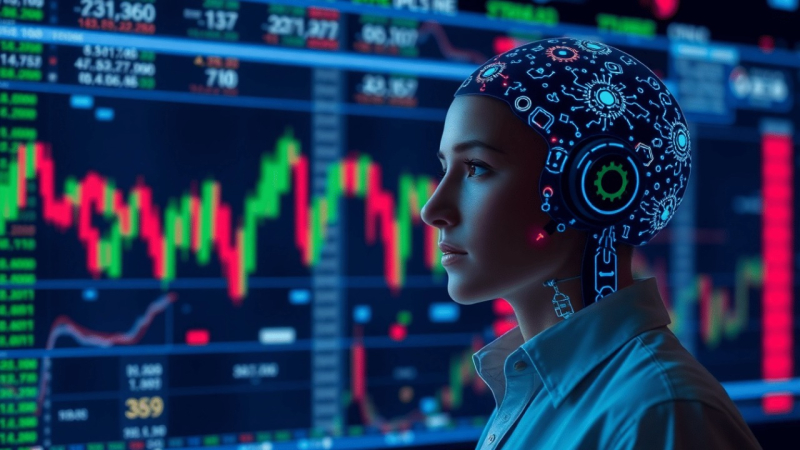
Market confidence has traditionally been shaped by visible actions. Large trades, policy announcements, and capital flows were seen as the primary forces that moved sentiment. Today, confidence is increasingly influenced before any trade occurs. AI systems are redefining how markets assess stability, risk, and readiness, not by trading assets directly, but by shaping decisions upstream. This shift is subtle, yet its impact is growing across global financial markets.
AI driven models now inform how institutions size exposure, manage risk, and interpret conditions. Even when these systems do not place trades themselves, they influence the behavior of those who do. Confidence is being formed earlier, based on data driven assessment of structure rather than reaction to price movement. Markets are becoming more anticipatory, guided by signals that operate quietly in the background.
Why Confidence Is No Longer Built on Price Action Alone
Price action reflects decisions already made. By the time prices move, confidence has either been confirmed or lost. AI systems operate earlier in the chain. They evaluate liquidity depth, correlation shifts, funding behavior, and stress indicators continuously. These inputs shape expectations before capital is deployed.
As a result, confidence is increasingly detached from short term price movement. Markets can remain stable not because prices are rising, but because AI informed frameworks indicate that conditions are resilient. Conversely, prices may stall even without negative news if AI systems detect fragility beneath the surface.
How AI Influences Decision Making Without Trading
AI does not need to trade to influence markets. It informs risk limits, exposure thresholds, and timing decisions. Portfolio managers rely on AI driven insights to decide when to engage, how much risk to take, and when to step back.
This guidance shapes aggregate behavior. When many participants use similar signals, confidence builds or erodes collectively. The effect is visible in positioning and liquidity patterns rather than individual trades. AI becomes a coordinator of caution or engagement without executing orders itself.
The Shift From Narrative Confidence to Structural Confidence
Narratives once played a dominant role in shaping confidence. Stories about growth, policy, or innovation could sustain optimism even when structure weakened. AI driven assessment has reduced reliance on narrative by emphasizing measurable conditions.
Structural confidence is based on execution quality, funding consistency, and system resilience. AI systems monitor these factors continuously. When structure is strong, confidence persists even during negative headlines. When structure weakens, confidence fades quietly, often before narratives change.
Why This Matters for Crypto and Digital Markets
Crypto markets highlight this shift clearly. AI models monitoring on chain liquidity, stablecoin flows, and derivatives positioning can influence confidence without affecting spot prices directly. Participants may reduce leverage or slow activity based on AI signals, keeping prices stable while risk is managed internally.
This explains periods where markets appear calm yet cautious. Confidence is conditional, shaped by AI assessment rather than speculative enthusiasm. The absence of dramatic moves does not imply complacency. It reflects informed restraint.
The Institutional Effect of AI Driven Confidence
Institutions amplify the influence of AI. Their scale means that small adjustments in exposure have meaningful impact. When AI systems recommend caution, institutions slow deployment. When signals improve, engagement increases gradually.
This behavior smooths market cycles. Instead of abrupt shifts, confidence builds and fades in stages. AI contributes to this moderation by enforcing discipline across portfolios.
Why This Influence Will Continue to Grow
As data availability expands and systems improve, AI will play an even larger role in shaping confidence. Markets are too complex for intuition alone. AI offers a way to process reality continuously without relying on reaction.
This does not remove human judgment. It reframes it. Decisions are increasingly guided by structured insight rather than instinct. Confidence becomes something measured, not assumed.
Conclusion
AI is redefining market confidence by shaping decisions before trades occur. Through continuous assessment of liquidity, risk, and structure, AI influences behavior without executing a single order. This quiet shift is changing how markets prepare, engage, and stabilize in a data driven era.