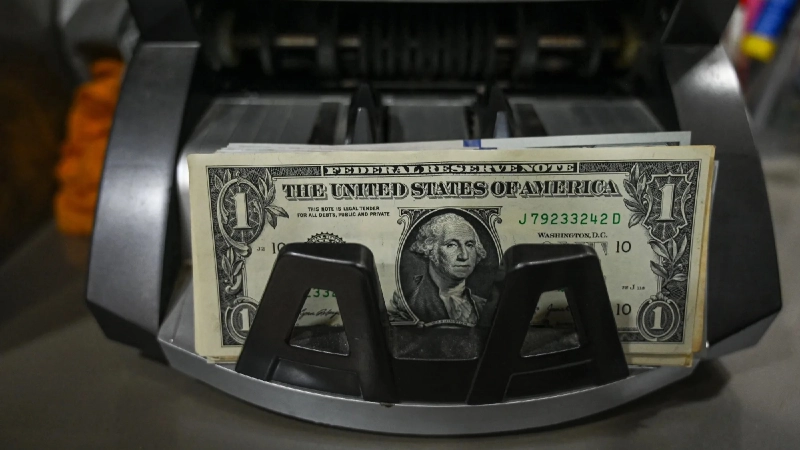
A senior portfolio manager at Invesco is maintaining a bearish outlook on the US dollar, even as the currency has strengthened amid heightened geopolitical tensions linked to the Iran conflict. The recent rally in the dollar is being viewed as temporary rather than a structural shift, with market dynamics suggesting that the currency’s current strength may not be sustainable over the longer term. Despite the short term gains driven by safe haven demand, concerns over valuation and broader macroeconomic factors continue to weigh on expectations for the dollar’s trajectory.
The US dollar has seen a notable rebound in recent weeks, climbing as investors moved toward safer assets during escalating tensions in the Middle East. However, the broader trend still shows weakness when viewed over a longer period, with the currency having declined significantly earlier in the year following trade policy moves and tariff decisions under Donald Trump. While the dollar has recovered some ground since late February, analysts argue that this recovery is not enough to offset underlying structural pressures that continue to influence global currency markets.
According to Kristina Campmany, a senior portfolio manager at Invesco, the dollar remains overvalued compared to several major global currencies, including the Japanese yen, Australian dollar and Chinese yuan. She suggests that relative valuation metrics and shifting global capital flows point toward potential downside in the coming months. Market participants are increasingly assessing whether the recent gains are driven more by temporary geopolitical factors rather than improvements in economic fundamentals, reinforcing the view that the rally may not hold.
The current environment reflects a complex interaction between geopolitics, trade policy and investor positioning. While conflicts and uncertainty often support the dollar in the short term, longer term trends are shaped by interest rate expectations, fiscal policy and global growth differentials. Analysts note that any easing in geopolitical tensions could quickly reverse the dollar’s recent gains, especially if investors begin reallocating capital toward higher yielding or undervalued currencies across emerging and developed markets.
Looking ahead, investors are closely monitoring economic data, central bank signals and geopolitical developments to determine the next direction for the currency. The divergence between short term momentum and long term valuation remains a key theme in global markets, with fund managers continuing to position cautiously. The outlook suggests that while volatility may persist, the broader narrative around the dollar remains uncertain, leaving room for further adjustments as macroeconomic conditions evolve.