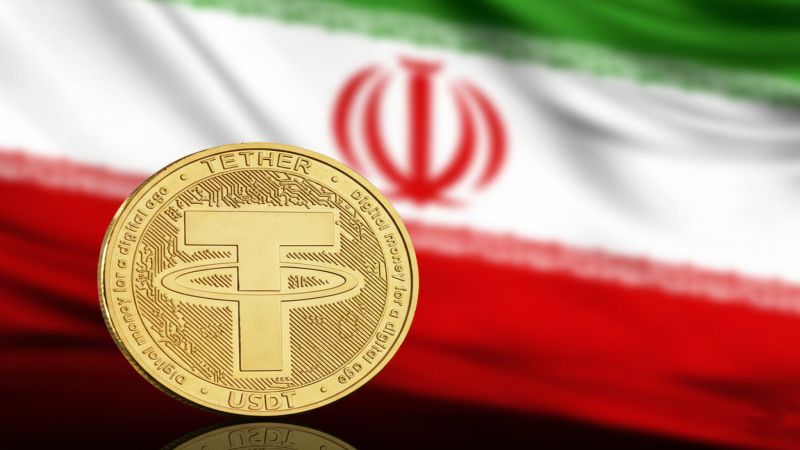
New blockchain analysis indicates that the Central Bank of Iran accumulated at least 507 million dollars worth of USDT during April and May 2025 as part of efforts to stabilize the national currency amid persistent financial strain. According to findings published by Elliptic, the stablecoins were acquired through a network of wallets linked with high confidence to the central bank, using payments routed through the United Arab Emirates and settled in Emirati dirhams. The transactions were conducted largely outside traditional banking rails, reflecting the growing role of blockchain based settlement in jurisdictions facing restricted access to global finance. The accumulation period coincided with a sharp depreciation of the Iranian rial, which reportedly lost around half its value within months. Analysts suggest the use of dollar linked stablecoins offered faster access to external liquidity while limiting exposure to conventional correspondent banking systems.
Elliptic’s investigation shows that a significant portion of the USDT initially flowed across the TRON network before being directed to domestic channels. Much of this liquidity was routed through Nobitex, Iran’s largest crypto exchange, where USDT could be traded, held, or converted into local currency. This pattern pointed to an attempt to inject dollar linked liquidity directly into the local market. However, transaction behavior shifted in mid 2025 following a major security breach at Nobitex that resulted in the loss of tens of millions of dollars in digital assets. After the incident, Elliptic observed increased cross chain activity, with funds moving from TRON to the Ethereum network via bridges, decentralized exchanges, and intermediary platforms, extending into late 2025.
Despite the complexity of these routes, public blockchain records allowed investigators to track the movement of funds with precision. Elliptic noted that this transparency ultimately limited the effectiveness of such strategies. In June 2025, Tether took enforcement action by blacklisting several wallets associated with the central bank, freezing approximately 37 million USDT. Subsequent reporting by other blockchain monitoring firms has highlighted broader crypto usage by Iranian state linked entities over recent years, reinforcing the visibility risks tied to large scale on chain activity. While stablecoins provided short term flexibility for managing currency pressure and trade settlement challenges, the exposure of wallet structures and subsequent freezes demonstrated the constraints of operating at scale on public ledgers under ongoing sanctions scrutiny.