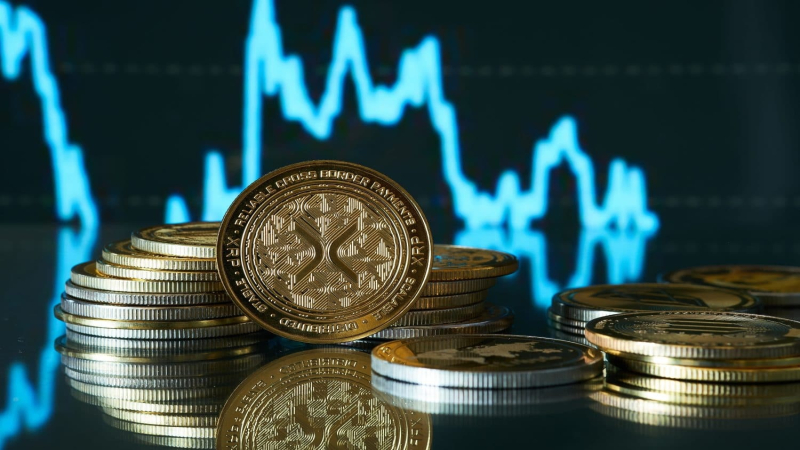
Market activity often feels subdued on the surface, leading many retail participants to assume conviction is absent. Prices drift, volume appears inconsistent, and narratives remain mixed. Yet beneath this calm exterior, large pools of capital are steadily positioning, not through aggressive buying, but through controlled and deliberate accumulation.
This behavior reflects a familiar pattern in mature markets. Large capital does not chase confirmation. It prepares ahead of it. While retail investors often wait for clarity, institutions and high net worth participants focus on structure, liquidity, and probability. The result is a growing gap between visible sentiment and underlying positioning.
Accumulation Happens Before Confidence Returns
Large capital typically accumulates during periods of uncertainty rather than optimism. When narratives are unclear and participation is uneven, prices often offer better asymmetry. Institutions recognize this phase as preparation, not indecision.
Accumulation at scale requires discretion. Entering too aggressively would move prices and attract attention. Instead, capital is deployed gradually through patient execution, often across multiple venues and time frames.
This process leaves few visible signals. Price remains range bound, and momentum stays muted. Retail participants mistake this for lack of interest, when it is often the opposite.
Why Large Capital Avoids Visibility
Visibility introduces risk. When accumulation becomes obvious, prices adjust quickly, reducing opportunity. Large capital prefers environments where liquidity is sufficient but attention is low.
By operating quietly, institutions reduce execution costs and avoid front running. This approach prioritizes efficiency over speed.
Silence is strategic, not passive.
Retail Behavior Amplifies the Gap
Retail investors tend to respond to confirmation. They wait for breakouts, narratives, or social validation before acting. This delay creates a natural lag between accumulation and participation.
When prices eventually move, retail interest often rises quickly. By that time, large capital has already built positions and shifts toward distribution or risk management.
This cycle repeats across markets. The gap is behavioral rather than informational.
Liquidity Conditions Favor Stealth Positioning
Current liquidity conditions support quiet accumulation. Markets remain functional but lack strong directional flow. This allows large orders to blend into normal activity without distorting prices.
Steady liquidity combined with cautious participation creates an ideal environment for patient positioning. Capital can enter without triggering volatility.
When liquidity is stable but not expanding, accumulation thrives below the surface.
What On Chain and Flow Data Suggest
While price action appears unremarkable, flow behavior often tells a different story. Stable positioning, consistent transfers, and reduced urgency indicate preparation rather than retreat.
Large capital focuses on balance rather than timing the exact bottom. The goal is exposure readiness, not perfect entry.
These signals are subtle and easy to overlook without context.
Why This Phase Feels Uncomfortable
Markets driven by quiet accumulation feel frustrating. Rallies stall, dips are bought quickly, and direction remains unclear. Retail participants interpret this as confusion.
In reality, it reflects equilibrium while positions are built. Once accumulation nears completion, conditions change rapidly.
Patience is tested because confirmation has not arrived yet.
What Typically Follows Quiet Accumulation
When large capital finishes positioning, markets often shift character. Volatility expands, participation broadens, and narratives emerge to justify price movement.
Retail participation increases as confidence builds. By then, the structural groundwork has already been laid.
Markets move fastest after preparation ends.
Conclusion
Large capital is accumulating quietly because uncertainty provides opportunity and discretion reduces cost. While retail waits for clarity, institutions prepare beneath the surface. Recognizing this phase helps explain why markets feel stagnant before decisive moves emerge and why patience often precedes momentum.