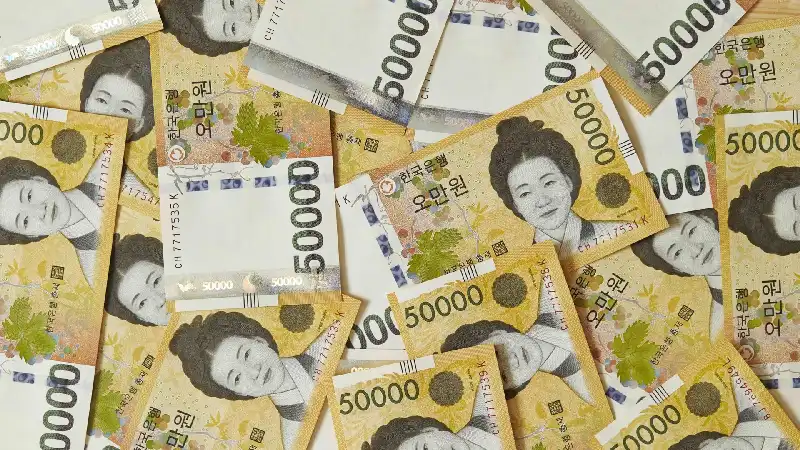
Stablecoin holdings on South Korea’s five largest crypto exchanges have fallen sharply, dropping roughly 55 percent since July 2025, as investors redeploy capital into domestic equities. On-chain data from Allium Labs shows combined stablecoin balances on Upbit, Bithumb, Coinone, Korbit, and GOPAX fell from $575 million to about $188 million by mid-March. The latest wave of outflows coincided with the South Korean won weakening past 1,500 per dollar, a level not seen since the 2008 financial crisis, prompting traders to convert dollar-pegged assets into won and invest in domestic markets.
The currency-driven rotation has fueled inflows into stocks, helping propel a semiconductor-led KOSPI rally while draining retail liquidity from crypto markets. Deposits in brokerage accounts, representing cash available for stock purchases, declined from roughly ₩131 trillion ($86 billion) in early March to ₩112 trillion ($74 billion) following the won’s drop, suggesting capital was actively redeployed into equities. Policy measures, including tax-favored “repatriation” accounts offering up to 100 percent capital gains tax exemptions, have further encouraged investors to shift overseas capital into domestic markets.
The KOSPI has gained an additional 37 percent this year, following a 75 percent increase in 2025, making it the world’s best-performing major index. The rally is highly concentrated in semiconductor stocks, with Samsung Electronics and SK Hynix accounting for roughly half of market capitalization and more than 50 percent of projected profits. Analysts note that these companies have become the primary destination for both retail and institutional flows, with crypto liquidity increasingly tied to the strength and sustainability of Korea’s equity market.
Stablecoin outflows in South Korea appear to be a domestic phenomenon rather than part of a broader regional trend. Data from Artemis indicates that stablecoin transaction volumes across Asia have ticked up over the last year, suggesting that capital rotation is largely motivated by currency movements and equity opportunities rather than a retreat from digital assets across the region. The shift underscores the loss of one of crypto’s most important retail liquidity pools, which historically amplified market cycles and price volatility in Korean crypto markets.
Market observers warn that the rotation may reverse if KOSPI experiences a sharp correction, especially given its concentration in semiconductor stocks and emerging energy concerns linked to disruptions in the Strait of Hormuz. For now, the data shows that capital is not idle but actively redeployed, highlighting the growing interplay between foreign exchange movements, domestic policy incentives, and investor positioning between crypto and equities in South Korea.