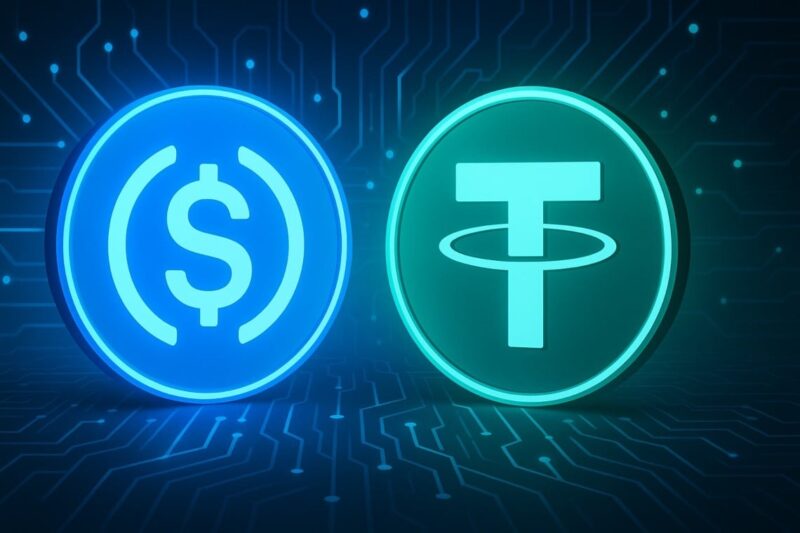
Tether has introduced a new U.S. focused stablecoin, USA₮, marking its first fully regulated product designed specifically for American users under the recently enacted GENIUS Act. The token is issued by Anchorage Digital Bank, a federally chartered institution, and represents a strategic shift for Tether as U.S. regulation tightens around dollar backed digital assets. The GENIUS Act requires stablecoins offered to U.S. customers to be issued by federally or state qualified entities, a framework that excludes Tether’s long standing USDT from domestic circulation. As a result, USA₮ has been developed as a separate, compliant product aimed at institutions that require clear regulatory oversight. Tether executives have positioned the launch as a step toward aligning with U.S. financial standards while maintaining the company’s dominant global presence.
USA₮ has already been listed on several major platforms, including Bybit, Crypto.com, Kraken, OKX, and MoonPay, signaling an aggressive push for adoption. Cantor Fitzgerald has been appointed as reserve custodian, reinforcing the institutional framing of the product. Leadership of the initiative has been handed to former White House Crypto Council executive director Bo Hines, who now serves as CEO of Tether USA₮. According to Tether, the stablecoin is fully backed by dollar denominated reserves and structured to meet the operational and compliance needs of regulated financial players. While USDT will continue to operate internationally, where it has roughly 143 billion dollars in circulation, the introduction of USA₮ places Tether in more direct competition with Circle’s USDC, which has benefited from early regulatory alignment in the U.S. market.
The launch has reignited concerns within the banking sector about the long term impact of stablecoins on traditional deposits. On the same day as the announcement, Standard Chartered released a report warning that stablecoins could siphon substantial funds away from U.S. banks. Geoff Kendrick, the bank’s global head of digital assets research, estimates that roughly one third of the current stablecoin market could come out of bank deposits, amounting to around 100 billion dollars. The concern stems from the way stablecoin issuers manage reserves, which are typically held in short term government securities rather than being recycled back into the banking system. This dynamic, the report argues, represents a structural shift rather than a temporary liquidity movement.
Standard Chartered’s analysis suggests regional banks are particularly exposed to this trend, while larger institutions may be better positioned to absorb the impact. The report also highlights differences among issuers, noting that Tether holds a very small portion of reserves in bank deposits compared with some competitors. As the stablecoin market continues to expand, Kendrick projects total capitalization could reach 2 trillion dollars by 2028. Regulated offerings like USA₮ are expected to accelerate institutional adoption, potentially increasing competitive pressure on banks for both deposits and payment activity. The convergence of regulatory clarity and large scale stablecoin growth is reshaping the relationship between digital assets and the traditional financial system.