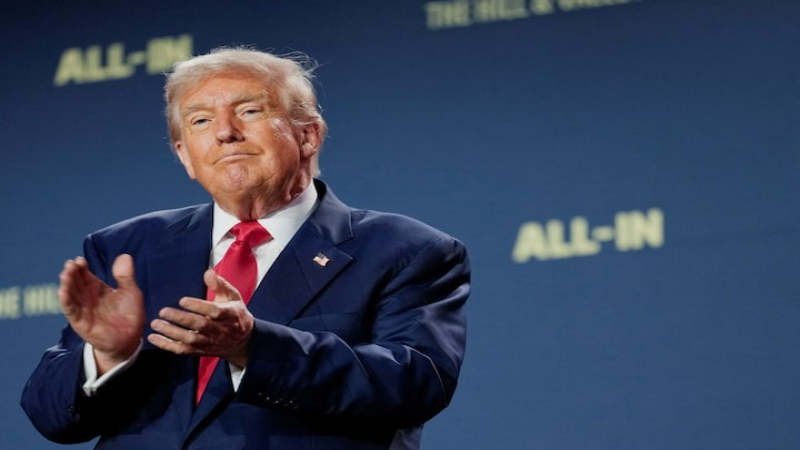
U.S. President Donald Trump announced plans to sign an executive order this week creating a single national framework for artificial intelligence, aiming to replace the patchwork of state-level regulations that industry leaders say slow innovation. Big Tech companies such as OpenAI, Google, and Meta have advocated for national standards, warning that differing rules across states could hamper U.S. competitiveness against China in the AI race. The move is expected to spark debate with both Democratic and Republican state leaders who seek to maintain protections for residents, ranging from data privacy to consumer safeguards. Analysts note that the executive order could accelerate AI integration in finance, tokenized asset management, and high-performance computing while also influencing regulatory approaches that shape crypto markets and digital finance platforms.
Industry observers highlight that a unified AI rule could simplify compliance and reduce operational hurdles for firms deploying cutting-edge technologies across multiple states. Currently, legislation in states like California and Florida imposes mandates on AI developers to manage risks such as discrimination, unauthorized political deepfakes, and nonconsensual content generation. The national rule could standardize safeguards while potentially giving federal authorities the power to override conflicting state policies. Market participants are tracking this closely, as AI-driven trading algorithms, tokenized investment platforms, and automated financial systems increasingly rely on scalable, legally compliant frameworks to operate efficiently and attract institutional capital.
Investors and analysts are weighing how this step might influence broader market dynamics and digital finance adoption. Central banks, hedge funds, and tokenized asset platforms could see implications for algorithmic trading strategies, AI-assisted research, and regulatory compliance. By streamlining approval and oversight, the executive order may encourage faster deployment of AI in equities, risk modeling, and digital finance infrastructure. While states continue to push for localized protections, the federal framework is likely to become a critical signal for institutional investors, retail traders, and crypto-native participants looking to gauge market stability, assess AI-driven innovation, and position capital effectively in a rapidly evolving tech landscape.