Artificial intelligence once promised traders a faster path to alpha. Early adopters believed smarter models would consistently outperform markets by spotting price patterns humans could not see. That belief has steadily faded. As AI tools spread across desks and platforms, their predictive advantage narrowed, and markets adapted quickly.
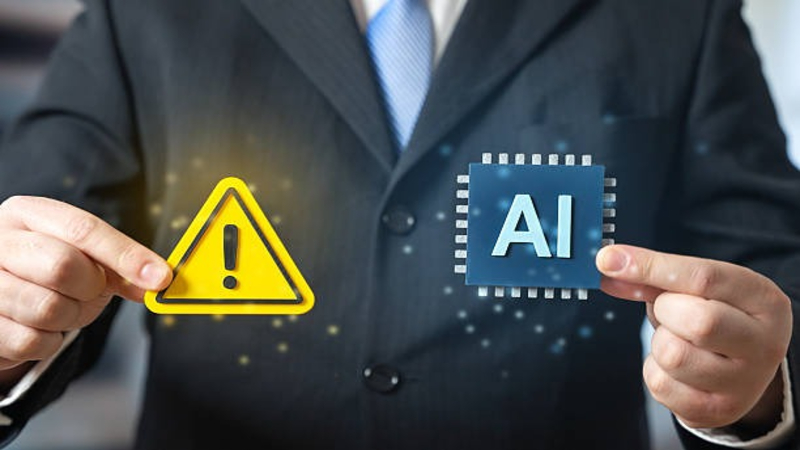
What replaced that promise is far more subtle and far more powerful. AI signals today are less about beating the market and more about understanding risk before it becomes visible. In modern trading, AI functions less like a profit generator and more like a live filter that separates healthy market conditions from fragile ones.
AI signals have evolved into real time risk filters
The most important transformation in AI driven trading is the shift from return optimization to risk detection. Modern AI systems continuously monitor volatility behavior, liquidity depth, leverage exposure, correlation shifts, and positioning data. Instead of issuing buy or sell calls, they flag when market conditions become unstable.
This change reflects how markets now behave. Price movements are often driven by positioning and liquidity rather than fundamentals alone. AI models help traders identify when a move is supported by structure and when it is vulnerable to sudden reversal. That information is often more valuable than a directional forecast.
Risk filtering also improves timing. Rather than entering trades based on predicted upside, traders can wait for conditions where downside risk is clearly defined. AI helps identify when markets are resilient enough to absorb shocks and when they are not, allowing for more disciplined execution.
Why alpha generation became harder for AI
Alpha is harder to extract because markets learn quickly. Once an AI signal becomes popular, its effectiveness declines. Competing models adapt, liquidity providers adjust, and pricing efficiency improves. The result is diminishing returns for prediction based strategies.
Another factor is regime instability. Markets in recent years have shifted repeatedly between inflation fears, growth optimism, policy uncertainty, and geopolitical risk. Prediction models trained on one regime often fail in another. AI systems designed to detect stress adapt better because they respond to current conditions rather than fixed expectations.
As a result, AI signals that survive are those that help traders avoid bad trades rather than chase perfect ones. In practice, avoiding losses contributes more to long term performance than capturing occasional upside.
How crypto markets shaped AI risk filtering
Crypto markets accelerated this evolution faster than any other asset class. Digital assets trade continuously, react instantly to flows, and often lack deep liquidity buffers. This environment exposed the limits of predictive models very quickly.
AI tools in crypto began focusing on leverage buildup, liquidation risk, funding imbalances, and stablecoin flows. These indicators proved effective at identifying stress points even when prices looked calm. Over time, similar frameworks were adopted in equities, foreign exchange, and rates.
The crypto experience demonstrated that understanding market fragility is often more important than forecasting price direction. This lesson reshaped how AI is used across financial markets.
What risk filtering means for modern traders
For traders, AI risk filters change how strategies are built. Instead of asking whether a trade can make money, the first question becomes whether the environment is safe enough to participate. AI signals help answer that by highlighting hidden vulnerabilities.
This approach encourages better capital preservation. Traders reduce position sizes during fragile conditions and scale up only when markets show structural strength. Over time, this leads to smoother performance and fewer emotional decisions.
Institutions benefit as well. Portfolio managers use AI filters to manage drawdown risk across assets. Market makers adjust exposure based on liquidity stress. Risk teams gain early warnings without relying on lagging indicators.
AI does not replace human judgment in this process. It enhances it. The most effective setups combine AI driven risk awareness with clear strategy rules and discipline.
Conclusion
AI signals are no longer about finding easy alpha. They have become essential tools for filtering risk in complex and fast moving markets. By helping traders understand when not to trade, AI delivers a quieter but more durable edge that aligns with how modern markets actually function.